

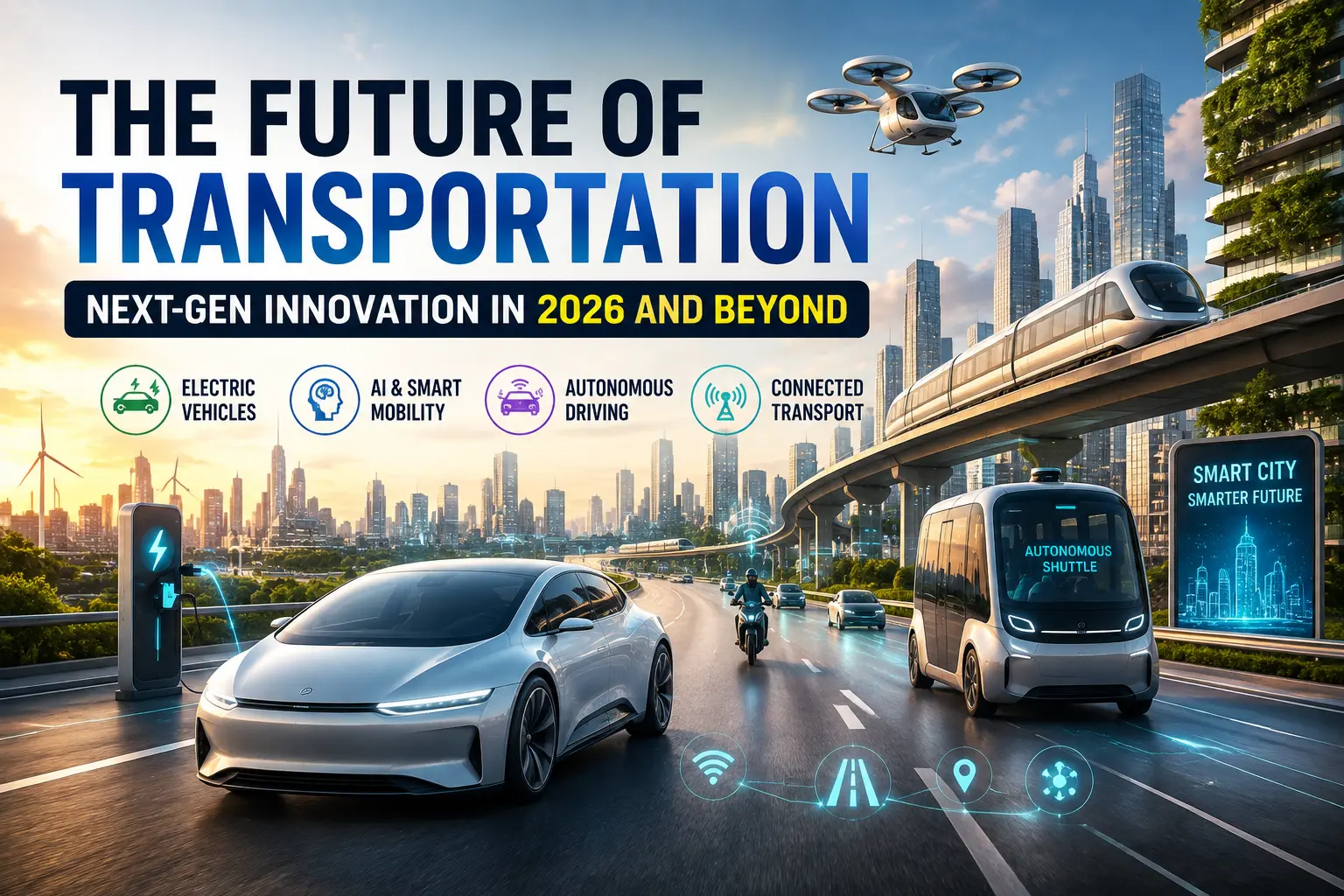
The future of transportation is no longer limited to concepts of flying cars or fully autonomous vehicles. Across the world, transportation is already being reshaped by electric mobility, artificial intelligence, connected vehicles, advanced driver-assistance systems and smarter infrastructure. The convergence of these technologies is creating a more connected and software-driven mobility ecosystem, changing not only how vehicles operate but also how people and goods move through cities.
Next-gen innovation is becoming an important part of this transformation. Electric vehicles are driving the shift toward cleaner mobility, while AI and advanced computing are improving vehicle control, driver assistance, traffic management and route optimization. At the same time, software-defined vehicles are allowing manufacturers to introduce new functions and improvements through software rather than relying entirely on traditional hardware changes.
The transition is also becoming visible beyond private cars. Connected mobility systems, smart public transport, intelligent traffic infrastructure and autonomous services are beginning to work together in some markets. Driverless electric taxi services, for example, are already operating commercially in more than 20 cities, although fully autonomous Level 5 vehicles remain a longer-term prospect.
For India and the rest of the world, this transformation presents both opportunities and challenges. Faster EV adoption, better charging infrastructure, safer roads and smarter urban mobility could make transportation more efficient and sustainable, but issues such as cost, regulation, cybersecurity, infrastructure and public acceptance will also shape how quickly these technologies become mainstream.
In this guide, we explore the future of transportation, the next-gen technologies driving it, and how AI, electric vehicles, connected mobility, autonomous driving and smart cities could change the way we travel in 2026 and beyond.
Read More: Automotive Innovation
How Next-Gen Innovation Is Changing Transportation
The future of transportation is being shaped by several technologies developing at the same time rather than by a single breakthrough. Artificial intelligence, electrification, connected vehicles, advanced driver-assistance systems, automation and intelligent infrastructure are increasingly becoming parts of the same mobility ecosystem.
AI is already being studied and deployed for applications such as traffic prediction, congestion management, road-safety analysis and intelligent transport systems. Recent research also highlights the growing role of AI in making transportation networks more adaptive and data-driven.
At the vehicle level, next-gen innovation is moving transportation from mechanically focused products toward connected and increasingly software-driven systems. Vehicles can collect information from sensors, navigation systems and surrounding infrastructure, allowing technology to support functions such as route optimisation, driver assistance, predictive maintenance and energy management.
The transformation is also happening outside the vehicle. Connected infrastructure can allow vehicles, traffic signals, road systems and mobility services to exchange information. Technologies such as vehicle-to-vehicle (V2V), vehicle-to-infrastructure (V2I) and vehicle-to-everything (V2X) are being developed to improve communication between different parts of the transportation network.
This means the future of transportation will increasingly depend on how well vehicles, infrastructure, energy systems and digital services work together. Instead of thinking about a car as an isolated machine, the emerging model treats it as one component of a much larger connected mobility system.
For consumers in India and other markets, this transformation could eventually mean smarter traffic management, more efficient electric vehicles, improved safety systems and more integrated public and private transportation. However, the speed of adoption will depend on infrastructure, affordability, regulation, cybersecurity and how effectively these technologies can operate in real-world conditions.
Electric Mobility and the Shift Toward Sustainable Transportation
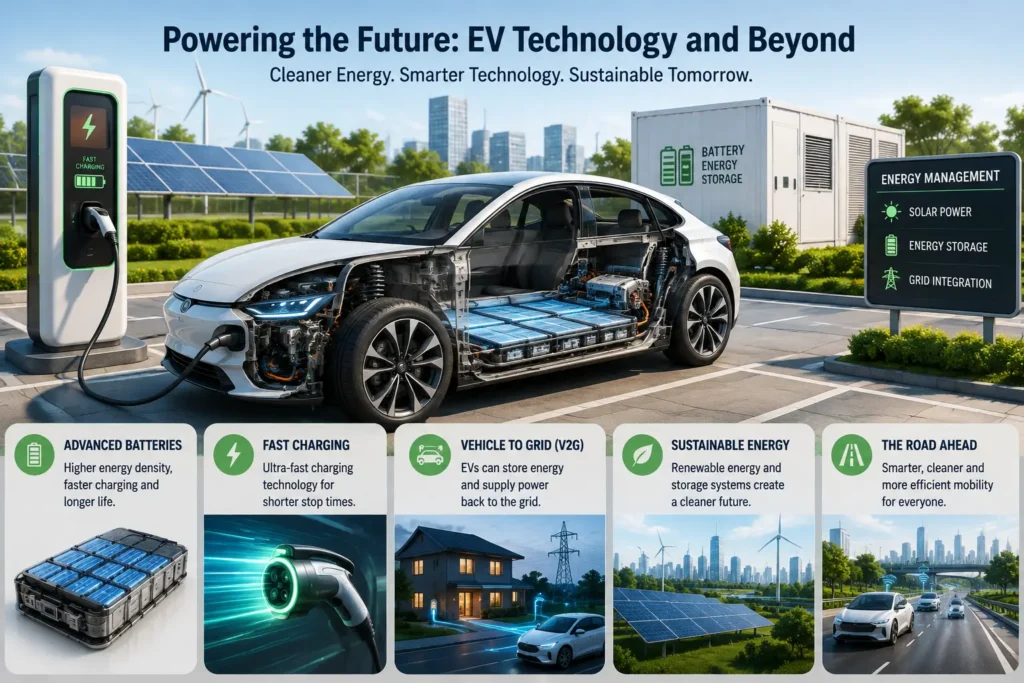
One of the most important parts of the future of transportation is the transition from fossil-fuel-powered vehicles to electric mobility. Electric cars, buses, motorcycles, scooters and commercial vehicles are becoming increasingly important as governments, manufacturers and consumers look for ways to reduce emissions and improve energy efficiency.
The transition is no longer limited to a few advanced markets. Global electric-car sales are expected to reach around 23 million vehicles in 2026, representing approximately 28% of total car sales, while markets across Europe, Asia-Pacific and Latin America are continuing to expand. India is also seeing stronger momentum, with electric-car sales increasing 75% in 2025 to around 165,000 units.
Charging Infrastructure Is Becoming Critical
The growth of electric mobility depends not only on vehicle prices and battery technology but also on convenient charging infrastructure. Public charging networks expanded significantly worldwide in 2025, with the global stock exceeding 7 million public charging points by the end of the year. India reached around 88,000 public charging points during the same period.
Faster charging is also becoming an important part of next-gen innovation. Higher-voltage electrical architectures, improved battery cells and more powerful chargers are helping reduce charging times, while technologies such as smart charging can help manage the additional electricity demand created by growing EV adoption.
For India, the development of charging infrastructure will be particularly important as electric mobility expands across cars, two-wheelers, three-wheelers, buses and commercial vehicles. India’s electric two- and three-wheeler markets are already significant, with two- and three-wheelers representing some of the country’s most electrified road-transport segments.
Beyond Electric Cars
Sustainable transportation is broader than simply replacing petrol and diesel cars with EVs. Electric public transport, shared mobility, electric two-wheelers, efficient logistics and better urban planning can all reduce energy consumption and congestion.
This is where smart mobility solutions become important. A city that combines electric public transport, charging infrastructure, connected vehicles, intelligent traffic management and shared mobility can create a more efficient transportation network rather than simply replacing one type of vehicle with another.
The result is a gradual shift toward a transportation system where electric mobility, clean energy, digital connectivity and intelligent infrastructure work together. That combination will be one of the defining characteristics of the future of transportation in India and around the world.
Software-Defined and Connected Vehicles
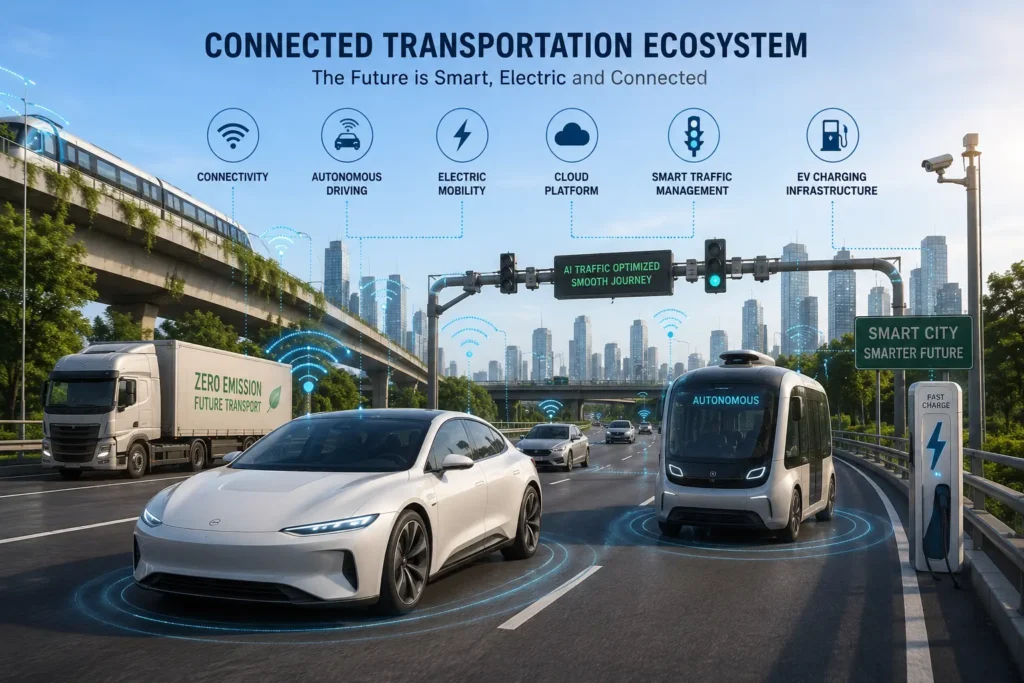
Another major shift shaping the future of transportation is the move toward software-defined and connected vehicles. Modern cars are increasingly becoming digital platforms in which software controls a growing share of vehicle functions, while cloud connectivity allows manufacturers to deliver new capabilities throughout the vehicle’s life. The transition is particularly visible in electric vehicles, where newer electronic architectures make continuous software updates easier to implement.
What Is a Software-Defined Vehicle?
A software-defined vehicle (SDV) is designed so that software plays a central role in controlling and improving vehicle functions. Instead of relying on separate electronic control units for every individual function, newer architectures can use fewer, more powerful computing systems to manage multiple vehicle systems.
This approach can allow manufacturers to improve features through over-the-air (OTA) updates, including certain driver-assistance functions, battery-management systems, infotainment features and cybersecurity updates. It also gives automakers the ability to introduce new functions after a vehicle has already been delivered to the customer.
For consumers, this could change the traditional idea of a car becoming technologically outdated as soon as it leaves the showroom. A connected vehicle can potentially receive software improvements during its ownership, although the availability of updates and features will depend on the manufacturer, vehicle hardware and market.
Connected Mobility and V2X
Connectivity is equally important to the future of transportation. Vehicles can communicate with cloud services, other vehicles and surrounding infrastructure through technologies collectively known as vehicle-to-everything (V2X) communication.
V2X can support applications involving traffic information, road infrastructure, vehicle safety and cooperative mobility. Research and industry development are also exploring how centralized computing, AI, cloud connectivity and V2X can work together to create more intelligent transportation systems.
This could eventually allow a vehicle to receive information about road conditions ahead, communicate with traffic infrastructure or share relevant safety information with other connected vehicles.
However, greater connectivity also brings new responsibilities. Cybersecurity, data privacy, software reliability and system interoperability become increasingly important when vehicles depend on connected digital systems. These challenges will be an important part of the next stage of transportation technology.
As vehicles become more connected and software-driven, the future of mobility will increasingly depend not only on better engines or batteries, but also on computing, connectivity, cybersecurity and continuously improving software.
Autonomous Vehicles and the Rise of Robotaxis
Autonomous driving is one of the most visible areas of the future of transportation, but the technology is developing in stages rather than moving directly toward fully driverless cars everywhere. Advanced driver-assistance systems (ADAS) are already becoming more common in consumer vehicles, while higher levels of automation are being deployed in controlled commercial environments. The International Energy Agency notes that fully autonomous Level 5 vehicles are not currently in sight, while Level 4 electric robotaxis are already operating commercially in more than 20 cities worldwide.
From Driver Assistance to Higher Automation
Today’s consumer vehicles primarily use automation to assist the driver, rather than replace them completely. Features such as adaptive cruise control, lane-centering assistance, automatic emergency braking and traffic-sign recognition can reduce driver workload and improve safety when used correctly.
The next stage involves systems capable of handling more of the driving task within defined conditions or geographical areas. Level 4 autonomous vehicles can perform the complete driving task within their approved operational conditions, but they remain limited by factors such as location, weather, road design and regulatory approval.
This distinction is important because the phrase “self-driving car” is often used to describe technologies with very different capabilities.
Robotaxis Are Moving Beyond Testing
Robotaxis provide one of the clearest examples of next-gen innovation becoming a real transportation service. According to the IEA, commercial robotaxi fleets had grown to around 8,000 vehicles across about 20 cities by March 2026, with services concentrated primarily in China and the United States.
The technology is also expanding geographically. Companies are testing or preparing autonomous mobility services in additional markets, including parts of Southeast Asia and the Middle East. This suggests that autonomous transportation could gradually become a practical component of urban mobility rather than remaining purely experimental.
However, widespread adoption will depend on much more than vehicle technology. Regulations, safety validation, infrastructure, operating costs, cybersecurity and public confidence will all influence how quickly robotaxis can expand.
What Autonomous Mobility Could Mean for Cities
If autonomous services become reliable and affordable, they could change how cities manage transportation. Shared autonomous vehicles could potentially operate continuously, adjust routes according to demand and connect passengers with public transport networks.
For India and other rapidly urbanising markets, autonomous mobility could eventually complement rather than completely replace conventional transportation. The most realistic path is likely to involve specific routes, geofenced areas, campuses, logistics networks and controlled urban environments before highly automated services become widespread.
The future of transportation therefore isn’t simply about removing the driver. It is about combining AI, sensors, connectivity, electric powertrains and intelligent infrastructure to create transportation services that can operate more efficiently and safely within clearly defined conditions.
Read More: Global Auto News: How Electric and Smart Vehicles Are Shaping the Future of Mobility
Smart Cities and Connected Mobility
The future of transportation will depend not only on smarter vehicles but also on smarter cities. As urban populations grow, cities need transportation systems that can manage increasing demand while keeping journeys safe, efficient, accessible and sustainable. This is driving investment in intelligent traffic systems, connected infrastructure, public transport technology and data-driven mobility services.
Intelligent Traffic Management
One of the most practical applications of smart mobility solutions is intelligent traffic management. AI and real-time data can help transportation authorities understand traffic patterns, identify congestion and adjust systems more dynamically.
Smart traffic signals, connected road infrastructure and real-time traffic information can potentially reduce unnecessary waiting and improve the efficiency of road networks. In India, AI, automation, real-time analytics and sensor-based systems are increasingly being applied to traffic management and infrastructure monitoring.
The next stage of transportation technology will involve connecting these systems more closely with vehicles. A connected vehicle could receive information about traffic conditions, road hazards or changes in traffic signals, while infrastructure could use aggregated vehicle and mobility data to improve traffic management.
Connected Public Transport
Smart mobility is not only about private cars. Connected mobility can also make buses, metros, railways, taxis and other forms of public transport work together more effectively.
Integrated transport systems can allow passengers to plan journeys across multiple modes, access travel information and make transfers more easily. International transport strategies are increasingly focusing on integrated, accessible and technology-enabled mobility rather than treating individual transport modes as completely separate systems.
This is particularly relevant for India, where public transport, motorcycles and walking remain major parts of everyday mobility. The 2026 Ipsos India Mobility Report found public transport to be the most preferred daily mobility mode among the surveyed options, highlighting why future mobility in India cannot be built around private cars alone.
Smart Cities Need More Than Smart Cars
A genuinely smart transportation system requires more than connected vehicles. Roads, public transport, charging networks, digital infrastructure, traffic management systems and pedestrian facilities all need to work together.
For example, improving the first- and last-mile connection between homes, public transport stations and workplaces can make public transportation more practical. This remains an important challenge in Indian cities, where walking infrastructure and safe connections to transit can influence whether people choose public transport for everyday journeys.
The result is a broader vision of future mobility in which transportation becomes an interconnected system rather than a collection of individual vehicles. Cars, buses, trains, two-wheelers, charging infrastructure and digital services can increasingly share information and complement one another.
This connected approach could make cities more efficient and sustainable, but it also introduces challenges around data privacy, cybersecurity, infrastructure investment and interoperability. The success of next-gen innovation will therefore depend not only on developing better technology, but also on creating the infrastructure and policies needed to use that technology responsibly.
The Future of Public and Shared Transportation
The future of transportation will not be built around private cars alone. Public transport, shared mobility and efficient last-mile connections will remain essential as cities grow and travel demand increases. Governments and urban planners are increasingly looking at integrated systems that combine public transport, electric vehicles, shared services and digital mobility tools.
In India, this is particularly important because urban mobility includes a mix of buses, metro systems, railways, two-wheelers, three-wheelers, cars and walking. NITI Aayog’s 2026 transport scenarios identify public and shared mobility, rail and waterways, zero-emission vehicles and clean fuels as important components of India’s longer-term transport transition.
Shared Mobility and Mobility-as-a-Service
Shared mobility can help cities make better use of existing vehicles by allowing multiple people to access transportation without necessarily owning a private vehicle. Car-sharing, ride-sharing, bike-sharing and app-based transport services are examples of this approach.
The next stage could involve mobility-as-a-service (MaaS), where different transportation options are brought together through a connected digital platform. Instead of planning every part of a journey separately, users could potentially combine buses, metro, shared vehicles, taxis and other services through a single mobility ecosystem.
This approach is particularly useful for the first- and last-mile parts of a journey, where the distance between a person’s home, workplace or destination and a major public transport station can otherwise make public transportation less convenient.
Electric Public Transport
Electrification is also extending beyond private cars. Electric buses, two-wheelers, three-wheelers and commercial vehicles are becoming increasingly important in several markets. The IEA notes that electric two- and three-wheelers are among the most electrified road-transport segments globally, with strong adoption in markets including India and Southeast Asia.
For cities, electric public transport can be combined with smart charging, fleet-management software and real-time passenger information to create more efficient transportation networks. The challenge will be ensuring that charging infrastructure, electricity supply and vehicle deployment develop together.
Why Shared Mobility Matters
A smarter transportation system should not simply replace every petrol or diesel vehicle with an electric one. It should also consider how many vehicles are needed, how efficiently they are used and how different modes can work together.
That makes public transport and shared mobility an important part of sustainable transportation. A well-connected system can give people alternatives to private vehicle ownership while helping cities manage congestion, energy consumption and limited road space.
For India and other rapidly urbanising markets, the future is therefore likely to involve a combination of electric mobility, public transport, shared services and connected digital platforms rather than one single solution.
Emerging Transportation Technologies to Watch
The future of transportation will be shaped not only by technologies that are already entering the market, but also by innovations that are still moving from research and development toward wider commercial use. Some of these technologies could significantly change how vehicles are powered, charged, connected and integrated with the wider energy and transportation system.
Advanced Battery Technology
Battery development remains one of the most important areas of transportation innovation. Improvements in cell chemistry, battery-pack design and manufacturing are helping electric vehicles achieve better efficiency, range and charging performance.
According to the IEA, global EV battery deployment reached around 1.2 TWh in 2025, while average battery prices fell by about 8% during the year. New battery technologies, including sodium-ion batteries, are also moving into the scale-up phase, although they still face limitations compared with established lithium-ion chemistries.
Faster charging is another important area of next-gen innovation. Higher-voltage architectures, improved power electronics and new battery designs are enabling increasingly rapid charging, with some manufacturers now targeting charging times of less than 10 minutes under suitable conditions.
Vehicle-to-Grid Technology
Electric vehicles could eventually become more than consumers of electricity. Vehicle-to-grid (V2G) technology allows compatible EVs to send electricity back to the grid, potentially helping manage periods of high electricity demand.
Commercial V2G offerings for private EV owners began appearing in 2025, although adoption remains limited because compatible vehicles, regulations and technical standards are still developing.
If these systems become more widespread, EVs could become an active part of future energy networks rather than simply another source of electricity demand.
AI-Powered Transportation Systems
Artificial intelligence is also expanding beyond autonomous driving. AI can be used for vehicle energy management, traffic prediction, route optimisation, predictive maintenance and the development and testing of new vehicle systems. The IEA notes that advances in AI and computing power are particularly benefiting EVs in areas such as automated driving and integrated vehicle control.
This could make transportation increasingly adaptive, with vehicles and infrastructure responding to changing road, traffic and energy conditions in real time.
Electric Commercial Vehicles
The transformation isn’t limited to passenger cars. Electric buses and trucks are becoming an increasingly important part of sustainable transportation. Global electric truck sales more than doubled in 2025, while battery-electric buses and other commercial vehicles continue to expand in several markets.
As battery costs decline and charging infrastructure improves, electrification could gradually extend to a much wider range of commercial and logistics applications.
Together, these technologies show that the future of transportation is likely to be defined by the convergence of batteries, AI, software, connectivity and energy systems rather than by one single invention.
India and the Global Future of Mobility
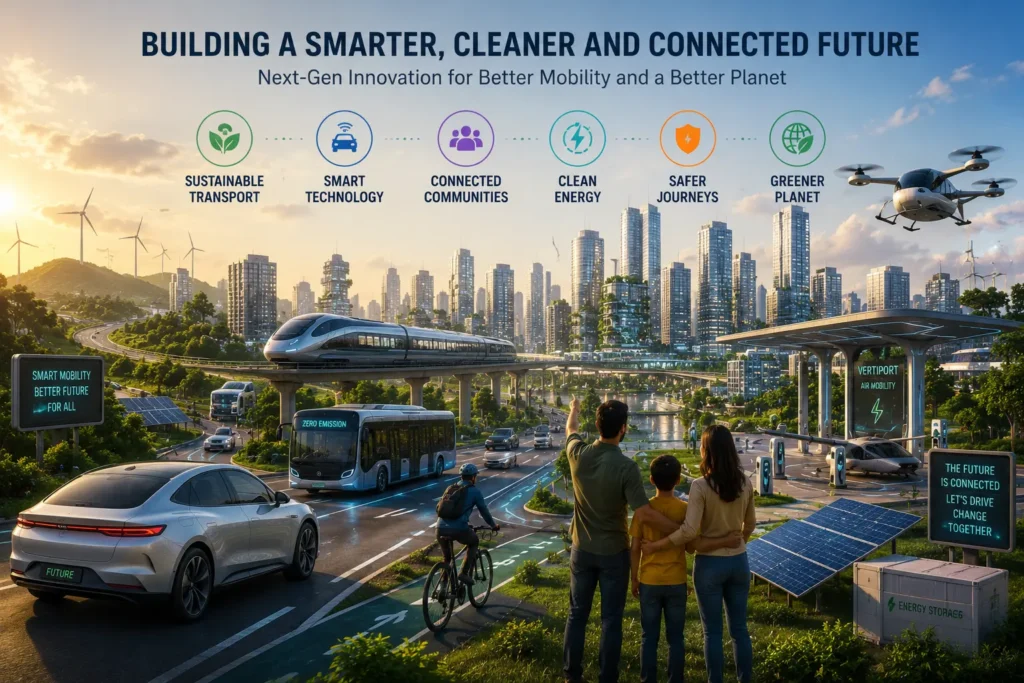
The future of transportation will not develop in exactly the same way in every country. Different levels of infrastructure, vehicle ownership, urban density, government policy and consumer demand will shape how quickly new mobility technologies are adopted. However, the broad direction is becoming increasingly similar: electrification, digitalisation, connectivity and smarter use of transportation infrastructure are becoming central to mobility planning around the world.
India’s Growing Role in Future Mobility
India is entering this transformation from a unique position. The country has a large two-wheeler and three-wheeler market, rapidly expanding EV adoption, growing urban populations and increasing investment in charging infrastructure and public transportation.
Government policy is also placing greater emphasis on electric mobility and cleaner transportation. Recent Indian policy discussions have highlighted public and shared mobility, zero-emission vehicles, rail and clean fuels as important components of the country’s longer-term transportation transition.
For India, the future of mobility therefore cannot simply mean replacing every petrol or diesel car with an electric car. A successful transition will also require better public transportation, charging networks, intelligent traffic management, safer roads and efficient last-mile connectivity.
How Global Markets Are Evolving
Other major markets are moving along their own paths. China remains a major force in EV adoption and vehicle manufacturing, while Europe is pushing electrification through emissions regulations and the United States is becoming an important market for autonomous mobility services. The IEA’s 2026 analysis shows that electric cars accounted for around one-quarter of global new-car sales in 2025, while commercial electric robotaxi services were already operating in more than 20 cities.
Emerging markets are also becoming important contributors to the next stage of mobility. As electric vehicles become more affordable and charging networks expand, technologies that were initially concentrated in wealthier markets can gradually reach a wider range of consumers.
One Future, Different Mobility Models
The global future of transportation is therefore unlikely to follow a single formula.
Some cities may rely heavily on electric public transport and shared mobility. Others may adopt autonomous services, connected vehicles and smart infrastructure more quickly. In markets such as India, electric two-wheelers, three-wheelers, buses and affordable EVs may have a larger impact than expensive autonomous cars.
What connects these different approaches is the growing importance of smart mobility solutions. Vehicles, energy systems, roads, public transport and digital platforms are increasingly being considered as parts of one connected transportation ecosystem.
This creates an opportunity for India and other emerging markets to develop mobility solutions suited to their own needs rather than simply copying systems developed elsewhere. The most successful next-gen innovation will ultimately be technology that is not only advanced, but also affordable, scalable, safe and practical for the people who use it.
Challenges That Could Shape the Future of Transportation
The future of transportation offers significant opportunities, but technological progress alone will not determine how quickly new mobility systems become mainstream. Cost, infrastructure, regulation, cybersecurity, safety and public acceptance will all influence the pace of adoption.
Infrastructure and Investment
Many emerging transportation technologies require substantial supporting infrastructure. Electric vehicles need reliable charging networks, autonomous vehicles require suitable digital and road infrastructure, and connected mobility depends on communication systems that can exchange information reliably.
For developing markets such as India, the challenge is particularly important because transportation infrastructure must expand alongside rapidly growing urban demand. AI-based traffic management, sensor networks and real-time monitoring are already being introduced across parts of India’s infrastructure ecosystem, but scaling these systems requires investment and reliable digital infrastructure.
Cost and Accessibility
Advanced technology can initially make vehicles and mobility services more expensive. Premium EVs, sophisticated sensors, high-performance computing systems and advanced software can increase development and ownership costs.
For next-gen innovation to have a broad impact, technologies need to become more affordable and scalable. This is particularly important in markets where two-wheelers, public transport and affordable vehicles represent a large share of everyday mobility.
Safety and Regulation
Autonomous driving presents another major challenge. A vehicle capable of operating without continuous human control must demonstrate reliable performance across different roads, weather conditions and unexpected situations. Regulators also need clear frameworks covering testing, liability, cybersecurity and passenger safety.
The continued development of autonomous vehicles shows why expectations need to remain realistic. Although commercial robotaxi services are expanding, highly automated transportation remains dependent on defined operating conditions and regulatory approval.
Cybersecurity and Data Privacy
As vehicles become increasingly connected, cybersecurity becomes an essential part of transportation technology. Modern vehicles can communicate with cloud services, mobile applications, charging networks and other digital systems. A larger digital attack surface means manufacturers and mobility providers need strong security measures throughout a vehicle’s lifecycle.
Data privacy is another consideration. Connected vehicles can generate information about journeys, vehicle usage and user behaviour. Responsible data collection, clear privacy policies and appropriate security measures will therefore become increasingly important.
Public Acceptance
Technology can only transform transportation when people are willing to use it. Consumers may have concerns about autonomous driving, data collection, reliability, charging availability or the cost of new vehicles.
Building public confidence will require transparent communication, real-world testing, strong safety standards and technologies that provide clear practical benefits.
Ultimately, the future of transportation will not be determined by the most futuristic technology alone. The technologies that succeed will be those that can combine safety, affordability, reliability, sustainability and convenience while fitting into the infrastructure and regulations of the markets where they are deployed.
Read More: Connected & Clean
What the Future of Transportation Could Look Like
The future of transportation is likely to be less about one revolutionary invention and more about several technologies working together. Electric powertrains, artificial intelligence, connected vehicles, advanced driver assistance, autonomous systems and smart infrastructure are gradually converging into a more integrated mobility ecosystem.
By 2026, this transition is already visible. Global electric-car sales exceeded 20 million in 2025, while manufacturers are increasingly developing vehicles around more centralised software architectures. Driverless electric taxi services are also operating commercially in more than 20 cities, showing that some technologies once considered futuristic are already entering real-world transportation.
From Cars to Connected Mobility Systems
In the future, a vehicle may increasingly function as one component of a larger transportation network. Instead of operating independently, connected vehicles could exchange information with infrastructure, other vehicles, cloud services and mobility platforms.
This could enable more intelligent route planning, traffic management, charging optimisation and driver assistance. Software-defined vehicles could also receive improvements through over-the-air updates, allowing manufacturers to introduce new functions without requiring every improvement to be installed physically at a workshop.
Transportation Could Become More Personalised
Artificial intelligence could make mobility increasingly responsive to individual needs. Vehicles may learn preferred routes, optimise energy consumption and provide more personalised assistance, while mobility platforms could combine different transport options according to factors such as time, cost and availability.
However, this does not necessarily mean every vehicle will become fully autonomous. Different markets will adopt different levels of automation depending on infrastructure, regulation, economics and consumer acceptance.
Electrification Will Remain Central
Electric mobility is likely to remain one of the strongest forces shaping transportation over the next decade. The IEA projects global electric-car sales to reach around 23 million in 2026, representing approximately 28% of total car sales.
At the same time, advances in batteries, charging technology and vehicle software could make EVs increasingly capable and competitive. Electric trucks, buses and two- and three-wheelers will also contribute to the broader transition beyond passenger cars.
A More Integrated Transportation Ecosystem
Ultimately, the next-gen innovation shaping transportation will be about integration.
A future journey could involve:
Electric vehicle → smart charging → connected road infrastructure → AI-powered traffic management → public transport or shared mobility → autonomous services
rather than relying on one privately owned vehicle for every part of a journey.
This does not mean every city will adopt the same model. India’s future mobility system may look very different from that of the United States, Europe or Southeast Asia. But the underlying direction is similar: cleaner power, greater connectivity, more intelligent software and better integration between different forms of transportation.
The most successful technologies will therefore not necessarily be the most futuristic ones. They will be the solutions that can deliver measurable improvements in safety, affordability, efficiency, sustainability and convenience at a scale that people and cities can realistically adopt.
What Will Define Next-Gen Innovation in the Years Ahead?
The next stage of the future of transportation will be defined less by a single breakthrough and more by how different technologies work together. Electric powertrains, AI, connected vehicles, software-defined architectures, autonomous systems and smart infrastructure are increasingly becoming parts of the same mobility ecosystem. Recent industry research also points to AI, autonomous vehicles, electrification and infrastructure modernisation as major themes shaping transportation in 2026 and beyond.
Integration Will Matter More Than Individual Technologies
A genuinely intelligent transportation system could combine several technologies at once. An electric vehicle might use AI to optimise its route and energy consumption, communicate with surrounding infrastructure, receive software updates remotely and automatically select an efficient charging stop.
Similarly, an autonomous vehicle could depend on far more than its onboard sensors. It may need connectivity, mapping, cloud computing, charging infrastructure and clearly defined operating conditions to function reliably.
This means next-gen innovation will increasingly be about integration rather than simply adding more features to individual vehicles.
AI Will Become More Embedded in Mobility
AI is likely to influence transportation well beyond autonomous driving. It can support traffic forecasting, route optimisation, fleet management, predictive maintenance and intelligent infrastructure. Emerging research is also exploring AI systems that can assist transportation operators with interpreting complex information and coordinating specialist systems, although safety-critical decisions still require independently verifiable controls and appropriate human accountability.
For consumers, much of this change may happen quietly. Instead of seeing AI as a separate feature, drivers may simply experience smarter navigation, better energy management, more capable assistance systems and increasingly personalised vehicle software.
The Transition Will Be Gradual
Despite rapid technological development, the future of transportation will not arrive everywhere at the same time. Different countries and cities will adopt technologies according to their infrastructure, regulations, economics and transportation needs.
Some markets may move quickly toward electric and autonomous shared mobility, while others may see the biggest benefits from electric two-wheelers, buses, improved public transportation or smarter traffic management.
That is why the most successful transportation technologies will likely be those that are practical, scalable, safe and affordable, rather than simply the most futuristic.
The coming years will therefore be less about replacing today’s transportation system overnight and more about gradually connecting its different parts into a cleaner, smarter and more efficient mobility network.
Frequently Asked Questions About the Future of Transportation
What is the future of transportation?
The future of transportation will be shaped by the convergence of electric mobility, artificial intelligence, connected vehicles, automation, smart infrastructure and sustainable transportation. Instead of relying on one technology, future mobility will increasingly connect vehicles, roads, energy systems and digital services.
How will AI change transportation?
AI in transportation can improve route planning, traffic management, predictive maintenance, driver assistance, fleet management and autonomous driving. AI is also becoming increasingly important in electric vehicles, where it can support energy management and automated-driving systems.
Will autonomous vehicles become mainstream?
Autonomous vehicles are likely to expand gradually rather than becoming fully driverless everywhere at once. Level 2 driver-assistance systems are already widespread, while Level 4 electric robotaxis are operating commercially in more than 20 cities. Fully autonomous Level 5 vehicles, however, are not currently considered close to widespread deployment.
What role will electric vehicles play in the future of transportation?
Electric vehicles are expected to remain one of the most important technologies in future mobility. Global electric-car sales exceeded 20 million in 2025, and the IEA expects sales to reach around 23 million in 2026. Electric two-wheelers, three-wheelers, buses and trucks are also contributing to the wider electrification of transportation.
What are smart mobility solutions?
Smart mobility solutions use technologies such as connectivity, real-time data, AI and digital platforms to make transportation more efficient and convenient. Examples include intelligent traffic systems, connected public transport, shared mobility platforms, smart parking and integrated journey planning.
What is connected mobility?
Connected mobility refers to transportation systems in which vehicles, infrastructure, mobility services and digital platforms can exchange information. Technologies such as vehicle-to-vehicle and vehicle-to-infrastructure communication can help support traffic management, safety and more efficient journeys.
What is a software-defined vehicle?
A software-defined vehicle is a vehicle in which software and centralised computing play a major role in controlling and improving vehicle functions. These vehicles can support over-the-air updates and allow manufacturers to introduce software improvements during the vehicle’s ownership. Software-defined architectures are becoming increasingly important in modern EVs.
How will transportation become more sustainable?
Sustainable transportation will involve more than replacing petrol and diesel cars with EVs. It will also include electric public transport, efficient batteries, renewable-energy integration, shared mobility, better public transportation and smarter urban planning. The combination of these approaches can reduce energy consumption, emissions and unnecessary vehicle use.
What transportation technologies should we watch in the coming years?
Some of the most important areas to watch include advanced batteries, ultra-fast charging, vehicle-to-grid technology, AI-powered mobility, software-defined vehicles, autonomous driving, connected infrastructure and electric commercial vehicles. Several of these technologies are already moving from development into real-world deployment.
How will the future of transportation affect India?
India’s mobility transition is likely to involve a combination of electric two-wheelers and three-wheelers, electric cars and buses, improved public transport, charging infrastructure, connected vehicles and smarter traffic management. Because two-wheelers play such an important role in India’s vehicle fleet, their electrification could be particularly significant.
Will every future car be autonomous and electric?
Not necessarily. The transition will happen at different speeds across countries and vehicle segments. Electric vehicles are expanding rapidly, but internal-combustion and hybrid vehicles will continue to exist for years. Similarly, autonomous technology will initially remain concentrated in specific vehicles, locations and operating conditions rather than immediately becoming universal.
The most realistic vision of next-gen innovation is therefore a gradual transition toward transportation that is cleaner, more connected, safer, more intelligent and more efficient.
Conclusion: The Future of Transportation Is Becoming Connected, Electric and Intelligent
The future of transportation is already taking shape. Electric vehicles are expanding beyond early adopters, software is becoming a central part of modern vehicles, AI is being integrated into mobility systems, and autonomous services are moving from controlled trials into commercial operations in selected markets.
However, the transformation will not happen through one technology alone. The real impact of next-gen innovation will come from the combination of electric powertrains, advanced batteries, connected vehicles, AI, smart infrastructure, public transport and shared mobility.
For India, the opportunity is particularly significant. The country’s mobility future will likely involve a combination of electric two-wheelers and three-wheelers, EVs, public transportation, connected infrastructure and intelligent traffic systems rather than a single universal solution.
Globally, the direction is similar. Transportation is moving toward a system that is cleaner, more connected, software-driven and increasingly intelligent. Some technologies, such as EVs and advanced driver assistance, are already becoming mainstream, while autonomous mobility and other emerging technologies will continue developing at different speeds across different markets.
The most important question is therefore not simply what will the future vehicle look like? It is how effectively vehicles, people, infrastructure, energy and technology can work together.
As this transition continues, the companies and cities that successfully combine innovation with safety, affordability, sustainability and practical usability will help define the next era of mobility.
Ride And Tech — Where Ride Meets Tech.
Drive Smarter. Ride Smarter.
Copyright (c) Ride And Tech. All rights reserved.

2 thoughts on “Next-Gen Innovation: The Future of Transportation in 2026 and Beyond”