


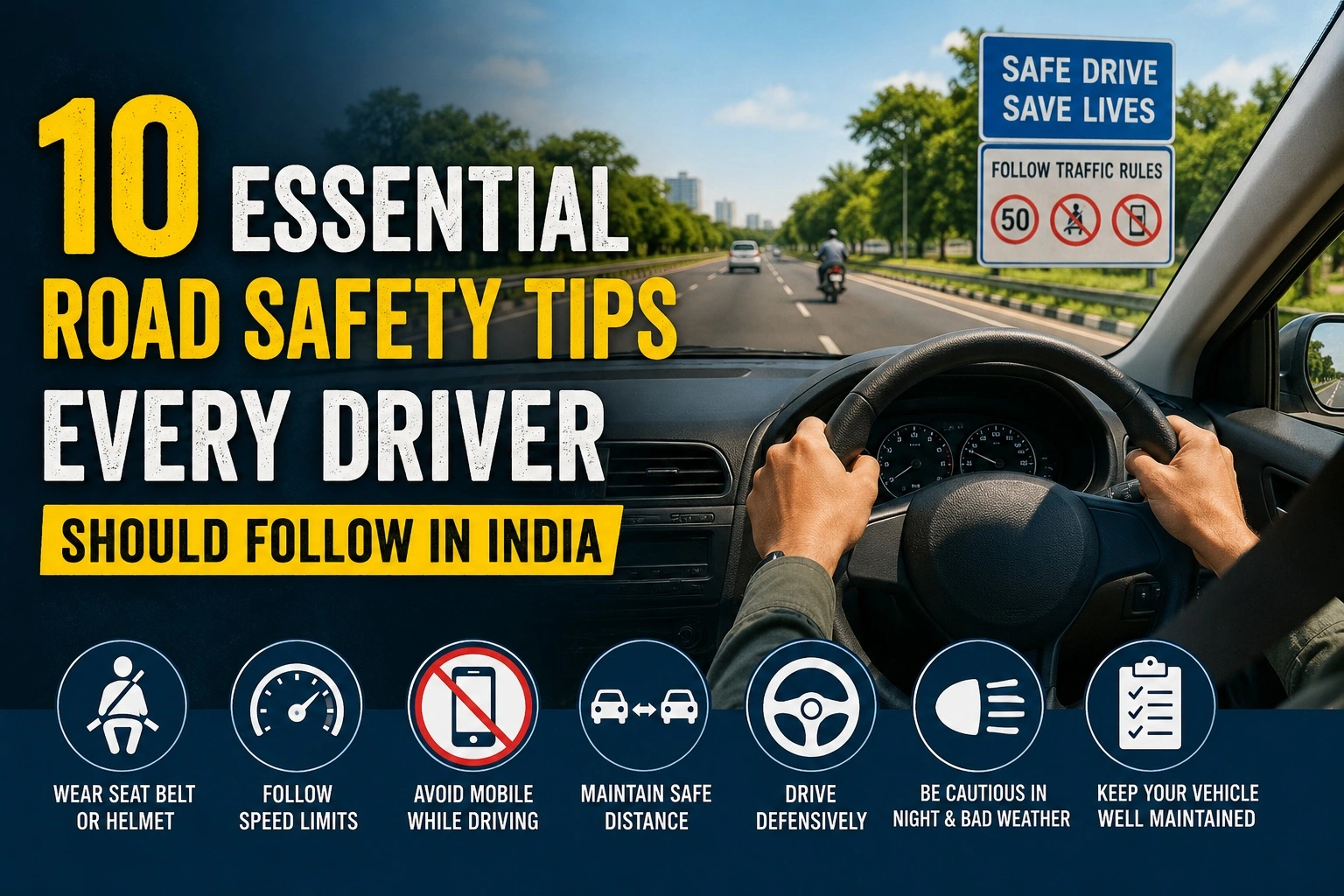
Road safety is a shared responsibility that goes beyond simply following traffic rules. Every decision made behind the wheel or on a motorcycle—from wearing a seat belt or helmet to maintaining a safe following distance—plays a vital role in preventing accidents and protecting lives. By adopting responsible driving habits and staying alert on the road, motorists can significantly reduce the risk of collisions while ensuring a safer journey for themselves and others.
Following practical road safety tips is especially important in India, where diverse traffic conditions, unpredictable road users, changing weather, and heavy congestion demand constant attention. Whether you’re commuting in the city, travelling on highways, or planning a long road trip, understanding safe driving practices can help you avoid dangerous situations and respond more effectively to unexpected challenges.
In this guide, Ride And Tech shares 10 essential road safety tips that every driver should follow to improve safety, reduce risks, and build responsible driving habits. These simple yet effective practices are suitable for both new and experienced drivers, making every journey safer and more enjoyable.
Why Road Safety Matters More Than Ever
Road safety has become more important than ever as the number of vehicles on Indian roads continues to grow. With increasing traffic, expanding highway networks, and a mix of cars, motorcycles, commercial vehicles, cyclists, and pedestrians sharing the same roads, drivers face new challenges every day. Following essential road safety tips not only helps prevent accidents but also protects passengers, pedestrians, and other road users.
Many road accidents are caused by avoidable factors such as speeding, distracted driving, ignoring traffic signals, unsafe overtaking, driving under the influence, and poor vehicle maintenance. While road conditions and unexpected situations can sometimes contribute to accidents, adopting responsible driving habits can significantly reduce the chances of serious incidents.
Road safety is not just about obeying traffic laws—it’s about staying alert, anticipating potential hazards, and making informed decisions behind the wheel. Simple actions like maintaining a safe following distance, wearing a seat belt, using indicators correctly, and avoiding mobile phone distractions can make a substantial difference in preventing collisions.
Whether you drive daily in busy city traffic or travel long distances on highways, practising safe driving habits creates a safer environment for everyone. By following the road safety tips covered in this guide, you can improve your confidence on the road while contributing to a safer driving culture across India.
10 Essential Road Safety Tips Every Driver Should Follow
1. Always Wear Your Seat Belt or Helmet
One of the simplest yet most effective road safety tips is to always wear a seat belt while driving or riding in a car. Seat belts significantly reduce the risk of serious injuries during sudden braking or collisions by keeping occupants securely in their seats. For motorcyclists and pillion riders, wearing a certified helmet is equally important, as it provides vital protection against head injuries. Before starting any journey—whether it’s a short city commute or a long highway trip—make sure every passenger is properly buckled up or wearing a helmet.
2. Follow Speed Limits at All Times
Speed limits are designed to match road conditions and traffic flow, helping drivers maintain better control of their vehicles. Driving above the prescribed limit reduces reaction time and increases both the likelihood and severity of accidents. Adapting your speed to weather conditions, traffic density, and road surfaces is one of the most effective safe driving habits for preventing collisions.
3. Avoid Using Mobile Phones While Driving
Distracted driving is a major cause of road accidents. Using a mobile phone to text, browse, or even make handheld calls takes your attention away from the road for critical moments. If you need to answer an urgent call, park your vehicle safely before using your phone. Using hands-free systems responsibly and keeping your focus on driving can greatly improve overall road safety.
4. Maintain a Safe Following Distance
Keeping a safe distance from the vehicle ahead gives you enough time to react in case of sudden braking or unexpected obstacles. Tailgating reduces your ability to avoid collisions and increases the risk of rear-end accidents. A good rule is to maintain at least a three-second gap in normal conditions and increase that distance during rain, fog, or heavy traffic.
5. Never Drive Under the Influence of Alcohol or Drugs
Driving under the influence of alcohol or drugs significantly impairs judgment, reaction time, coordination, and decision-making abilities. Even a small amount of alcohol can affect your concentration and increase the risk of accidents. If you have consumed alcohol or medication that may cause drowsiness, arrange for a designated driver, use public transport, or book a taxi instead. Responsible decisions before driving can save lives.
6. Obey Traffic Signals and Road Signs
Traffic signals, speed limits, and road signs are designed to keep traffic flowing safely and reduce the risk of accidents. Ignoring red lights, stop signs, or lane markings can lead to dangerous situations for both drivers and pedestrians. Following traffic rules consistently is one of the most important road safety tips, helping create a safer and more predictable driving environment for everyone.
7. Keep Your Vehicle Well Maintained
A well-maintained vehicle is less likely to experience unexpected mechanical failures that could lead to accidents. Regularly inspect your tyres, brakes, lights, windshield wipers, engine oil, coolant, and battery to ensure everything is functioning properly. Proper maintenance not only improves safety but also enhances fuel efficiency and extends the lifespan of your vehicle.
8. Stay Alert and Avoid Driver Fatigue
Fatigue can be just as dangerous as distracted driving. Long hours behind the wheel reduce concentration, slow reaction times, and increase the likelihood of making mistakes. If you’re planning a long journey, take regular breaks every two to three hours, stay hydrated, and avoid driving when feeling sleepy. If fatigue sets in, stop at a safe location and rest before continuing your trip.
9. Drive Defensively and Anticipate Hazards
Defensive driving is one of the most valuable road safety tips every driver should develop. Instead of assuming that other road users will always follow traffic rules, stay alert and anticipate unexpected situations such as sudden lane changes, pedestrians crossing the road, cyclists, or vehicles braking abruptly. Always use your mirrors, check blind spots before changing lanes, and maintain enough space to react safely. A calm and defensive approach helps reduce risks and improves your ability to handle challenging road conditions.
10. Be Extra Cautious During Bad Weather and Night Driving
Driving during heavy rain, fog, or at night requires additional care and attention. Reduced visibility and slippery roads can significantly increase the risk of accidents. Slow down, switch on your headlights when necessary, maintain a greater following distance, and avoid sudden braking or sharp steering movements. Ensure that your headlights, tail lights, and windshield wipers are functioning properly before starting your journey. By adjusting your driving style to suit weather and visibility conditions, you can greatly improve your safety and the safety of other road users.
Common Road Safety Mistakes to Avoid
Even experienced drivers can develop habits that increase the risk of accidents. Recognising and avoiding these common mistakes is just as important as following road safety tips. Here are some behaviours every driver should avoid:
- Overspeeding: Driving above the speed limit reduces reaction time and increases the severity of accidents.
- Ignoring Seat Belts or Helmets: Failing to wear essential safety gear can lead to serious injuries during a collision.
- Using Mobile Phones While Driving: Looking away from the road for even a few seconds can have dangerous consequences.
- Driving While Fatigued: Drowsiness affects concentration and reaction time, making long journeys more hazardous.
- Unsafe Overtaking: Overtaking without sufficient visibility or space can result in head-on collisions.
- Skipping Vehicle Maintenance: Worn tyres, faulty brakes, or malfunctioning lights can compromise vehicle safety.
- Ignoring Weather Conditions: Failing to adjust speed and driving style during rain, fog, or poor visibility increases accident risks.
Avoiding these common mistakes, combined with practising responsible driving habits, can significantly improve road safety for everyone.
Ride And Tech Road Safety Checklist
Before every journey, take a few moments to review this simple Ride And Tech Road Safety Checklist. These essential checks can help reduce risks and make every drive safer.
Before You Start Driving
- Wear your seat belt or certified helmet.
- Check that your mirrors are properly adjusted.
- Ensure your headlights, indicators, and brake lights are working.
- Inspect tyre pressure and tyre condition.
- Carry your driving licence, vehicle registration, insurance, and PUC certificate.
- Plan your route, especially for long-distance journeys.
While Driving
- Follow speed limits and traffic rules.
- Maintain a safe following distance.
- Avoid using your mobile phone while driving.
- Use indicators before changing lanes or turning.
- Stay alert and watch for pedestrians, cyclists, and other road users.
- Drive defensively and remain patient in heavy traffic.
After Reaching Your Destination
- Park only in designated and safe areas.
- Switch off all lights and electrical accessories.
- Lock your vehicle and avoid leaving valuables in plain sight.
- If you’ve noticed unusual noises or warning lights during the trip, schedule a vehicle inspection before your next drive.
Making this checklist part of your routine can help you develop safer driving habits while reducing the chances of unexpected incidents on the road.
Conclusion
Practising good driving habits isn’t just about avoiding traffic fines—it’s about protecting yourself, your passengers, and everyone else on the road. By following these road safety tips, maintaining your vehicle, staying alert, and respecting traffic regulations, you can significantly reduce the risk of accidents and enjoy a safer driving experience.
Road safety is a continuous responsibility that begins before you start your engine and continues until you reach your destination. Whether you’re a new driver or have years of experience behind the wheel, small improvements in your daily driving habits can make a lasting difference.
As the automotive industry continues to evolve, Ride And Tech remains your trusted source for the latest automotive news, emerging technologies, vehicle reviews, buying guides, maintenance tips, and future mobility trends. Follow Ride And Tech to stay informed, make smarter automotive decisions, and experience the future of mobility with confidence.
Copyright (c) Ride And Tech. All rights reserved.

1 thought on “10 Essential Road Safety Tips Every Driver Should Follow in India”