


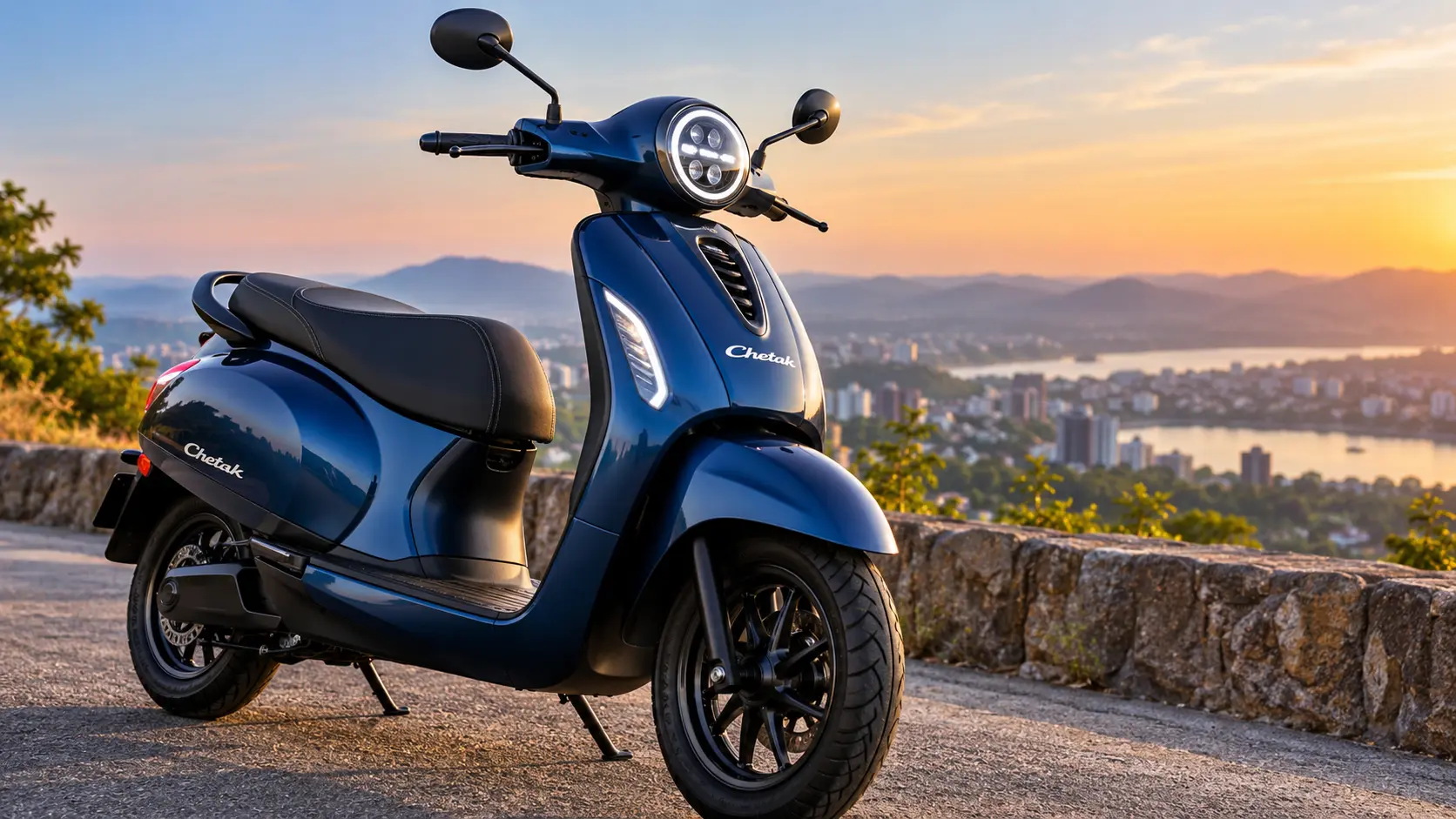
The Bajaj Chetak has become an important name in India’s electric scooter market, combining a familiar brand identity with an all-electric powertrain and a solid-body design. Its growing presence also reflects the wider shift towards electric two-wheelers: Bajaj recorded 48,383 Chetak retail sales in September 2026, according to recently reported VAHAN data.
However, choosing an electric scooter involves more than looking at sales figures or the range printed in a brochure. Buyers need to consider daily travel distance, charging access, riding performance, storage, features and the price of the particular variant they plan to purchase.
In this Bajaj Chetak review, we examine the scooter’s current C Series lineup, its published specifications, everyday usability and the factors that matter before buying. One important distinction throughout this review is that manufacturer-claimed range is not the same as independently measured real-world range; actual results depend on riding conditions, speed, load, terrain and other factors.
Bajaj Chetak Review: Overview and Key Highlights
Bajaj has reorganised its electric scooter range under the C Series nomenclature, covering the C 25, C 30 and C 35 families. These models cater to different needs, from affordable urban commuting to greater range, higher speed and more advanced equipment.
The main appeal is a combination of metal-body construction, conventional scooter practicality and electric running. But buyers should compare individual variants carefully, because battery capacity, claimed range, top speed, storage, displays and connectivity can differ significantly across the lineup.
Read More: Mahindra XEV 9e Review
Design and Build Quality: A Familiar Scooter with an Electric Identity
One of the Chetak’s distinguishing characteristics is its metal-body construction, which gives it a different positioning from electric scooters that rely more heavily on plastic body panels. The design combines rounded surfaces, a clean front profile and contemporary lighting elements rather than adopting an aggressively futuristic appearance. This should appeal to buyers who prefer a conventional scooter silhouette with modern electric technology.
The Chetak’s compact proportions are also relevant for Indian cities, where riders frequently navigate crowded streets, narrow lanes and limited parking spaces. However, design alone cannot establish how easy a scooter is to handle at low speeds or move around while parked. Prospective buyers should check its weight, steering feel, seat height and turning behaviour during a test ride.
Build quality is an important consideration for an electric scooter intended for regular commuting. Even so, long-term durability depends on more than the outer body: switches, suspension components, brakes, electrical connectors, battery protection and after-sales support all influence ownership experience.
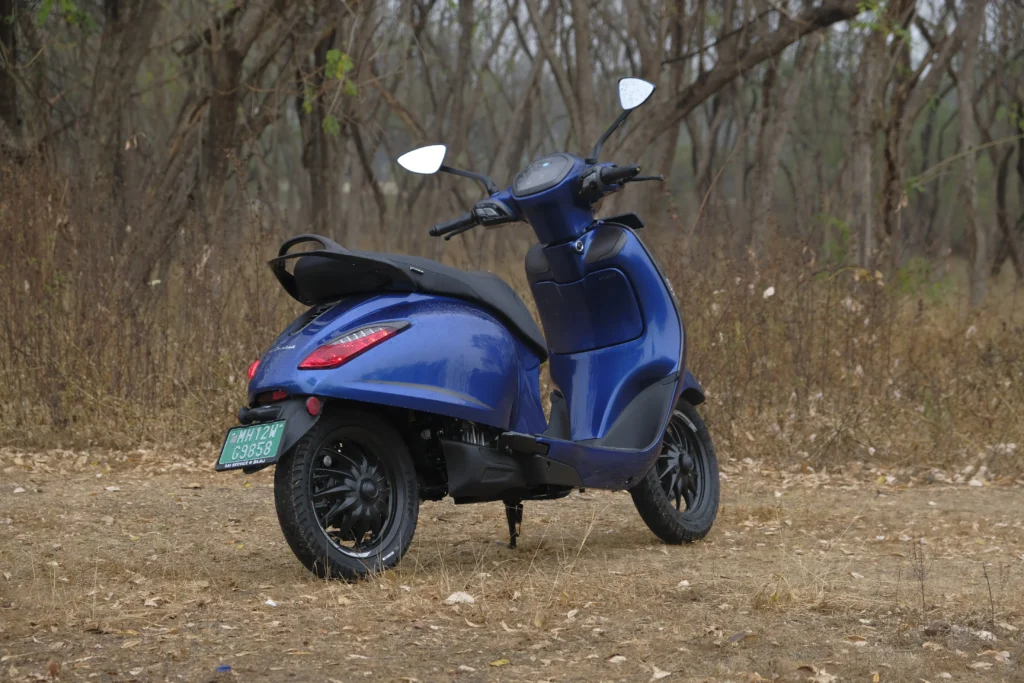
Bajaj Chetak Range and Battery Capacity
Range is among the most important factors when choosing an electric scooter. The current Chetak C Series offers different battery capacities and claimed ranges, allowing buyers to select a variant based on their commute and budget.
| Variant | Battery capacity | Claimed range | Top speed |
|---|---|---|---|
| C 2501 | 2.5 kWh | 113 km | 60 km/h |
| C 3001 | 3.0 kWh | 127 km | 70 km/h |
| C 3501 | 3.5 kWh | 153 km | 80 km/h |
Manufacturer-published figures following the April 2026 C Series updates. Verify the exact variant and specification on the official website before purchase.
The C 2501 is aimed at buyers whose daily travel is largely limited to city roads, while the C 3001 offers a larger battery and a higher claimed range. The C 3501 sits at the top of this comparison, with the largest battery and the highest stated top speed. A bigger battery can provide greater flexibility, but it also makes the price and charging requirements of each variant worth comparing carefully.
What Real-World Range Can You Expect?
The figures in the table are manufacturer-claimed ranges, not a guarantee of how far every owner will travel on a charge. Actual range can vary with average speed, traffic conditions, rider and passenger weight, tyre pressure, road gradients, riding mode, temperature and battery condition.
For example, someone travelling at moderate speeds through city traffic may achieve a different result from a rider who regularly uses faster roads or carries a passenger. Frequent acceleration, sustained high speeds and heavy loads can increase energy consumption, so buyers should avoid planning their commute around the full claimed range.
A sensible buying approach is to leave a comfortable battery reserve for unexpected journeys. If your daily commute is long or you cannot charge at work, consider the larger-battery variant only after assessing its price and charging convenience. The best choice is the scooter that comfortably covers your regular travel, rather than the one with the largest headline range.
Performance and Riding Experience
The Chetak range is designed primarily for urban commuting rather than high-speed touring. Its electric powertrain eliminates conventional gear changes, while the updated lineup offers top speeds ranging from 60 km/h on the C 2501 to 80 km/h on the C 3501.
For city use, this type of performance can suit everyday trips to work, college, shops and nearby destinations. Acceleration from a standstill, smooth throttle response and manageable low-speed behaviour are particularly important in congested traffic, where riders rarely maintain a constant speed for long.
However, a published top-speed figure does not tell the whole story. Motor response, acceleration under load, stability on uneven roads and performance with a passenger should all be evaluated during a test ride. We have not independently tested the current Chetak variants, so we cannot claim measured acceleration times or present a personal riding impression as a verified result.
Ride Modes and Braking
Bajaj’s April 2026 update lists Eco and Sports riding modes as standard on the C 35 and C 30 series, along with hill-hold assist. These features can help riders tailor the scooter’s response and manage starts on inclines, although their practical benefit depends on the route and riding conditions.
The C 2501 has different equipment arrangements, and some features are available through the optional TecPac. Buyers should check the exact variant’s equipment list rather than assuming that every Chetak includes the same functions. Braking hardware also varies by model, making it important to inspect the specifications and test the brake feel before deciding.
Charging Time and Everyday Convenience
Charging convenience can make as much difference as battery range. The Chetak is intended for routine electric commuting, so buyers should consider whether they can charge at home, whether a suitable electrical connection is available and how long they can leave the scooter plugged in.
The manufacturer’s updated specifications list the following approximate charging times from 0% to 80%:
| Variant | Published 0–80% charging time |
|---|---|
| C 2501 | Around 2 hours 25 minutes |
| C 3001 | 2 hours 55 minutes |
| C 3501 | 3 hours |
These figures are based on the manufacturer’s April 2026 update and refer to charging up to 80%, not a complete 0–100% charge. Actual charging time may vary depending on the charger, power supply, battery temperature and charging conditions.
For people who can charge overnight, plugging in after the day’s commute may be more convenient than making separate trips to a public charging station. Those living in apartments should check permission, parking arrangements and electrical access before buying an electric scooter. If you depend entirely on public charging, investigate compatible charging facilities in your regular travel area first.
Features, Display and Connectivity
Equipment varies considerably across the Chetak lineup. The entry-level C 2501 has a colour LCD display, while the C 3501 offers a touchscreen TFT display and integrated Google Maps navigation through the Chetak app. Other variants receive different display and connectivity arrangements.
The updated C Series also includes features such as reverse assistance, while the higher variants offer additional connectivity and software capabilities. Over-the-air updates are listed for the C 3501 and C 3502, allowing supported software improvements to be delivered without a conventional service-centre visit.
The optional TecPac unlocks additional functions on eligible variants, including features such as music control, guide-me-home lighting and navigation or security-related capabilities depending on the model. Because feature availability differs, buyers should confirm the package price, supported functions and any subscription or app requirements with a dealer before treating a feature as included.
For everyday use, the most valuable features are those that genuinely improve the commute. A clear display, easy-to-read battery status, useful navigation and dependable connectivity can make ownership more convenient, but advanced software features should not outweigh range, comfort, charging access and service support.
Storage and Practicality for Indian Families
Storage is an important consideration for an electric scooter that may be used for groceries, work bags, helmets and everyday errands. Bajaj’s updated specifications list 25 litres of under-seat storage for the C 2501 and 35 litres for the C 30 and C 35 variants.
That difference can influence which version is most suitable for your household. Riders who regularly carry shopping or work equipment may appreciate the additional space, while buyers with shorter commutes and lighter storage needs may be comfortable with the smaller variant.
Still, storage volume alone does not establish how practical the compartment is. Check whether your helmet fits, how much room remains for other items and whether the opening is convenient for your routine. You should also test the seat comfort, pillion space, footboard room and ease of mounting before making a decision.
Bajaj Chetak Price in India
The Chetak’s price depends on the variant, city, applicable offers and on-road charges. The official Chetak website lists different starting prices for the C 25, C 30 and C 35 families; the figures displayed online may be tied to a specific location and should not be treated as a universal on-road price.
For reference, the official Bengaluru listings available during research showed the C 2501 at approximately ₹99,802 and the C 3001 at ₹1,14,270 ex-showroom. The C 3501 was listed at a higher price, around ₹1.52 lakh ex-showroom. Confirm current pricing with the official website or a local dealership before publishing a final buying calculation, as prices and offers can change.
The ex-showroom price is only the starting point. The final on-road amount may include registration, insurance and other applicable charges, while any local EV incentives or promotional offers depend on the buyer’s location and eligibility. Ask for a written quotation for your chosen variant so that you can compare the actual purchase cost with competing electric scooters.
Running Costs: Is the Bajaj Chetak Cheaper Than a Petrol Scooter?
One potential advantage of electric scooters is lower energy cost per kilometre compared with petrol-powered alternatives. But the actual saving depends on how much you ride, the electricity tariff, the scooter’s real-world energy consumption and the price you pay for charging.
A simple way to estimate the electricity cost is to divide the amount paid for charging by the distance travelled. For example, if a full charge costs ₹25 and the scooter covers 100 km under your actual usage, the energy cost works out to ₹0.25 per kilometre. This is an illustrative calculation, not a verified Chetak consumption result; the real cost will vary with the electricity rate and charging losses.
To compare it fairly with a petrol scooter, use your actual monthly kilometres and local petrol price. Include servicing, tyres, insurance and any battery warranty or replacement considerations rather than comparing fuel cost alone. Electric running costs can be attractive for frequent commuters, but a buyer who rides very little may take longer to recover a higher initial purchase price.
Bajaj Chetak Pros and Cons
What works in its favor
- Metal-body construction: A key differentiator for buyers who value a solid-feeling scooter design.
- Multiple battery options: The C 25, C 30 and C 35 ranges offer different combinations of claimed range and performance.
- Useful urban specifications: The range is designed around city commuting, with the higher variants offering a greater stated top speed.
- Practical storage: Up to 35 litres of under-seat storage is listed on the C 30 and C 35 variants.
- Modern equipment: Selected models offer touchscreen displays, navigation, ride modes, hill-hold assist and software updates.
What buyers should consider
- Claimed range is not real-world range: Your daily distance will depend on riding conditions and energy consumption.
- Variant differences matter: Displays, connectivity, braking hardware and other features are not identical across the lineup.
- Charging access is essential: Home charging arrangements may be difficult for some apartment residents.
- Price needs local verification: Ex-showroom prices, offers and on-road costs vary by location.
- Test-ride checks are important: Comfort, low-speed handling, braking and passenger space should be evaluated personally.
Bajaj Chetak vs TVS iQube: Which Should You Consider?
The TVS iQube is one of the Chetak’s important competitors in India’s electric scooter market. Both are aimed at everyday mobility, so the decision should come down to the specific variant, total price, range requirements, features and local service convenience rather than brand reputation alone.
| Buying factor | Bajaj Chetak | TVS iQube |
|---|---|---|
| Design and body | Metal-body construction is a key highlight | Evaluate the body design and finish of the chosen variant |
| Range | Multiple C Series battery and range options | Range varies by iQube variant |
| Technology | Features vary by Chetak model and TecPac | Equipment varies by iQube model |
| Storage and comfort | Check storage capacity and seating on the exact variant | Check storage, seating and ergonomics on the exact variant |
| Ownership support | Check nearby Chetak service availability | Check nearby TVS EV service availability |
The table is a buying framework rather than a claim that one scooter wins every category. Compare current official specifications for the exact versions available in your city, then test-ride both if possible. Dealer support, warranty terms, charging arrangements and final on-road prices may matter more than a small difference in claimed range.
Read More: How to Check Car Coolant Level
Who Should Buy the Bajaj Chetak?
The Bajaj Chetak is worth considering for urban commuters who want an electric scooter for regular work trips, shopping and other daily journeys. It may also suit households looking to reduce petrol spending, provided they have convenient charging access and choose a variant whose range comfortably covers their routine.
The C 2501 is the more relevant starting point for buyers prioritising entry price and shorter city journeys. The C 3001 offers a middle ground with a larger battery and more storage, while the C 3501 is worth evaluating if you need the higher claimed range, faster top speed and additional technology features. These are comparisons based on published specifications, not a substitute for an individual test ride.
It may be less suitable for someone who regularly needs sustained high-speed travel, covers long distances without charging opportunities or lacks a practical place to charge at home or work. In those cases, consider your daily route and charging options carefully before committing to an electric scooter.
Frequently Asked Questions
1. What is the range of the Bajaj Chetak?
The published range varies by variant. Following the 2026 C Series updates, the C 2501 is listed at 113 km, the C 3001 at 127 km and the C 3501 at 153 km. These are manufacturer-claimed figures; real-world range varies with riding conditions.
2. What is the price of the Bajaj Chetak in India?
The price depends on the model, city and applicable offers. During this research, official Bengaluru listings showed the C 2501 at approximately ₹99,802 and the C 3001 at ₹1,14,270 ex-showroom. Confirm the current price and on-road quotation before buying.
3. How long does the Bajaj Chetak take to charge?
Published charging times from 0% to 80% are around 2 hours 25 minutes for the C 2501, 2 hours 55 minutes for the C 3001 and 3 hours for the C 3501. Actual charging time can vary with the charging setup and conditions.
4. Is the Bajaj Chetak suitable for daily commuting?
It can be a suitable option for city commuting if the selected variant covers your daily distance with a reserve and you have convenient charging access. Consider your route, passenger load, storage needs and local service support before choosing.
5. Is the Bajaj Chetak better than the TVS iQube?
Neither is automatically better for every buyer. Compare similarly priced variants for range, charging, comfort, features, warranty and local service support. A test ride and a written on-road quotation can help determine which offers better value for your usage.
6. Does every Bajaj Chetak variant include navigation and ride modes?
No. Feature availability varies by variant and optional package. The flagship C 3501 offers integrated Google Maps navigation through the Chetak app, while ride modes and hill-hold assist are listed as standard on the C 35 and C 30 series. Confirm the exact equipment list before booking.
Ride And Tech Verdict
The Bajaj Chetak has a clear place in India’s electric scooter market, with its metal-body construction, several battery options and a range of features spread across the C Series lineup. Its appeal lies in offering buyers a choice between a more affordable urban commuter and higher variants with greater claimed range, speed, storage and technology.
The most important decision is choosing the right variant for your needs. The C 2501 deserves consideration if upfront cost and shorter daily trips are your priorities; the C 3001 offers a middle option, while the C 3501 may be more suitable for buyers who value the additional range and equipment. None should be selected on claimed range alone.
Our recommendation: shortlist the Bajaj Chetak if you can charge conveniently and most of your journeys are within the scooter’s practical city range. Before buying, test-ride the exact variant, compare its on-road price with the TVS iQube and other alternatives, and confirm warranty, service access and feature availability. That is the most reliable way to decide whether the Chetak fits your daily routine and budget.
Ride And Tech — Where Ride Meets Tech.
Drive Smarter. Ride Smarter.
Copyright (c) Ride And Tech. All rights reserved.

2 thoughts on “Bajaj Chetak Review: Real-World Range, Performance & Price”