

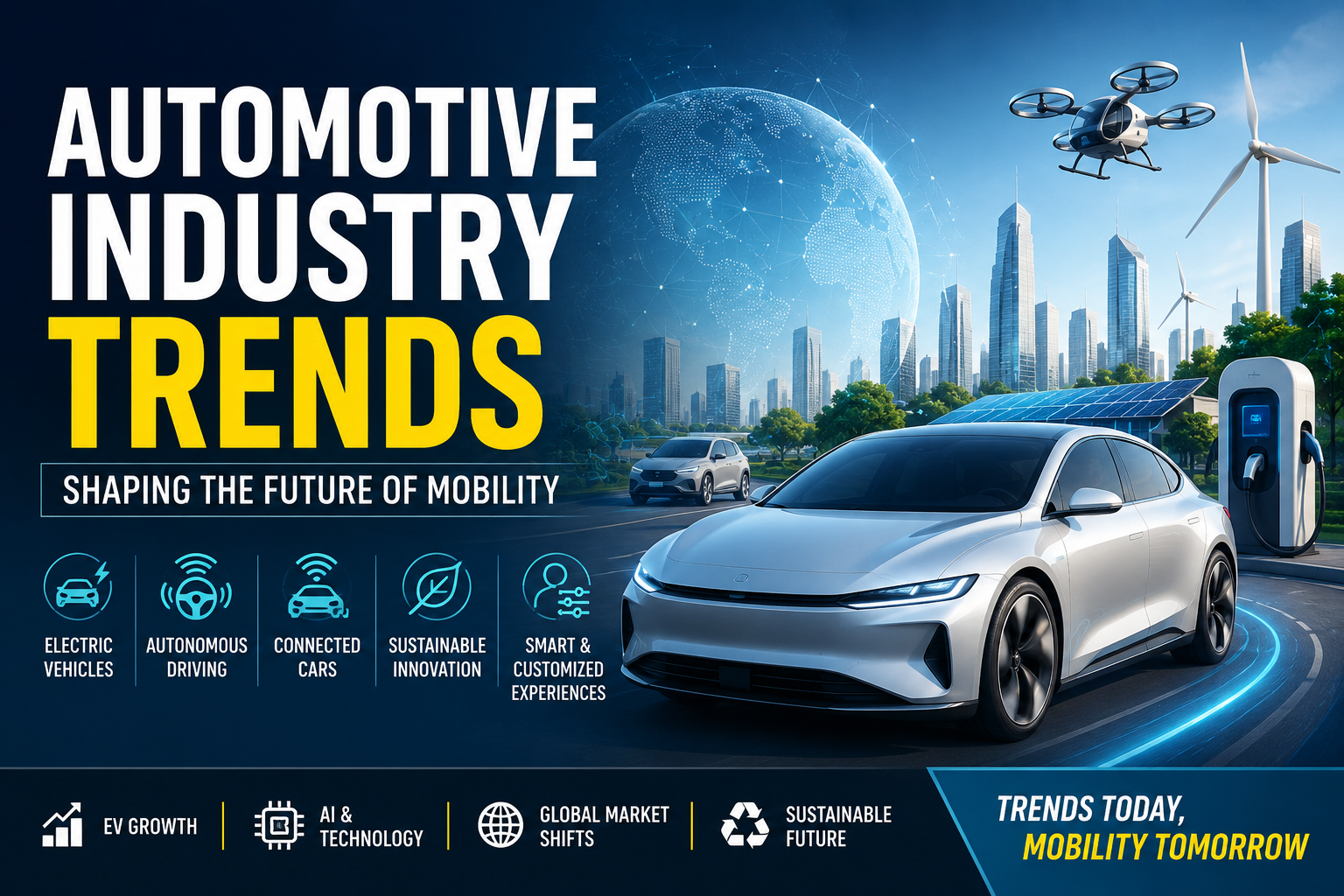
The automotive industry is evolving at an unprecedented pace, driven by technological innovation, sustainability, and changing consumer expectations. From the rapid adoption of electric vehicles and connected car technology to advancements in autonomous driving and smart mobility, today’s automotive industry trends are reshaping how people travel and interact with vehicles.
As manufacturers invest in cleaner energy, intelligent software, and advanced safety features, the future of mobility is becoming smarter, more efficient, and increasingly connected. Here’s a closer look at the key automotive industry trends transforming the global automotive landscape.
1. The Rise of Electric Vehicles
Electric vehicles (EVs) continue to be one of the most significant automotive industry trends worldwide. Governments, manufacturers, and consumers are increasingly embracing electric mobility as part of the transition toward cleaner transportation. Leading brands such as Tesla, BYD, Hyundai, Volkswagen, Tata Motors, and Mahindra are expanding their EV portfolios while investing heavily in advanced battery technology, faster charging solutions, and improved driving range. As charging infrastructure continues to grow and battery costs gradually decrease, electric vehicles are becoming a practical choice for everyday drivers, making sustainable mobility more accessible than ever before.
2. Autonomous Vehicles Take Center Stage
Autonomous driving technology is steadily advancing as manufacturers integrate artificial intelligence, advanced sensors, radar, cameras, and LiDAR systems into modern vehicles. While fully self-driving cars are still under development in many regions, advanced driver assistance systems (ADAS) have become increasingly common in passenger vehicles. Features such as adaptive cruise control, lane-keeping assist, automatic emergency braking, and traffic sign recognition are enhancing road safety and improving the overall driving experience. As regulations and technology continue to evolve, autonomous mobility is expected to play an increasingly important role in the future of transportation.
3. Smart Mobility and Connected Vehicles
Modern vehicles are becoming highly connected digital platforms rather than simply modes of transportation. Connected car technology enables over-the-air (OTA) software updates, cloud-based navigation, real-time vehicle diagnostics, smartphone integration, voice assistants, and remote vehicle monitoring. Artificial intelligence is also enhancing infotainment systems by delivering personalised experiences and predictive maintenance alerts. As smart cities and connected infrastructure continue to develop, vehicles will increasingly communicate with traffic systems, charging stations, and other connected devices, creating a safer and more efficient mobility ecosystem.
4. Global Automotive Market Shifts
The global automotive industry continues to evolve as emerging markets play an increasingly important role in vehicle manufacturing, innovation, and electric vehicle adoption. Countries such as India and China have become key automotive hubs, while established markets in Europe, North America, and Japan continue investing in electrification, software-defined vehicles, and stricter emission standards. Supply chain improvements, changing consumer preferences, and government policies are also influencing production strategies and vehicle pricing, making global market dynamics one of the most significant automotive industry trends today.
5. Sustainable Manufacturing and Innovation
Sustainability now extends far beyond electric powertrains. Automotive manufacturers are adopting environmentally responsible production methods by using recycled materials, lightweight components, renewable energy, and eco-friendly manufacturing processes. At the same time, research into solid-state batteries, hydrogen fuel cell technology, and next-generation hybrid systems continues to accelerate. These innovations are helping manufacturers reduce their environmental impact while delivering improved performance, greater efficiency, and longer vehicle lifecycles, making sustainability a key pillar of the future automotive industry.
6. Consumer-Centric Customization and Digital Experiences
Modern consumers expect vehicles to deliver a personalised driving experience that extends beyond performance and comfort. Manufacturers are introducing AI-powered personal assistants, customisable digital instrument clusters, connected smartphone ecosystems, and subscription-based software features that allow drivers to tailor their vehicles to their individual preferences. From personalised infotainment settings to remote vehicle management through mobile apps, digital innovation is transforming customer expectations and strengthening the relationship between drivers and their vehicles.
Final Thoughts
The automotive industry is undergoing one of the most significant transformations in its history. Rapid advancements in electric mobility, autonomous driving, connected vehicle technology, sustainable manufacturing, and intelligent software are redefining how vehicles are designed, built, and experienced. As these automotive industry trends continue to evolve, manufacturers and consumers alike will play an important role in shaping the future of mobility.
Whether you’re interested in the latest vehicle technology, electric cars, buying guides, or automotive innovations, staying informed about these developments will help you understand where the industry is heading. Keep following Ride And Tech for expert automotive news, in-depth reviews, practical guides, and the latest updates from the world of cars, bikes, and future mobility.
Copyright (c) Ride And Tech. All rights reserved.

2 thoughts on “Top Automobile Industry Trends Reshaping the Future of Mobility”