


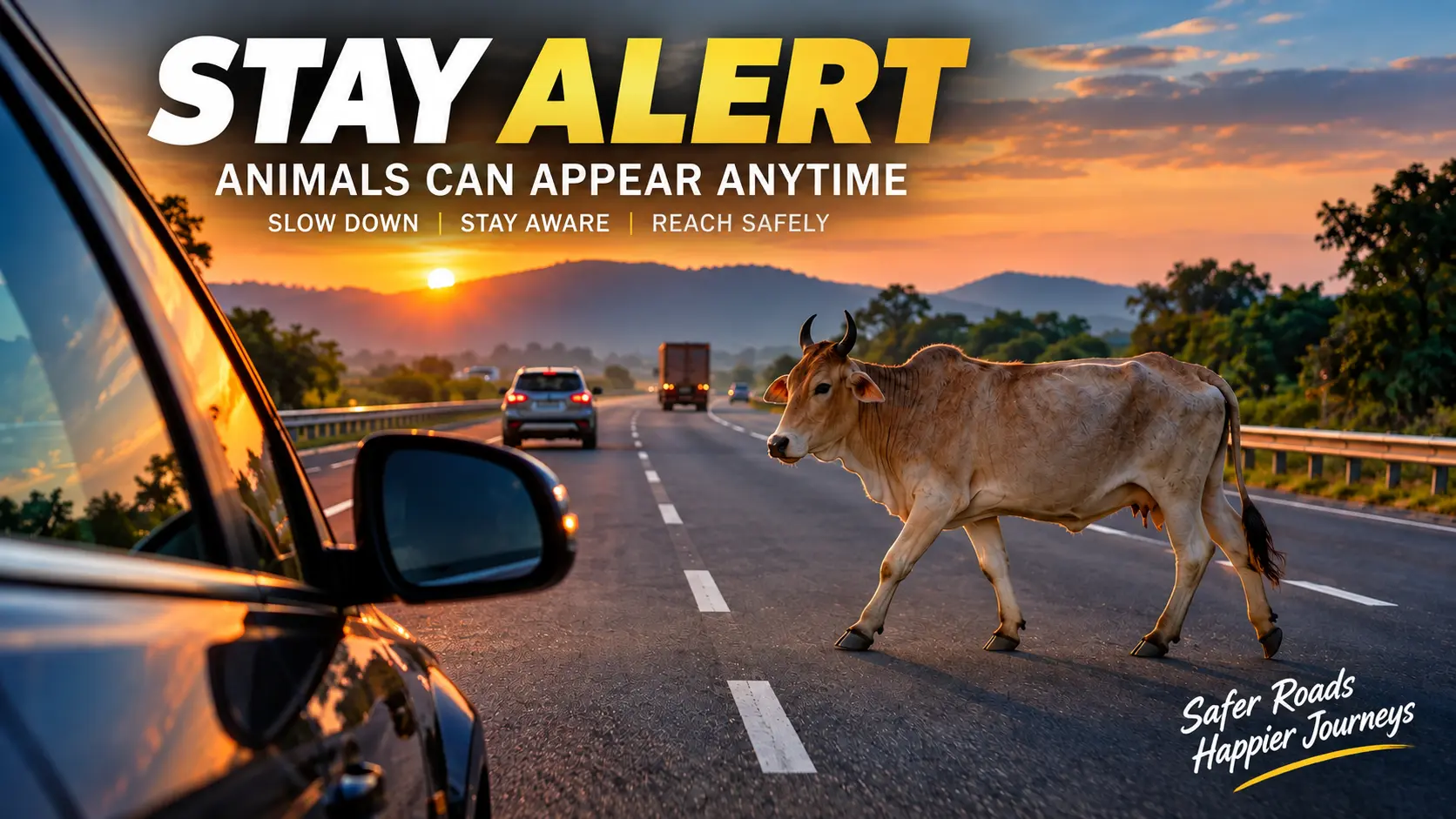
Indian highways are getting faster, wider and more sophisticated, but one of the country’s oldest road hazards has not disappeared. Cattle, dogs, goats and other animals can still wander onto high-speed roads, sometimes appearing with almost no warning. For a driver travelling at 80, 90 or 100km/h, an animal suddenly entering the lane can turn an ordinary journey into a serious emergency within seconds.
The problem has received fresh attention in September 2026 after the Ministry of Road Transport and Highways introduced a new standard operating procedure for dealing with stray cattle and other animals on National Highways and expressways. The measures focus on identifying accident-prone locations, recording incidents and using tools such as CCTV, lighting, warning signs and barriers to reduce the chances of animals entering high-speed roads. For motorists, however, the most important question remains much simpler: what should you actually do when you encounter stray animals on highways?
The answer is not simply to brake hard or swing the steering wheel away from the animal. Highway driving requires the driver to manage speed, visibility, following distance and surrounding traffic at the same time. Understanding how animals behave and knowing how to respond before a crisis develops can give you the extra seconds needed to keep control.
Why Stray Animals on Highways Are So Dangerous
The danger created by stray animals on highways comes from the combination of vehicle speed and unpredictable movement. A car travelling at 90km/h covers roughly 25 metres every second, leaving very little time to react if an animal becomes visible only 40 or 50 metres ahead.
Cattle present a particularly difficult challenge because of their size and unpredictable movements. A cow may remain completely still as a vehicle approaches, then suddenly turn across the carriageway. Smaller animals such as dogs can be even harder to predict because they can change direction rapidly and may react to traffic, horns or headlights.
Night driving adds another layer of risk. A dark-coloured animal standing near the edge of an unlit road can blend into the background until the vehicle is dangerously close. Glare from oncoming headlights, rain, fog and dust can reduce visibility even further.
That is why drivers should treat stray animals on highways as a genuine traffic hazard rather than something that can always be avoided with a quick steering correction.
Read More: 10 Essential Road Safety Tips Every Driver Should Follow in India
What India’s New Highway Safety Measures Mean
The government’s latest SOP takes a more systematic approach to the problem. Instead of treating every animal-related incident as an isolated event, authorities are being encouraged to identify locations where animals repeatedly enter National Highways and expressways.
Measures can include better fencing and barriers, improved lighting, warning signs, CCTV surveillance and coordination between highway authorities, local administrations and other agencies responsible for dealing with stray animals. The broader objective is to prevent animals from reaching high-speed carriageways rather than relying entirely on drivers to avoid them once they are already on the road.
This approach is important because the appearance of stray animals on highways is often connected to the surrounding environment. Roads passing near villages, agricultural land, markets, water sources and settlements can naturally experience more animal movement than isolated highway stretches.
Technology is also becoming part of the response. NHAI has been working with location-based warning systems for cattle-prone sections, allowing motorists to receive alerts when approaching identified risk areas. Giving drivers an additional warning before they reach a dangerous stretch could be particularly valuable at night or in poor visibility.
Where Are You Most Likely to Encounter Stray Animals?
There is no single type of road where animals appear, but drivers should be particularly cautious around highway sections close to villages, agricultural areas and densely populated settlements. These environments naturally create more interaction between livestock, pedestrians, local traffic and high-speed vehicles.
Drivers should also pay attention to highway fencing. A divided highway may appear completely protected, but a damaged barrier, an opening near a junction or an unofficial access route can provide animals with a way onto the carriageway.
Service roads and areas near markets can create additional risks because local movement tends to be more complicated. If you notice pedestrians, livestock or local vehicles operating unusually close to the main carriageway, treat that as a reason to increase your observation and moderate your speed.
The presence of stray animals on highways is therefore often something drivers can anticipate from the environment before an animal actually appears in the lane.
1. Reduce Your Speed When Visibility Is Poor
Speed determines how much time you have to react to an unexpected hazard. If visibility is reduced by darkness, heavy rain, fog, dust or spray from other vehicles, reducing speed can give you a much greater safety margin.
This does not mean driving unnecessarily slowly on every highway. Instead, the driver should adjust speed according to what can actually be seen and what the surrounding road environment suggests. A posted speed limit represents a legal maximum under applicable conditions, not a guarantee that travelling at that speed is appropriate in every situation.
If you are approaching a stretch where stray animals on highways have been reported or where roadside conditions make animal movement more likely, a modest reduction in speed can provide additional time for observation and controlled braking.
2. Look Beyond the Vehicle Directly Ahead
Following the rear lights of the vehicle in front is not enough on a busy highway. Drivers should scan further down the road whenever visibility allows, looking for movement near the road edge, unusual shadows, pedestrians, animals and vehicles that appear to be slowing unexpectedly.
This is particularly important when following a bus, truck or large SUV because the vehicle ahead can temporarily hide an obstruction. If it suddenly changes direction or begins braking, do not automatically copy the manoeuvre without understanding why.
The vehicle in front may have seen stray animals on highways before they become visible from your position. Maintaining a reasonable following distance gives you more time to understand the situation rather than reacting blindly to another driver’s movements.
3. Avoid Panic Steering
When a large animal suddenly appears in the lane, the natural instinct can be to pull the steering wheel sharply in the opposite direction. At highway speeds, however, an aggressive steering input can create a second emergency.
You could move into the path of an overtaking vehicle, cross into oncoming traffic, hit a roadside barrier or lose control of the vehicle. The safest response depends on the circumstances, but the priority should be maintaining vehicle control while reducing speed and assessing the space around you.
There is no universal manoeuvre that will work every time a driver encounters stray animals on highways. The correct response depends on your speed, traffic conditions, road layout, available escape space and the animal’s position.
4. Maintain a Safe Following Distance
A generous following distance gives you more than extra braking space. It also improves your ability to see what is happening ahead and react before an emergency reaches your vehicle.
Imagine a car travelling 30 metres ahead suddenly encountering a cow. If you are following closely, you may see the animal only after the vehicle ahead begins braking. If you have a larger gap, you have a better chance of seeing the animal yourself and beginning your response earlier.
This becomes even more important at night, when visibility is already reduced. If the driver ahead brakes suddenly because of stray animals on highways, sufficient following distance can prevent a rear-end collision from becoming another part of the incident.
5. Use Your Headlights Properly at Night
Night-time driving requires more than simply switching on the headlights. Drivers need to use them appropriately while remaining aware of glare from other vehicles and limitations in visibility.
High beam can help illuminate poorly lit sections when conditions permit, but it should be dipped when approaching other road users. Drivers should also avoid looking directly into the headlights of oncoming vehicles because temporary glare can make it harder to identify hazards.
Modern cars with LED, matrix or adaptive lighting systems can improve visibility, but no headlight technology can guarantee that an animal will be visible in time. When travelling through an unlit area where stray animals on highways are possible, the driver still needs to manage speed according to the available sight distance.
6. Be Extra Careful Near Villages and Agricultural Areas
A highway may pass through an environment that existed long before the road was constructed. Villages, farms, grazing areas and water sources can all influence how livestock and other animals move around the road.
If you are approaching a settlement or agricultural area, look beyond the paved carriageway. Animals may be standing on the shoulder, behind a barrier or near an access road before suddenly moving towards the highway.
Drivers should also avoid assuming that a divided highway completely eliminates the risk. Gaps in fencing, junctions and damaged barriers can still provide access to the road.
Understanding the environment around the highway can therefore help drivers anticipate stray animals on highways before they become an immediate obstacle.
7. Do Not Assume a Horn Will Make an Animal Move
Using the horn can alert people and may sometimes attract an animal’s attention, but drivers should never assume that a cow or dog will respond in a predictable way.
An animal may move towards the sound, away from it or remain where it is. A frightened animal can also change direction suddenly, making it impossible to predict its next movement.
The horn should therefore be treated as an additional warning rather than a solution. When dealing with stray animals on highways, the more important actions are creating time, reducing speed and maintaining enough space to respond safely.
8. Give Animals as Much Safe Clearance as Possible
If an animal is standing near the edge of the road rather than directly in your lane, reducing speed and allowing additional clearance can be sensible when traffic conditions permit. However, drivers should not move into another lane simply to create a larger gap without checking whether that lane is clear.
Cattle can suddenly turn, dogs can run unpredictably and smaller animals may react to passing traffic. A driver who moves sideways without checking surrounding traffic can create a collision that is potentially more dangerous than the original hazard.
The goal when passing stray animals on highways is therefore not simply to get around the animal as quickly as possible. The objective is to maintain control, preserve a safe buffer and avoid creating another danger.
9. Take Extra Care During Rain and Poor Weather
Rain can significantly change highway conditions. Braking distances increase, road markings can become harder to see and spray from other vehicles can temporarily obscure the road ahead.
Animals may also seek shelter near roadside structures, vegetation or other areas depending on the weather. A driver who maintains dry-weather speeds during heavy rain can therefore find themselves with very little time to react.
When conditions deteriorate, reduce speed appropriately and increase your following distance. The same principle applies during fog, dust storms and heavy spray.
The combination of poor visibility and stray animals on highways is particularly dangerous because the driver may not see the hazard until there is very little room left to respond.
10. Know What to Do When an Animal Blocks the Road
Sometimes the animal simply refuses to move. A large cow can stand directly in the lane with traffic approaching from behind and another vehicle coming from the opposite direction.
There is no perfect solution in that situation. The driver should reduce speed as early as possible, maintain control and assess the surrounding traffic before deciding whether there is a safe path around the obstruction.
Avoid treating the animal like a stationary object that can simply be bypassed at the last moment. It may move as you approach, and a sudden manoeuvre could place your vehicle in another lane.
If stray animals on highways create an ongoing obstruction, drivers should also report the hazard through the appropriate highway authorities so that other motorists and road operators can respond.
What About Stray Dogs and Smaller Animals?
Cattle receive much of the attention because of their size, but smaller animals can also create dangerous situations. Dogs, goats, horses and other animals may enter a carriageway and move unpredictably when they encounter traffic.
A dog, for example, may suddenly run across the road after being startled by a vehicle. A goat can change direction quickly, while smaller animals may be difficult to identify at night.
The same basic principles still apply: reduce speed when necessary, maintain observation, leave enough following distance and avoid making a dangerous emergency manoeuvre simply to avoid a small animal.
The size of the animal should not determine whether the driver takes an unnecessary risk. Vehicle control and the safety of everyone around the vehicle remain the priority.
How Technology Could Make Highways Safer
The future response to stray animals on highways is likely to involve considerably more technology. CCTV cameras, computer vision, GPS-based reporting and real-time warning systems could help highway operators identify animals before they become a serious threat to approaching traffic.
NHAI has already explored location-based alerts for cattle-prone sections. Such systems are interesting because they can potentially connect information collected beside the road with motorists approaching the danger zone.
A future system could potentially identify an animal through a roadside camera, determine its location and send a warning to approaching vehicles or drivers. The technology does not need to prevent every animal from entering the highway to be useful. Giving drivers even a few additional seconds of warning could make a significant difference.
The longer-term opportunity is therefore not simply detecting stray animals on highways, but connecting detection, warning and highway response into one system.
What Should You Do After an Animal Collision?
If a collision with an animal occurs, the first priority is protecting the people involved and preventing a second accident. If the vehicle can be moved safely, take it to a suitable location away from live traffic and activate the hazard warning lights.
Do not immediately step into the carriageway to inspect the damage. Fast-moving traffic can create another serious risk, particularly on an expressway or divided highway where approaching vehicles may have limited space to avoid you.
If anyone has been injured, seek emergency assistance immediately. If the animal is injured, avoid approaching it if doing so would place you in danger, particularly when the vehicle is stopped on or close to the carriageway.
A collision involving stray animals on highways can leave debris, a damaged vehicle or an injured animal in the road, so reporting the incident is also important when the location remains hazardous for other motorists.
Read More: Porsche Cayenne Electric Wireless Charging
Common Mistakes Drivers Make Around Highway Animals
One of the biggest mistakes is travelling too quickly through an area where the surrounding environment already suggests a greater possibility of animal movement. Another is following the vehicle ahead too closely, leaving insufficient time to respond when that driver encounters an animal.
Panic steering is another serious problem. A driver may successfully avoid the animal but then collide with another vehicle, a barrier or roadside structure. The instinct to “get away” from the hazard can therefore create a second and potentially more serious collision.
Drivers also sometimes believe that flashing headlights or repeatedly using the horn will force an animal to move in a predictable direction. Animals do not understand traffic rules, and their response cannot be guaranteed.
Finally, drivers can become so focused on the animal that they forget about the vehicles around them. Avoiding stray animals on highways requires awareness of the entire road environment, including traffic approaching from behind, vehicles in adjacent lanes and roadside obstacles.
Frequently Asked Questions
Why are stray animals on highways dangerous?
Stray animals on highways are dangerous because vehicles travel at high speeds while animals can move unpredictably. Drivers may have only a few seconds to react, particularly at night or during poor visibility.
How can I avoid hitting a cow on a highway?
Reduce your speed when you see cattle near the road, maintain a safe following distance and avoid sudden steering movements. If the animal enters your path, brake while maintaining control and assess surrounding traffic before making any steering correction.
Should I honk at cattle on highways?
A horn can alert an animal to your presence, but it should not be considered a guaranteed way to make it leave the road. Cattle can react unpredictably, so drivers should create as much time and space as possible.
Should I swerve to avoid an animal?
Not automatically. A sudden steering manoeuvre at highway speed can create a collision with another vehicle or roadside object. The correct response depends on your speed, traffic, available space and the animal’s position.
Are stray animals more dangerous at night?
They can be because visibility is reduced and animals may blend into the roadside environment. Drivers should use headlights appropriately, reduce speed when visibility is poor and remain particularly alert on unlit stretches.
What should I do if cattle are blocking a highway?
Slow down early, maintain vehicle control and assess the surrounding traffic. Avoid aggressive steering or attempting to pass through an unsafe gap. If the obstruction remains a hazard, report it to the relevant highway authorities.
Can technology help prevent animal-related highway crashes?
Yes. CCTV, computer vision, location-based alerts and real-time reporting can help identify animal-prone locations and warn approaching drivers. Highway authorities are already exploring these technologies.
Ride And Tech Verdict
Stray animals on highways remain a surprisingly difficult road-safety problem because modern vehicles and modern highways cannot completely eliminate unpredictable animal movement. A vehicle travelling at highway speed still has to deal with a cow, dog or other animal that can enter its path with very little warning.
The best defence is not a dramatic last-second manoeuvre. It is preparation: sensible speed, adequate following distance, good observation and controlled braking give drivers more time to understand what is happening and respond without creating another collision.
The latest highway SOP and the growing use of CCTV, location-based alerts and real-time reporting could eventually reduce the number of situations where motorists encounter animals directly on high-speed roads. Until those systems become widespread, however, drivers remain an important part of the safety equation.
When stray animals on highways become a hazard, the most valuable thing a driver can have is not a faster reaction. It is enough time and space to make a controlled decision.
Ride And Tech — Where Ride Meets Tech.
Drive Smarter. Ride Smarter.
Copyright (c) Ride And Tech. All rights reserved.

1 thought on “Stray Animals on Highways: 10 Crucial Safety Tips Every Driver Should Know”