


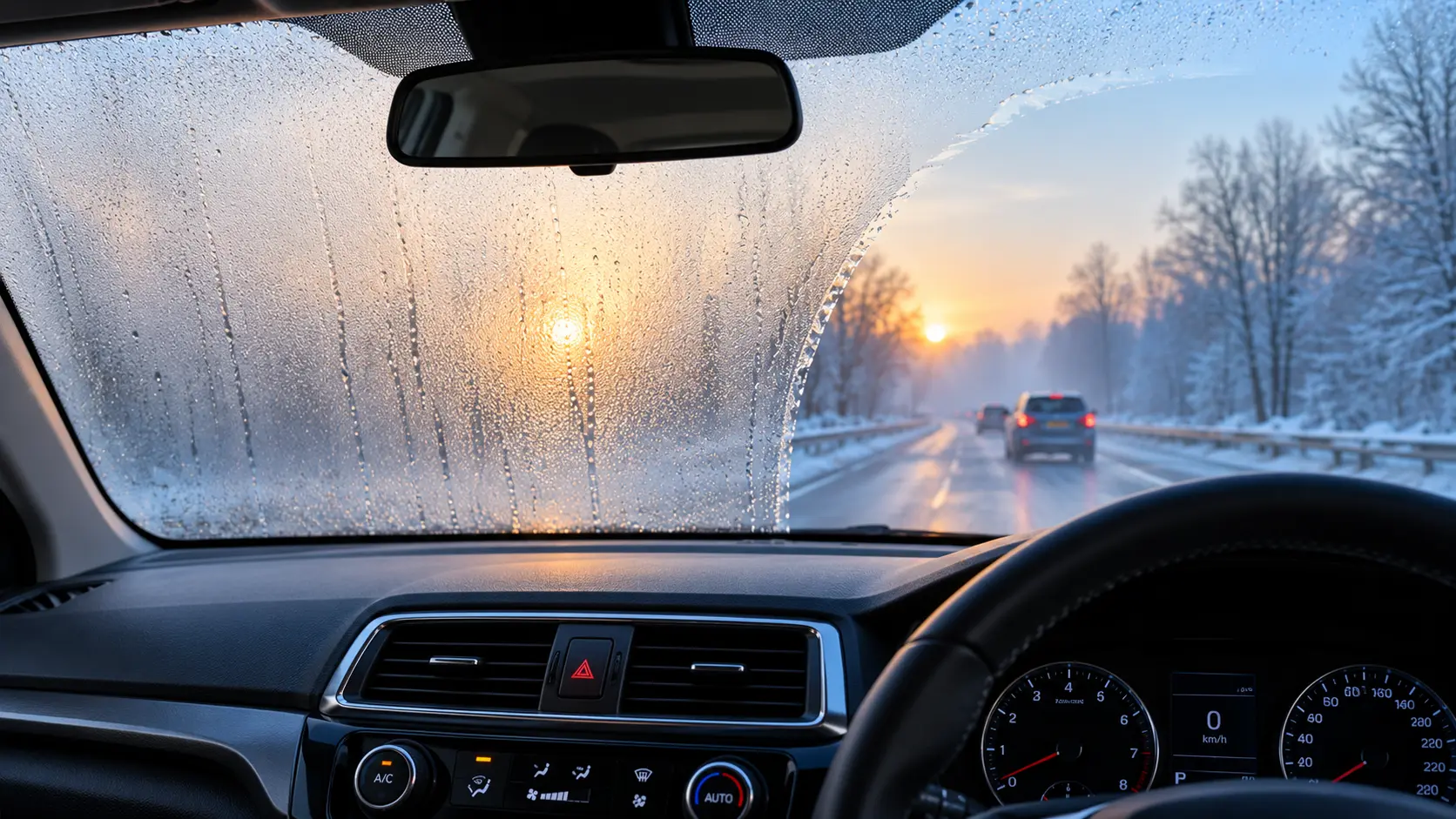
Car window fogging is a common winter problem that can make driving uncomfortable and, more importantly, reduce visibility. You may notice the windshield becoming cloudy just after starting the engine, when passengers enter the car, or when the temperature outside drops sharply. Even a short drive can become risky if the glass fogs up faster than the defogger can clear it.
The good news is that you usually do not need a special product to solve the problem. Understanding why condensation forms and using your car’s air-conditioning, heater and defogger correctly can help clear the glass quickly. In this guide, Ride And Tech explains seven practical ways to manage car window fogging, prevent it from returning and maintain a clear view of the road during winter.
Why Do Car Windows Fog Up Inside in Winter?
Car windows fog up when moisture in the cabin air comes into contact with cold glass. The water vapour condenses into tiny droplets, creating a misty layer on the inside of the windshield and windows. This is more likely in winter because the glass can be much colder than the air inside the vehicle.
Moisture enters the cabin through passengers’ breath, damp clothes, wet shoes, rainwater on floor mats and other everyday sources. When the car is closed, this moisture can build up, particularly if the ventilation system is set to recirculate cabin air for a long time. That is why car window fogging can return even after you have wiped the glass clean.
Before choosing a solution, check whether the mist is on the inside or outside of the glass. Interior fogging generally needs drier air directed at the glass, while exterior condensation may need the wipers or a change in cabin temperature. Knowing the difference helps you choose the right setting instead of wasting time adjusting controls.
Read More: Car Battery in Winter: 10 Essential Tips to Prevent Starting Problems
1. Use the Front Windshield Defogger
The front windshield defogger is usually the quickest place to start when car window fogging affects your view. Select the windshield demist or defrost setting on the climate-control panel. This directs airflow towards the glass, helping remove the moisture that has collected on its inner surface.
Set the fan to a suitable medium or high speed, especially when the windshield is heavily misted. Depending on the vehicle, the system may automatically activate the air conditioner, adjust the temperature or change the fresh-air setting. These automatic adjustments are normal, so allow the system to work rather than repeatedly switching between unrelated controls.
Do not begin driving until you can see clearly through the windshield and the side windows. If the mist is too dense to see the road safely, remain parked in a safe location until visibility improves. A few minutes spent clearing the glass is far better than driving with an obstructed view.
2. Switch On the AC Along With the Heater
Many drivers assume the air conditioner should only be used in summer, but it can also help control moisture in winter. When the system is operating under suitable conditions, the AC removes moisture from the air passing through it. The heater can then warm that air before it reaches the windshield, helping clear condensation without leaving the cabin uncomfortably cold.
If you are wondering how to defog car windows effectively, try the front defogger setting with the AC enabled and a comfortable warm temperature. In many cars, this combination works better than relying on hot air alone because it tackles both the cold glass and the moisture in the cabin. The exact controls and behaviour depend on the vehicle’s climate system.
Remember that the AC compressor may not operate in every outside temperature or operating condition. Some vehicles manage this automatically, while others have different controls. Follow the owner’s manual if the system behaves differently, and do not assume that a light on the AC button guarantees the compressor is running.
3. Use Fresh Air Instead of Recirculation
The recirculation setting is useful when you want to reduce outside dust, fumes or unwanted smells entering the cabin. However, keeping it switched on for a long time can allow moisture from passengers’ breath and damp belongings to accumulate inside. This can make car window fogging more persistent, especially when several people are travelling together.
When the windows begin misting, switch to fresh-air intake if outside conditions permit. Fresh air can help replace humid cabin air, while the ventilation system directs airflow towards the glass. Combining fresh air with the front defogger and AC, where available, is often an effective way to clear interior condensation.
There are situations when outside air may be unsuitable, such as heavy pollution, smoke or strong exhaust fumes. Use your judgement and the vehicle’s recommended settings in those conditions. Once the immediate visibility problem is resolved, adjust the ventilation to maintain comfort without allowing moisture to build up again.
4. Turn On the Rear Window Defogger
The rear windshield often fogs up separately from the front, and the front defogger may not clear it directly. Most modern cars have a dedicated rear-window defogger, commonly identified by a rectangular window symbol with wavy arrows. Press the relevant button and allow the system time to work.
Many rear defoggers use thin electrical heating elements embedded in the glass to warm its surface and remove condensation. The rear glass may take a little longer to clear, so avoid expecting instant results. If your car has heated side mirrors, the same control may activate them as well, although this varies by model.
Keep the rear window clear before pulling into traffic, reversing or changing lanes. If your vehicle has limited rear visibility, use its mirrors carefully and ensure the side windows are also clear. Never assume the rear glass will clear automatically just because the front windshield is now transparent.
5. Keep the Glass Clean on the Inside
A dirty windshield can make car window fogging more noticeable and harder to clear. Dust, oily residue, fingerprints and vapour from interior materials can leave a film on the glass. Moisture may collect unevenly on that film, creating a hazy appearance that becomes particularly distracting when headlights shine through it at night.
Clean the inside of the windshield and windows with a suitable automotive glass cleaner and a clean microfibre cloth. Use a separate, dry cloth for the final wipe to minimise streaks. Avoid spraying cleaner directly onto electronic displays, dashboard switches or sensitive interior surfaces; apply it to the cloth when appropriate and follow the product instructions.
Do not use your hand or sleeve to wipe a fogged windshield while driving. This can leave greasy marks, distract you and prevent you from clearing the entire viewing area. If you need to clean the glass manually, stop somewhere safe first and use the right cloth.
6. Reduce Moisture Inside the Cabin
Preventing excess moisture is one of the most useful ways to reduce recurring car window fogging. During wet or cold weather, water can enter the car on shoes, umbrellas, jackets and floor mats. Even after the visible water disappears, damp carpet and fabric can continue releasing moisture into the cabin.
Remove wet items when practical and allow floor mats to dry thoroughly. Check whether the mats or carpets remain damp after rain, and look for signs of water entering through doors, windows or the boot. If the cabin repeatedly smells musty or the carpet stays wet without an obvious reason, have the vehicle checked for leaks rather than relying on the defogger alone.
Avoid leaving wet towels, soaked clothes or other moisture-heavy items inside the vehicle overnight. If your car has a cabin air filter, follow the manufacturer’s maintenance schedule and replace it when needed. A clean, properly maintained ventilation system supports airflow, although a cabin filter does not directly remove all moisture from the air. Taking these preventive steps can reduce car window fogging in winter and help maintain a clearer view throughout your journey.
7. Check Your Defogger Settings Before Winter Trips
A little preparation can prevent delays when car window fogging appears during an early-morning commute. Before setting off, familiarise yourself with the front windshield defogger, rear-window heater, AC controls and fresh-air setting. Knowing where these controls are means you will not have to search for them while visibility is deteriorating.
If you regularly drive in cold, damp conditions, check that the ventilation system produces adequate airflow and that the front and rear defoggers operate as expected. If airflow is unusually weak, the glass remains misted despite using the correct settings, or the rear heating elements do not work, arrange an inspection. The cause could be a maintenance issue rather than normal winter condensation.
Before moving off, make sure the windshield, rear glass, side windows and mirrors provide a clear view. Clear snow, dirt or other obstructions from the exterior where relevant, and keep your attention on the road rather than repeatedly adjusting climate controls while moving. If visibility deteriorates during the journey, slow down safely and pull over when necessary.
Read More: ADAS in Indian Driving Conditions
Common Mistakes That Make Window Fogging Worse
One common mistake is using only the heater while leaving the cabin air recirculating. Warm air can help, but if moisture remains trapped inside the car, the glass may fog again. Try the windshield setting, fresh-air intake and AC where the vehicle supports them, then allow the ventilation system to clear the glass.
Another mistake is wiping the windshield with a hand, tissue or unsuitable cloth. These methods can spread oils and leave streaks, making visibility worse when light hits the glass. Clean the surface properly when parked, and use the vehicle’s defogging system while driving.
Some drivers also start moving as soon as a small clear patch appears on the windshield. That is not enough if the remaining glass, side windows or mirrors are still obscured. Wait until you have a safe, clear view in every direction needed for the journey. If the defogger cannot restore visibility, do not continue driving until the issue is resolved.
Frequently Asked Questions
Should I use AC in winter to stop car windows from fogging?
Yes, when your vehicle’s system supports it and operating conditions allow the compressor to run. The AC helps remove moisture from the air, while the heater can warm the air directed at the windshield. Many cars manage these functions automatically when you select the front defogger setting.
Is hot air or cold air better for a foggy windshield?
The best setting depends on the vehicle and the conditions, but warm air directed at the windshield, combined with AC and fresh-air intake where available, is often effective for interior fogging. The AC helps reduce humidity, while warm airflow helps the glass clear. Follow your owner’s manual for the recommended defogging procedure.
Why do my car windows fog up again after I clean them?
Car window fogging can return because wiping removes the visible droplets but does not remove the moisture from the cabin air. Wet floor mats, damp clothing, passengers’ breath and prolonged recirculation can all contribute. Use the ventilation system to reduce humidity and check for persistent dampness or water leaks.
Does opening a car window help remove fog?
Opening a window slightly can help exchange humid cabin air with outside air, depending on weather and traffic conditions. However, you should not rely on this alone, particularly in heavy rain, cold weather or polluted areas. The vehicle’s defogger and ventilation system are generally the better starting point.
Why does the windshield fog up on the outside?
Exterior fogging happens when the outside surface of the glass becomes colder than the surrounding humid air, allowing condensation to form. Use the wipers if appropriate and adjust the climate-control temperature as recommended in your owner’s manual. If the mist worsens, change the settings until the glass clears safely.
Can a dirty cabin air filter cause window fogging?
A clogged or poorly maintained cabin filter can restrict airflow, which may make it harder for the ventilation system to clear mist quickly. It is not the only possible cause, since moisture levels, temperature and ventilation settings also matter. Check the maintenance schedule and have the filter inspected if airflow seems weak.
Ride And Tech Verdict
Car window fogging in winter is more than a minor inconvenience because it can reduce visibility at the exact moment a driver needs to react to traffic, pedestrians and unexpected hazards. The most effective approach is to use the front defogger, enable AC when available, select fresh-air intake where suitable and activate the rear-window heater when necessary. These simple adjustments can clear condensation without relying on improvised fixes.
Prevention matters just as much as clearing the glass. Keep the inside of the windshield clean, dry wet floor mats and belongings, maintain the ventilation system and investigate persistent dampness. Most importantly, never drive until your windshield and other essential viewing areas are clear. Good visibility is a basic safety requirement, not something to compromise for a quicker start.
Ride And Tech — Where Ride Meets Tech.
Drive Smarter. Ride Smarter.
Copyright (c) Ride And Tech. All rights reserved.

1 thought on “How to Stop Car Windows from Fogging Up in Winter”