


You arrive home after a long highway trip, park your car, switch off the engine, lock the doors, and walk away.
It feels like the most normal thing in the world.
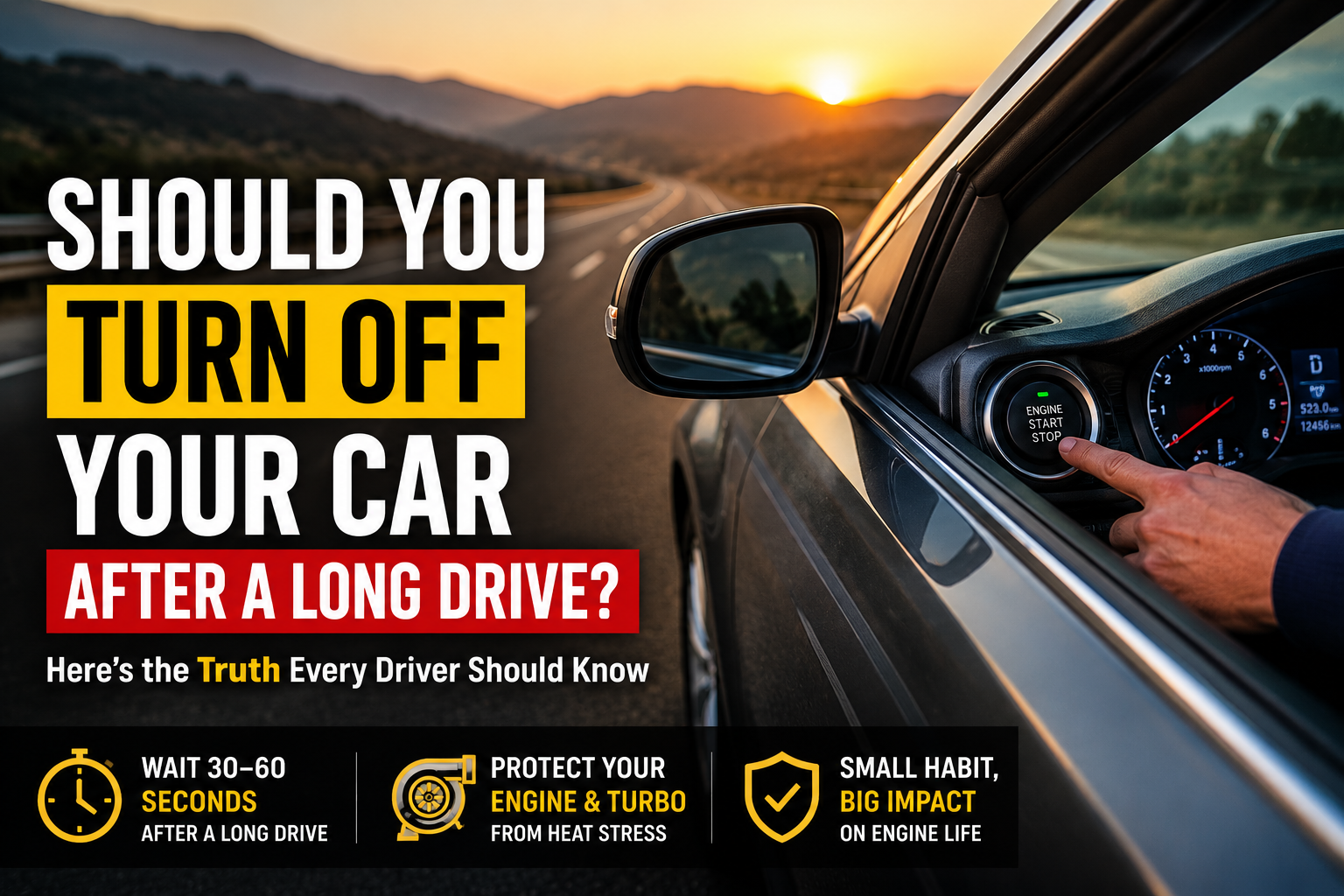
Should you turn off your car after a long drive immediately, or should you let the engine idle first? Many drivers have heard different opinions, but the correct answer depends on your vehicle and driving conditions. In this guide, we’ll explain what modern cars need, when idling is useful, and when it’s simply unnecessary.
But if your car has been working hard for the last few hours—especially if it’s fitted with a turbocharged engine—giving it a short cool-down period before switching it off can be a smart habit.
The good news?
You don’t need to wait for five or ten minutes like some people believe. In most situations, 30 to 60 seconds is enough after demanding driving conditions.
Why Does a Turbocharged Engine Need a Cool-Down?
Many drivers wonder whether they should turn off your car after a long drive immediately or allow the engine to idle for a short period. Turbochargers improve engine performance by forcing more air into the engine, but they also generate a significant amount of heat.
During a long highway drive, hill climb, or heavy acceleration, the turbocharger spins at extremely high speeds and relies on engine oil for lubrication and cooling.
If you stop the engine immediately after heavy use, oil circulation also stops.
Modern turbocharged cars are much better protected than older ones, but allowing the engine to idle briefly after demanding driving helps reduce heat around critical components.
Should You Turn Off Your Car After a Long Drive Immediately?
No.
This is one of the biggest myths in car maintenance.
A short cool-down is recommended if:
- You have a turbo petrol or turbo diesel vehicle.
- You’ve completed a long highway journey.
- You’ve driven through mountains or steep roads.
- You’ve been towing a trailer.
- You’ve driven aggressively for an extended period.
It is generally not necessary if:
- You’ve only driven around the city.
- The journey was short.
- Traffic speeds were low.
Modern naturally aspirated engines used for everyday commuting usually don’t need a cool-down period before switching off.

Myth vs Reality
Understanding when to turn off your car after a long drive depends on your vehicle, driving conditions, and whether it has a turbocharged engine.
❌ Myth:
“You should idle your car for 10 minutes before turning it off.”
✅ Reality:
Modern engines do not need such long idling periods.
For most vehicles after demanding driving, 30–60 seconds is sufficient. Longer idling simply wastes fuel and increases unnecessary emissions.
🚗 Ride and Tech Quick Tip
If you’ve just completed a long highway drive in a turbocharged car, let the engine idle for 30–60 seconds before switching it off. For normal city driving, there’s usually no need to wait.
✅ Key Takeaways
Knowing when to turn off your car after a long drive can help you follow the right maintenance practices for your vehicle.
- Modern cars don’t always need to idle before shutdown.
- Turbocharged engines may benefit after hard driving.
- Avoid idling for several minutes unless recommended by your manufacturer.
- Regular maintenance matters more than extended idling.
A Simple Real-Life Example
Imagine you’ve just driven from Rajkot to Ahmedabad on the highway during summer.
Your engine has been running continuously, and if your vehicle has a turbocharger, it has been working hard for the entire journey.
Instead of switching off the engine the moment you park, let it idle for about half a minute while you gather your belongings or check your phone.
That short pause gives the engine a chance to stabilise before shutting down.
Ride and Tech Pro Tip 💡
A short cool-down isn’t a substitute for regular maintenance.
To keep your engine healthy:
- Change engine oil on schedule.
- Use the oil grade recommended by your manufacturer.
- Replace air and oil filters on time.
- Avoid harsh acceleration when the engine is still cold.
These habits have a much bigger impact on engine life than extended idling.
Final Thoughts
Car maintenance isn’t always about expensive repairs or advanced tools.
Sometimes it’s about understanding when a small habit actually makes sense—and when it doesn’t.
If you’ve just finished a long highway journey or driven a turbocharged car under heavy load, waiting 30 to 60 seconds before turning off the engine is a simple precaution that can help reduce thermal stress.
For everyday city driving, however, there’s usually no need to wait.
Knowing the difference helps you take better care of your car without following outdated myths.
Before you turn off your car after a long drive, consider how you’ve been driving. For most modern cars used in everyday conditions, switching the engine off immediately is perfectly safe. However, turbocharged vehicles after demanding drives may benefit from a short cool-down period.
Frequently Asked Questions
Should I wait before turning off a naturally aspirated petrol car?
For normal city driving, it’s generally not necessary. The recommendation mainly applies after demanding driving in turbocharged vehicles.
Is idling for five or ten minutes better?
No. In most situations, extended idling wastes fuel and offers little additional benefit.
What about electric vehicles?
Electric vehicles don’t have an internal combustion engine or turbocharger, so this practice doesn’t apply.
Related Articles
- 5 Driving Mistakes Most Drivers Still Make
- 5 Driving Mistakes That Can Cost You Money
- 5 Common Monsoon Driving Mistakes
At Ride and Tech, we believe every journey begins with knowledge.
Whether you’re driving your first car, exploring electric vehicles, or following the future of mobility, our goal is to help you make smarter decisions through trusted, practical, and easy-to-understand automotive content.
🚗 Explore more expert guides, car hacks, EV insights, and the latest automotive news at:
👉 https://rideandtech.com/blog
Where Ride Meets Tech.
Copyright (c) Ride And Tech. All rights reserved.
