


BMW is making a much bigger bet on electric cars in India. After electric vehicles accounted for 26% of BMW Group India’s sales in the first half of 2026, the German luxury carmaker now expects that share to move beyond 30% by the end of the year.
The target is significant because BMW is no longer treating electric vehicles as a small part of its India portfolio. The company delivered 2,359 EVs between January and June, up 78% year over year, while its overall India sales reached a record 9,075 cars during the same period.
The timing is also important. BMW is expanding its electric lineup, strengthening its long-wheelbase strategy and considering further local production, including the BMW i5 Long Wheelbase. At the same time, demand for premium electric vehicles in India is becoming increasingly important to the competition between BMW, Mercedes-Benz and Audi.
So, what is driving BMW’s aggressive EV push, and can BMW electric cars in India realistically cross the 30% sales mark in 2026? Here’s what the latest numbers and strategy reveal.
BMW’s EV Push Is Accelerating in India
BMW’s move toward a larger electric share is backed by strong sales momentum rather than being simply a future target. In the first half of 2026, BMW Group India sold 2,359 electric vehicles, representing a 78% increase year over year. Electric vehicles accounted for 26% of the company’s total car sales, meaning roughly one in every four BMW cars sold in India during the period was electric.
The wider sales picture is equally important. BMW Group India delivered 9,075 cars between January and June 2026, its highest-ever first-half sales result and a 17% increase over the same period in 2025. This gives BMW a strong foundation as it works toward its BMW EV target in India of more than 30% by the end of the year.
BMW also reported a 69% share of India’s luxury EV segment during the first half of 2026. At the same time, long-wheelbase models accounted for 52% of the company’s overall sales, highlighting the importance of spacious and premium vehicles to Indian luxury-car buyers.
The combination of rising BMW EV sales in India, an expanding electric lineup and strong demand for long-wheelbase models puts the company in a favorable position as it enters the second half of 2026. The bigger question now is whether BMW can maintain this momentum and push its EV contribution beyond the 30% threshold by year-end.
Read More: Dhoot Transmission IPO Debut
Why BMW Is Seeing Stronger EV Demand in India
The growth in BMW electric cars in India comes as premium buyers become increasingly comfortable with electric powertrains. BMW’s expanding EV portfolio has also given customers more choice across different vehicle types, from premium SUVs to performance-oriented sedans.
The company’s recent sales performance suggests that electric vehicles are moving beyond a niche role within BMW’s India business. With EVs already accounting for 26% of first-half sales, the company has a strong base from which to pursue its BMW EV target India of more than 30% by the end of 2026.
BMW is also strengthening the ownership experience around its electric vehicles. Its India strategy includes charging partnerships and connected features designed to help customers locate charging points and plan journeys more conveniently.
Another factor is the wider growth of India’s luxury EV market. Mercedes-Benz, Audi and other premium manufacturers are expanding their electric portfolios, giving buyers more choices and encouraging greater acceptance of luxury EVs.
For BMW, the challenge is therefore no longer simply introducing electric vehicles. The company needs to offer a combination of range, performance, space, technology and charging support that can convince more luxury-car buyers to make the switch.
That makes the company’s expanding BMW EV lineup in India an important part of its plan to push electric vehicles beyond 30% of total sales this year.
BMW’s Electric Car Lineup in India
BMW has built one of the broader BMW EV lineups in India, giving customers electric options across multiple luxury-car segments. The portfolio includes models such as the BMW iX1, BMW i4, BMW i5, BMW i7 and BMW iX, along with the newer long-wheelbase version of the iX1.
The BMW iX1 Long Wheelbase is particularly important for the Indian market because it combines an electric powertrain with the additional rear-seat space that Indian luxury-car buyers often prioritize. The larger body and premium cabin make it a different proposition from a conventional compact luxury SUV.
The BMW i4 provides a more performance-oriented electric sedan option, while the BMW i5 sits higher in the executive segment. At the top end, the BMW i7 brings BMW’s flagship luxury sedan experience to the electric range, while the BMW iX serves customers looking for a larger premium electric SUV.
This variety is important to BMW’s strategy. Rather than depending on a single high-volume EV, the company can target different customer groups with its BMW electric cars in India. That broader product mix should help BMW increase EV penetration as more Indian luxury buyers consider switching from combustion-engine vehicles to electric models.
Why the BMW iX1 Long Wheelbase Matters in India
The BMW iX1 Long Wheelbase could play an important role in BMW’s strategy because it combines two trends that are particularly relevant to the Indian luxury-car market: growing interest in electric vehicles and strong demand for additional rear-seat space.
BMW has already seen significant demand for its long-wheelbase models in India. During the first half of 2026, long-wheelbase variants accounted for 52% of BMW’s overall car sales, showing how strongly Indian customers value additional cabin space and rear-seat comfort.
The iX1 LWB takes that approach into the electric segment. Instead of offering buyers a conventional compact electric SUV, BMW gives the model a more India-focused proposition with greater emphasis on rear passenger space and premium comfort.
This could make the BMW iX1 LWB particularly important for customers who want an electric luxury SUV but are not ready to compromise on the spacious cabin expected from a premium vehicle.
It also strengthens BMW’s broader BMW India EV strategy by giving the company an electric model positioned around a preference that is already proving successful with its combustion-powered long-wheelbase vehicles. If demand remains strong, products such as the iX1 LWB could help BMW increase the share of BMW electric cars in India and move closer to its 30% EV sales target.
BMW i5 LWB Could Be the Next Big Step
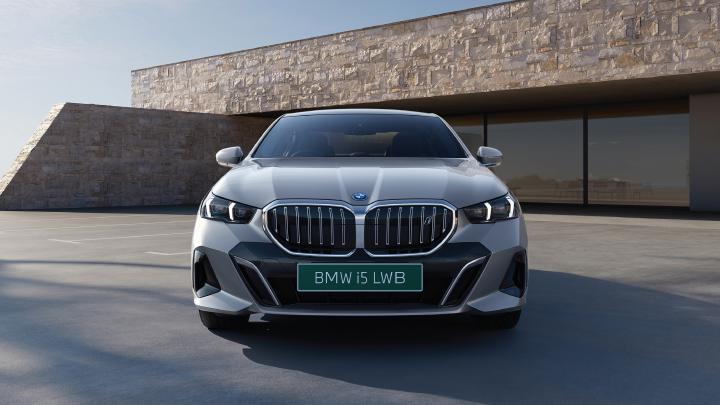
BMW’s electric strategy in India could get another boost if the company moves ahead with local assembly of the BMW i5 Long Wheelbase. The possibility is significant because the i5 LWB would combine an electric powertrain with the additional rear-seat space that has already proved popular among Indian luxury-car buyers.
According to current reporting, BMW is considering assembling the i5 LWB locally in India. Local production could potentially make the model more competitive while also strengthening BMW’s ability to offer a wider range of BMW electric cars in India.
The move would also fit BMW’s broader localization strategy. The company already produces several models in India, and increasing local assembly of electric vehicles could become increasingly important as EV volumes grow.
For buyers, the i5 LWB could offer an interesting combination of executive-car comfort, electric performance and additional rear-seat space. For BMW, it could become another important product in its effort to increase BMW EV sales in India and push electric vehicles beyond 30% of its overall sales in 2026.
BMW’s EV Strategy Goes Beyond Selling Electric Cars
BMW’s push for a higher electric share in India is not limited to expanding its BMW EV lineup. The company is also working on the wider ownership ecosystem that can influence whether luxury-car buyers are comfortable switching to electric vehicles.
Charging access is an important part of that strategy. BMW has expanded charging support through partnerships and has said its customers can access more than 6,000 charging points through its charging ecosystem. The company has also introduced connected features designed to make charging and route planning easier for EV owners.
BMW’s approach also includes features such as Smart E-Routing and charging-related services that can help drivers plan longer journeys around available charging infrastructure. These features are particularly relevant in India, where charging convenience remains an important consideration for buyers moving from petrol or diesel vehicles to electric cars.
The company is also emphasizing the overall ownership proposition rather than treating the electric powertrain as the only selling point. As BMW electric cars in India become a larger part of its portfolio, factors such as charging convenience, resale confidence, service support and running costs could become increasingly important in attracting customers.
This broader strategy could help BMW maintain the momentum behind its BMW EV sales in India and make the transition to electric mobility easier for luxury-car buyers.
BMW vs Mercedes-Benz and Audi: The Luxury EV Race in India
BMW’s push to increase its electric share comes as competition in India’s luxury EV market is becoming more intense. Mercedes-Benz and Audi are also expanding their electric portfolios, giving premium buyers more choices across SUVs, sedans and performance-focused models.
BMW currently has an advantage from the breadth of its electric portfolio and the strong growth recorded in the first half of 2026. Its EVs accounted for 26% of BMW Group India’s car sales, while the company reported a 69% share of the luxury EV segment during the same period.
The competition, however, is unlikely to be decided by sales numbers alone. Product range, pricing, charging support, localization, technology and after-sales service will all influence how quickly luxury EV adoption grows in India.
BMW’s long-wheelbase strategy could also become an important differentiator. With long-wheelbase models already accounting for more than half of its sales, combining that customer preference with electric powertrains gives BMW an opportunity to create products specifically suited to the Indian luxury market.
As Mercedes-Benz and Audi continue expanding their own luxury electric cars in India, BMW’s target of taking EVs beyond 30% of its sales will therefore be both a growth objective and a test of its competitive position in India’s rapidly developing premium EV market.
What BMW’s 30% EV Target Means for Indian Luxury-Car Buyers
BMW’s plan to take electric vehicles beyond 30% of its India sales could give luxury-car buyers a wider choice of premium EVs across different segments. With the company already expanding its electric portfolio, customers can expect more attention on electric SUVs, executive sedans and long-wheelbase models.
The growing BMW EV lineup in India could also increase competition on features, technology and ownership benefits. As more luxury manufacturers target the same customer base, buyers are likely to have more options when comparing electric range, performance, cabin space, charging support and pricing.
Local assembly could become another important factor. If more BMW electric models are produced in India, the company could potentially improve pricing flexibility and respond more quickly to growing demand. The possible local assembly of the BMW i5 LWB is particularly relevant in this context.
For buyers considering BMW electric cars in India, the expanding portfolio could therefore mean more choices without having to move away from the comfort, performance and technology expected from a premium BMW.
The bigger impact, however, could be on the luxury-car market as a whole. BMW’s stronger EV push may encourage Mercedes-Benz, Audi and other manufacturers to accelerate their own electric strategies, giving Indian buyers a wider and more competitive luxury EV market.
Can BMW Really Reach More Than 30% EV Sales in India by 2026?
BMW has already moved from a relatively small electric-vehicle contribution to 26% of its India sales in the first half of 2026, so crossing the 30% mark is not an unrealistic target. The company needs only a further increase in EV contribution during the second half of the year.
The bigger challenge will be maintaining demand as the luxury EV market becomes more competitive. BMW will need its existing models, including the BMW iX1, i4, i5, i7 and iX, to continue attracting buyers while newer products and long-wheelbase variants expand the customer base.
The possible introduction of the BMW i5 LWB could also help. A locally assembled electric executive sedan would give BMW another product that combines the benefits of an EV with the spacious rear cabin that Indian luxury-car buyers have already shown strong demand for.
There is no guarantee that BMW will exceed its target, particularly because sales can vary significantly between individual months and model launches. However, the company’s 78% year-over-year growth in EV sales during H1 2026 provides a strong indication that the underlying demand is moving in the right direction.
If that momentum continues through the rest of the year, BMW electric cars in India could account for more than one in every three BMW cars sold by the end of 2026.
Read More: 1964 Shelby Cobra Daytona Coupe Sells for $42.9 Million
What BMW’s India EV Push Could Mean for the Future
BMW’s growing focus on electric vehicles could have implications beyond its 2026 EV sales target. If the company can continue increasing the share of BMW electric cars in India, it could encourage faster expansion of its electric portfolio and greater localization of EV production.
The possible local assembly of the BMW i5 LWB is particularly significant because it could strengthen BMW’s India-focused product strategy while combining electric technology with the long-wheelbase format that has already proved popular with local customers.
More broadly, BMW’s approach shows how India’s luxury-car market is changing. Electric vehicles are no longer being treated simply as niche alternatives to petrol and diesel models. Premium manufacturers are increasingly using EVs as an important part of their core product strategy.
For Indian buyers, that could mean more premium electric models, greater competition between luxury brands and potentially more locally assembled EVs in the years ahead.
BMW’s immediate goal is clear: move its EV contribution beyond 30% of India sales in 2026. Whether it achieves that target will depend on demand, product availability and the company’s ability to keep expanding its electric offering while maintaining the premium ownership experience BMW customers expect.
FAQs About BMW Electric Cars in India
What is BMW’s EV sales target in India for 2026?
BMW is targeting an electric-vehicle share of more than 30% of its India car sales by the end of 2026. The company had already reached a 26% EV share during the first half of the year.
How many electric cars did BMW sell in India in H1 2026?
BMW Group India sold 2,359 electric vehicles between January and June 2026, representing a 78% increase compared with the same period in 2025.
Which BMW electric cars are available in India?
BMW’s electric portfolio in India includes models such as the iX1, iX1 Long Wheelbase, i4, i5, i7 and iX. Availability can vary as BMW updates its product lineup.
Why is the BMW iX1 Long Wheelbase important for India?
The iX1 LWB combines electric mobility with additional rear-seat space, matching the strong preference for long-wheelbase luxury vehicles in India. Long-wheelbase models accounted for 52% of BMW’s overall sales during the first half of 2026.
Is BMW planning to locally assemble the i5 LWB in India?
BMW is considering local assembly of the i5 Long Wheelbase in India. If the plan moves forward, it could strengthen BMW’s electric portfolio and localization strategy in the country.
Can BMW cross 30% EV sales in India in 2026?
BMW has already reached a 26% EV share in the first half of 2026. Its 78% year-over-year EV sales growth provides a strong foundation for exceeding 30%, although the final result will depend on demand, product availability and sales performance during the remainder of the year.
Ride And Tech Verdict
BMW’s plan to make electric vehicles account for more than 30% of its India sales in 2026 is ambitious, but the company’s first-half performance shows that the target is backed by real momentum rather than being just a long-term ambition.
With EV sales up 78% year over year, a 26% EV contribution already achieved, and an expanding lineup of models such as the iX1 LWB, i4, i5, i7 and iX, BMW has built a strong foundation for the next stage of its India EV strategy.
The potential local assembly of the BMW i5 LWB could make the strategy even more interesting, particularly because Indian luxury buyers continue to show strong demand for spacious long-wheelbase vehicles.
For us, the most important development is that BMW is treating electric mobility as a core part of its India business rather than a niche product category. If the company can maintain its current momentum, crossing the 30% mark could become an important milestone for both BMW and India’s growing luxury EV market.
Ride And Tech — Where Ride Meets Tech.
Drive Smarter. Ride Smarter.
Copyright (c) Ride And Tech. All rights reserved.
