


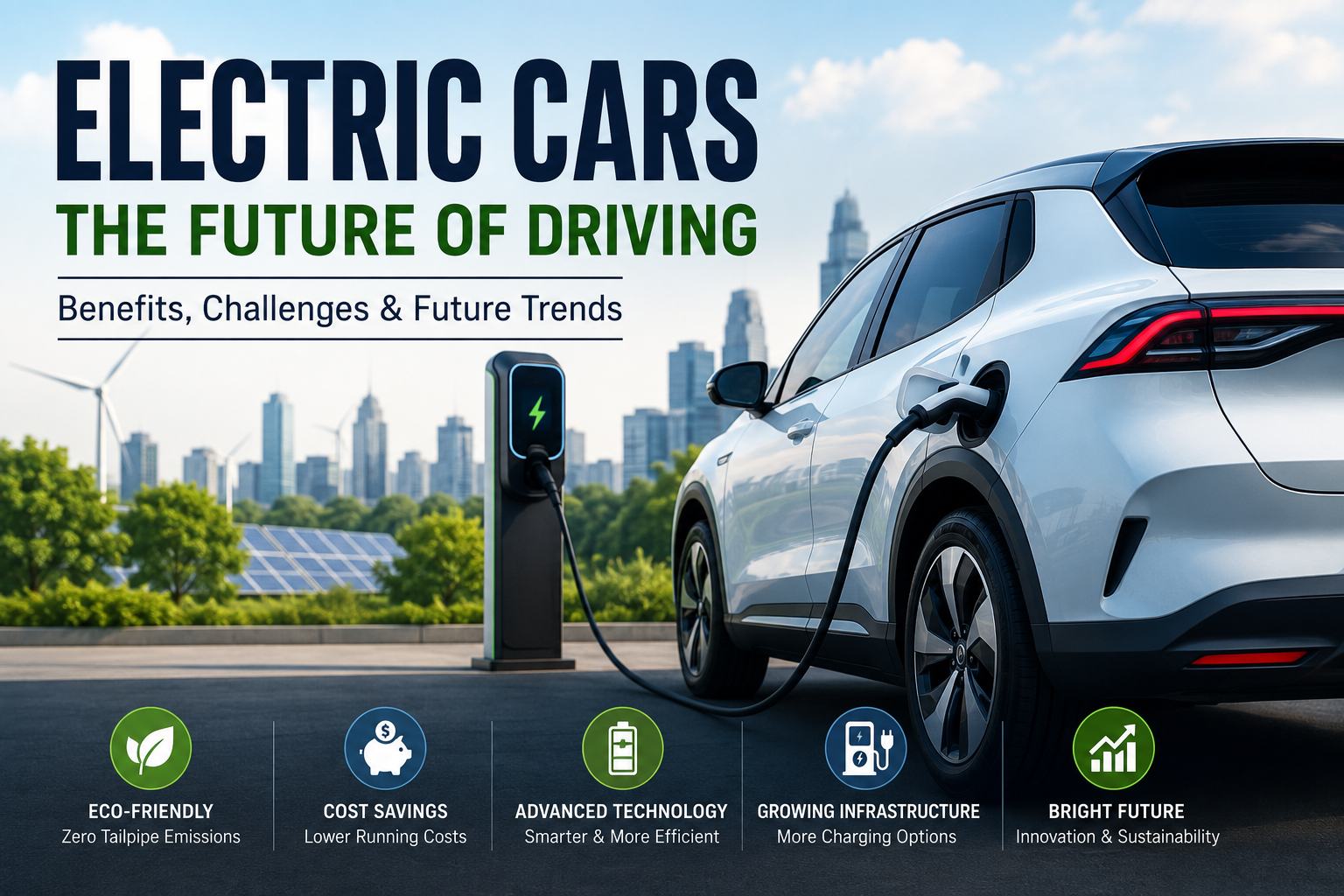
Electric cars are transforming the automotive industry faster than ever before. As governments promote cleaner transportation and automakers invest heavily in electric vehicle (EV) technology, electric cars are becoming a practical choice for millions of drivers worldwide. From lower running costs and zero tailpipe emissions to advanced connected features, EVs offer several advantages over traditional petrol and diesel vehicles.
However, challenges such as charging infrastructure, battery costs and long-distance travel still influence buying decisions. In this guide, we’ll explore the benefits, challenges and future trends of electric cars, and examine whether they truly represent the future of driving.
What Are Electric Cars?
Electric cars are vehicles powered by one or more electric motors instead of a traditional internal combustion engine. They use rechargeable battery packs to store energy and produce zero tailpipe emissions while driving. Modern electric cars also feature regenerative braking, smart energy management systems and connected technologies that improve efficiency and enhance the overall driving experience.
Benefits of Electric Cars
One of the strongest drivers of adoption is the wide range of benefits electric cars offer:
- Environmental Impact: Unlike traditional petrol and diesel vehicles, electric cars produce zero tailpipe emissions, helping reduce greenhouse gas emissions and improve air quality. As more countries adopt renewable energy sources, the environmental benefits of electric vehicles continue to increase, making them an important part of sustainable transportation.
- Cost Savings: Although electric cars generally have a higher upfront purchase price, they offer lower running and maintenance costs over time. Electricity is often more affordable than petrol or diesel, and electric vehicles have fewer moving parts, reducing the need for regular servicing and expensive repairs.
- Government Incentives: Many governments continue to encourage electric vehicle adoption through incentives such as tax benefits, purchase subsidies and reduced registration fees. These initiatives help lower the overall cost of ownership and make electric cars more accessible to a wider range of buyers.
- Performance Benefits: Electric motors deliver instant torque, allowing electric cars to accelerate quickly and smoothly. They also provide a quieter driving experience, lower vibration levels and improved driving comfort, making EVs enjoyable for both city commuting and highway travel.
Challenges of Electric Cars
Despite their appeal, EVs face several obstacles that need addressing for widespread adoption:
- Charging Infrastructure: One of the biggest challenges facing electric cars is the availability of charging infrastructure. While major cities continue to expand their public charging networks, access to fast-charging stations remains limited in many rural and remote areas. Expanding reliable charging infrastructure is essential to support the growing number of EV owners and reduce range anxiety.
- Battery Technology: Battery technology has improved significantly in recent years, but concerns about driving range, charging time and replacement costs still influence buying decisions. Continuous advancements in battery efficiency, faster charging solutions and emerging technologies such as solid-state batteries are expected to address these challenges in the future.
- Affordability: Although electric cars can reduce fuel and maintenance expenses over time, their initial purchase price remains higher than many comparable petrol or diesel vehicles. As battery production scales up and manufacturing costs decrease, electric vehicles are expected to become more affordable for a larger number of consumers.
- Supply Chain Matters: The growing demand for battery materials such as lithium, cobalt and nickel has created supply chain and sustainability challenges. Manufacturers are investing in battery recycling, alternative materials and responsible sourcing practices to reduce environmental impact and ensure long-term availability of essential resources.
Read more on: Electric Cars Take the Lead: Biggest Stories in Automobile News
Future Trends in Electric Cars
The future of electric cars is being shaped by rapid technological advancements, improved battery technology and growing investments in sustainable mobility. Here are some of the key trends expected to drive the next generation of electric vehicles:
- Longer Driving Range & Faster Charging: Automakers are developing advanced battery technologies that offer longer driving ranges and significantly faster charging times. Innovations such as solid-state batteries and ultra-fast DC charging are expected to make electric cars even more practical for everyday use and long-distance travel.
- Expansion of Charging Networks: Governments and private companies continue to invest in public charging infrastructure, making charging stations more widely available in cities, highways and residential areas. A larger charging network will help reduce range anxiety and encourage more people to switch to electric vehicles.
- Smart & Connected Vehicles: Modern electric cars are increasingly equipped with artificial intelligence, over-the-air software updates, connected services and advanced driver assistance systems (ADAS), improving safety, convenience and the overall driving experience.
- Electrification Beyond Passenger Cars: The transition to electric mobility is expanding beyond passenger cars. Electric buses, trucks, motorcycles and commercial vehicles are becoming more common, helping reduce emissions across the entire transportation sector.
- Sustainability & Battery Recycling: Battery recycling and the use of sustainable materials are becoming increasingly important. Automakers are investing in recycling technologies and second-life battery applications to minimize waste and improve the environmental impact of electric vehicles throughout their lifecycle.
The Future of Electric Cars
The future of electric cars looks promising as governments, automakers and technology companies continue investing in cleaner and more sustainable mobility solutions. Improvements in battery technology, expanding charging infrastructure and smarter vehicle software are making EVs more practical for everyday use. In India and around the world, growing consumer awareness, supportive government policies and continuous innovation are expected to accelerate electric vehicle adoption. While challenges such as charging availability and battery costs remain, ongoing advancements are steadily making electric cars a more accessible and reliable choice for the future of transportation.
Conclusion
Electric cars are no longer just an emerging technology—they are becoming an integral part of the future of mobility. Their lower running costs, reduced environmental impact and continuous technological advancements make them an attractive option for many drivers. While challenges such as charging infrastructure and battery costs still exist, ongoing innovation and supportive policies are helping overcome these barriers. As the automotive industry continues to evolve, electric cars are expected to play an increasingly important role in creating a cleaner, smarter and more sustainable transportation ecosystem.
Stay connected with Ride And Tech for the latest automotive news, expert buying guides, EV updates and technology insights to help you stay informed about the future of mobility.
Copyright (c) Ride And Tech. All rights reserved.

2 thoughts on “Are Electric Cars the Future of Driving? Benefits, Challenges & Future Trends”