


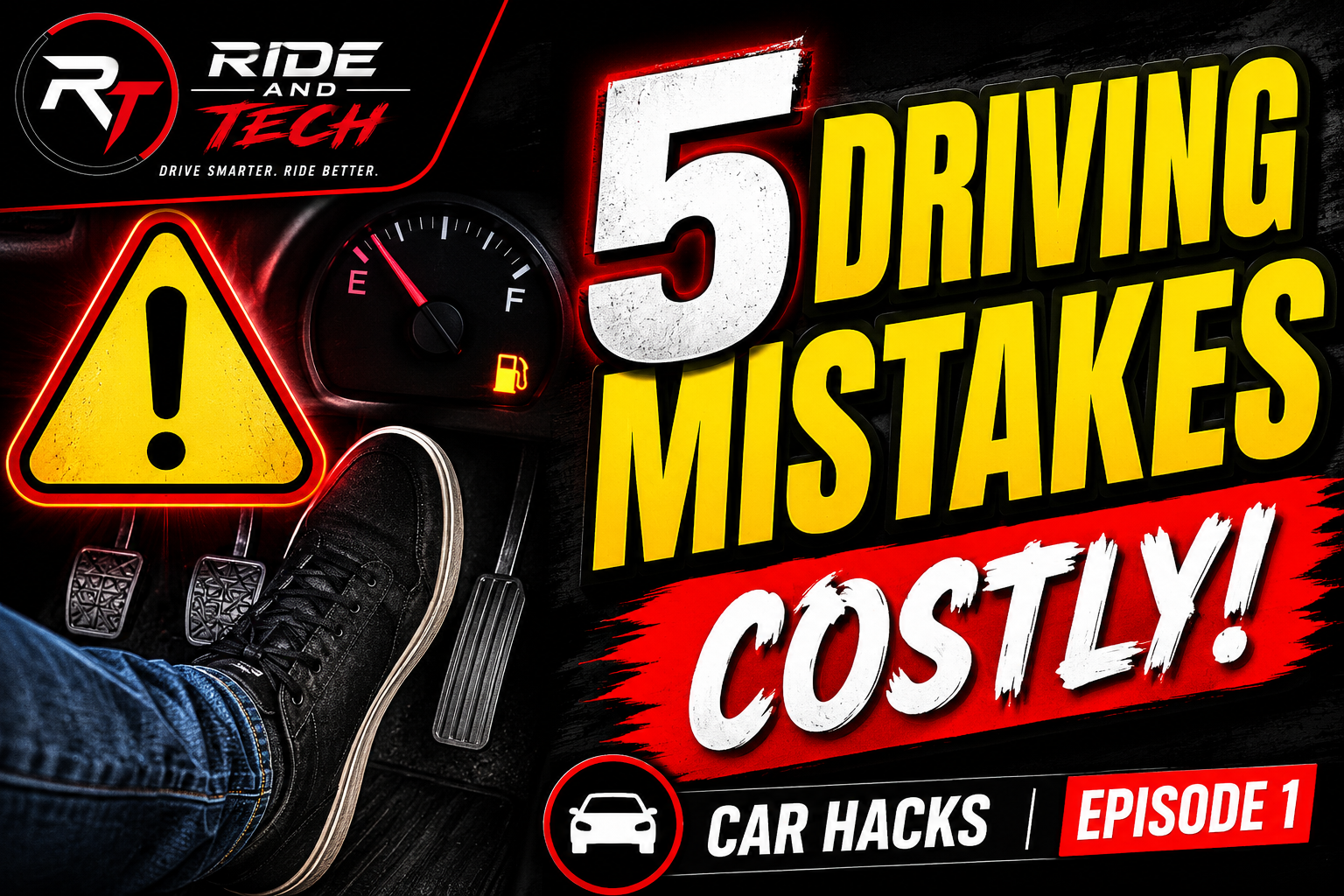
Many drivers unknowingly develop habits that can reduce vehicle life, increase maintenance costs, and lead to expensive repairs. While modern cars are built to be reliable, poor driving habits can still cause unnecessary wear and tear over time.
In this edition of Ride & Tech Car Hacks, we look at five common driving mistakes that could be costing you money without you even realizing it.
Watch the Video
1. Resting Your Foot on the Clutch
Many drivers have a habit of keeping their foot lightly resting on the clutch pedal while driving. Although it may seem harmless, this creates constant pressure on clutch components.
Over time, clutch riding can lead to:
- Premature clutch wear
- Reduced clutch life
- Expensive replacement costs
The best practice is to completely remove your foot from the clutch pedal when it is not being used.
2. Driving on Low Fuel
Driving with the fuel gauge near empty on a regular basis can be harmful to your vehicle.
Fuel helps cool and lubricate the fuel pump. When fuel levels remain consistently low, the fuel pump may work harder than intended. In addition, sediment that settles at the bottom of the fuel tank can sometimes affect fuel system components over time.
To avoid potential issues, try to refill your vehicle before the fuel level becomes critically low.
3. Ignoring Tire Pressure
Incorrect tire pressure is one of the most common yet overlooked vehicle maintenance issues.
Driving with underinflated or overinflated tires can result in:
- Uneven tire wear
- Reduced fuel efficiency
- Poor handling
- Increased stopping distance
Checking tire pressure regularly takes only a few minutes and can significantly improve safety and tire life.
Also Read: Top 5 Fastest Hypercars in the World (2026): The Race Beyond 500 KM/H
4. Driving Hard on a Cold Engine
Many drivers accelerate aggressively immediately after starting the engine.
When an engine is cold, the oil has not yet fully circulated through all internal components. Driving aggressively during this period increases stress on the engine and can contribute to long-term wear.
Allow your vehicle a short warm-up period and drive gently for the first few minutes, especially during colder weather.
5. Ignoring Engine Oil Condition
Engine oil is critical for lubricating and protecting internal engine components.
Old or contaminated oil may lose its effectiveness, increasing friction and wear inside the engine.
Warning signs include:
- Dark and dirty oil
- Increased engine noise
- Oil warning lights
- Reduced engine performance
Following the manufacturer’s recommended oil change intervals is one of the simplest ways to protect your engine.
Why These Driving Habits Matter
Small driving mistakes often go unnoticed because they do not cause immediate problems. However, over months and years, these habits can significantly increase maintenance costs and reduce vehicle reliability.
By avoiding these common mistakes, drivers can:
- Extend vehicle life
- Improve safety
- Reduce repair expenses
- Maintain better fuel efficiency
- Improve overall driving experience
Conclusion
Good driving habits play an important role in keeping your vehicle reliable and cost-effective to own. Avoiding these five common mistakes can help prevent unnecessary repairs and keep your car running smoothly for years.
Whether you’re a new driver or an experienced car owner, paying attention to these simple habits can make a big difference in long-term vehicle health.
At Ride & Tech, we’ll continue sharing practical car hacks, maintenance tips, and automotive insights to help you drive smarter and save money.
Frequently Asked Questions
Does resting your foot on the clutch really damage it?
Yes. Continuous pressure on the clutch system can increase wear and reduce clutch life over time.
Is it bad to drive with very low fuel?
Occasionally doing so is unlikely to cause immediate damage, but regularly driving on low fuel can place additional stress on the fuel system.
How often should tire pressure be checked?
Most experts recommend checking tire pressure at least once a month and before long trips.
How long should I wait before driving a cold engine?
Modern vehicles do not require lengthy warm-ups. Driving gently for the first few minutes is generally sufficient.
How often should engine oil be changed?
Oil change intervals vary by vehicle and oil type. Always follow the recommendations in your owner’s manual.
For in-depth stories, reviews and the latest updates from the world of automobiles and technology, head over to Ride and Tech.
Copyright (c) Ride And Tech. All rights reserved.

3 thoughts on “5 Driving Mistakes That Can Cost You Money and Damage Your Car”