


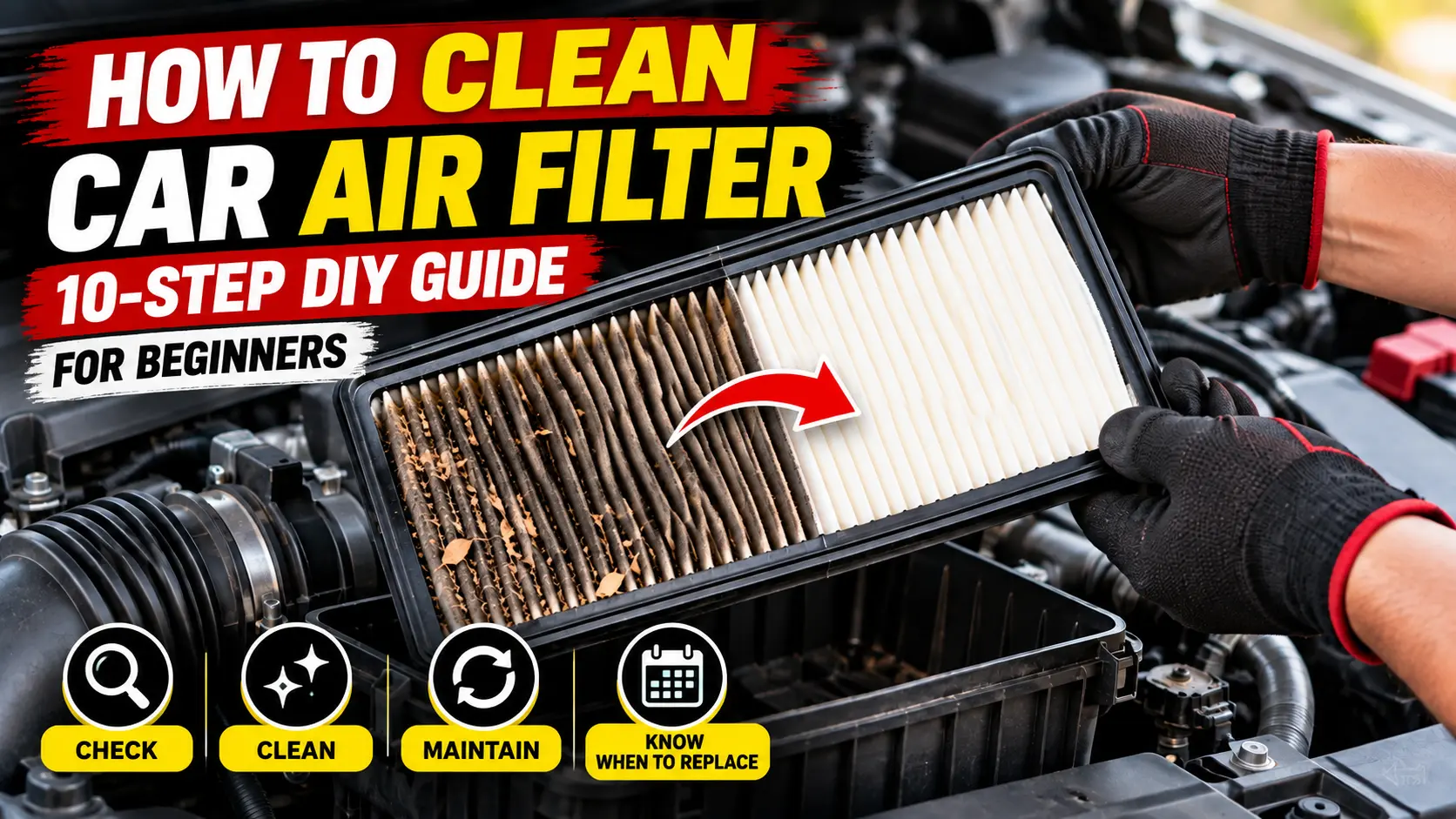
Your car needs a steady supply of clean air for the engine to work properly. The engine air filter sits between the outside air and the engine intake system, trapping dust, dirt and other particles before they can enter the engine. Over time, that filter becomes contaminated, which is why knowing how to clean car air filter components—or when to replace them—is a useful part of basic vehicle maintenance.
A dirty filter can restrict airflow and affect the way the engine breathes. However, cleaning is not always the correct solution. Many conventional engine air filters use paper or cellulose-based filter media and are intended to be replaced rather than washed or repeatedly cleaned. Toyota, for example, warns that running an engine without its air-cleaner filter can allow dirt into the engine and cause excessive wear, while filter manufacturers commonly recommend replacement at specified intervals.
This DIY guide explains how to clean car air filter housings safely, how to inspect the filter itself, when cleaning is appropriate, and when installing a new filter is the better option.
What Does a Car Air Filter Do?
The engine air filter prevents dust, road debris and other contaminants from entering the engine through the intake system. The engine needs air for combustion, but that air must be filtered before it reaches sensitive engine components.
A clean filter allows the intake system to provide the airflow the engine needs while trapping unwanted particles. As dirt accumulates, the filter can become increasingly restrictive, which can contribute to reduced engine performance.
This is why checking the filter should be part of routine vehicle maintenance rather than something you only consider when the car develops a problem.
Read More: How to Check and Top Up Engine Oil Yourself
Can You Actually Clean a Car Air Filter?
The answer depends on what type of air filter your vehicle uses.
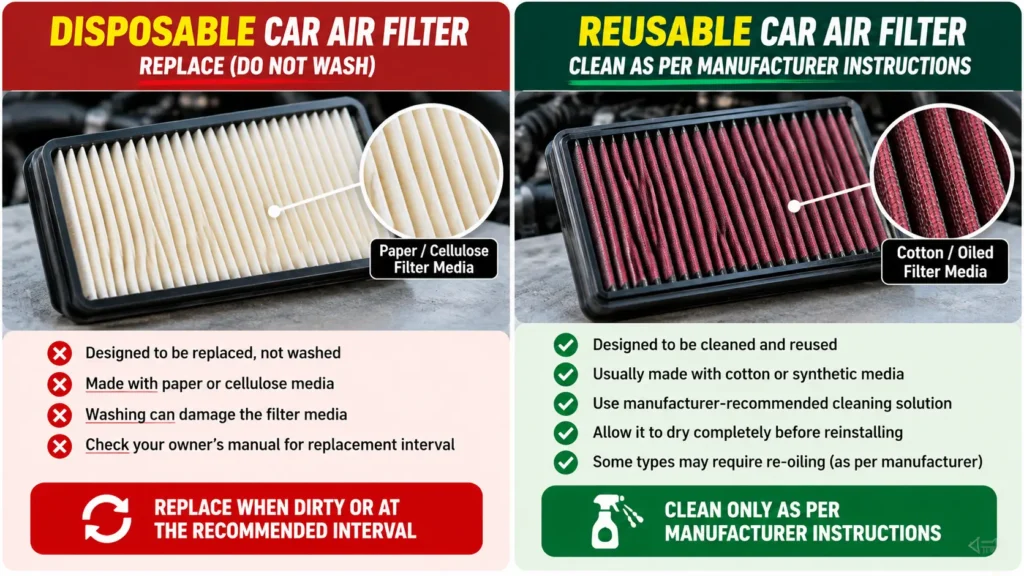
Many modern cars use disposable pleated filters made with paper or synthetic filter media. These filters are generally designed to be removed and replaced rather than washed. Manufacturers and filter suppliers commonly provide replacement intervals rather than instructions for washing these filters.
Some vehicles and aftermarket systems use reusable filters that can be cleaned according to the manufacturer’s specific procedure. These may require a dedicated cleaning solution, drying procedure and sometimes a specific filter oil, depending on the design.
Therefore, before searching for how to clean car air filter instructions, check your owner’s manual or the filter manufacturer’s instructions. If the filter is identified as disposable, replacing it is normally the appropriate maintenance procedure.
Signs of a Dirty or Clogged Air Filter
A visual inspection is one of the easiest ways to determine the condition of an engine air filter. A filter that is heavily loaded with dust, dirt or debris deserves attention, especially if it has reached the replacement interval specified for the vehicle.
Other possible signs of a restricted air filter can include reduced acceleration, changes in engine response or reduced overall performance. However, these symptoms can have many other causes, so they should not automatically be blamed on the air filter.
If the filter is visibly damaged, badly deformed, wet or unable to seal properly around its housing, replacement is generally preferable to attempting to clean it.
What You Need Before Starting
For a basic inspection or replacement, you usually do not need a large collection of tools. Depending on the vehicle, the air-filter housing may use clips, screws or other fasteners, so the exact requirements vary from one model to another.
For a typical DIY inspection, keep a clean work area, a suitable screwdriver or tool for the housing fasteners if required, a vacuum cleaner for loose debris and a clean cloth available. Safety glasses and gloves are also sensible when working around the engine compartment. Toyota’s DIY service guidance specifically recommends precautions around hot components and moving parts and advises using safety glasses when appropriate.
How to Clean Car Air Filter: Step-by-Step
1. Park the Car Safely and Let the Engine Cool
Park the vehicle on a level surface, switch the engine off and allow the engine compartment to cool before beginning work. Do not start working immediately after a long drive because components under the hood can remain hot.
Keep your hands, clothing and tools away from moving parts, belts and fans. The engine compartment can also contain hot surfaces and fluids, so taking a few minutes to prepare safely is important.
2. Locate the Engine Air Filter Housing
Open the hood and identify the air-filter housing. On many vehicles, it is a rectangular or similarly shaped plastic box connected to the engine’s air-intake duct.
The exact location and design vary considerably between cars. If you cannot identify the housing confidently, use the owner’s manual instead of disconnecting intake components at random. FRAM’s installation guidance similarly recommends consulting the vehicle manual when necessary.
3. Open the Air Filter Housing Carefully
Release the clips or remove the screws securing the housing cover. Do not force the cover if it does not open easily because some designs may have additional fasteners or components that need to be moved first.
Before removing the filter, take a moment to observe how it is positioned. This makes it easier to reinstall a reusable filter correctly or identify the correct orientation when installing a replacement.
4. Remove and Inspect the Filter
Lift the filter out carefully and inspect both the filter media and the sealing edge. Look for accumulated dust, leaves, insects, moisture, tears, deformation or other visible damage.
A moderate amount of dust does not automatically mean the filter can be washed. If it is a conventional disposable filter, the correct approach is generally replacement according to the vehicle manufacturer’s recommendation rather than attempting to restore it through aggressive cleaning.
5. Clean the Air Filter Housing
This is the part of the process where DIY cleaning is particularly useful. With the filter removed, inspect the inside of the housing for loose dirt, leaves and other debris.
Use a vacuum cleaner to remove loose contamination from the housing without allowing debris to fall deeper into the intake system. Filter manufacturers also recommend cleaning the housing before installing a replacement filter.
Do not leave loose dirt inside the housing simply because the filter itself looks clean. The housing should be reasonably clean before the filter goes back in.
6. Do Not Wash a Disposable Filter Unless the Manufacturer Allows It
This is one of the most important points when learning how to clean car air filter components. A conventional paper-type engine air filter should not automatically be treated like a washable household filter.
Water, detergents or aggressive cleaning methods can damage the filter media or affect its ability to trap contaminants. If the manufacturer’s instructions identify the filter as disposable, install a new filter rather than trying to wash it.
For reusable filters, follow the specific cleaning procedure supplied by the filter manufacturer. Do not assume that instructions for one reusable filter apply to another design.
7. Check the Filter Seal and Housing
Before reinstalling the filter, inspect the sealing surface around the housing. The filter should sit correctly and form a proper seal around its perimeter.
An incorrectly seated filter can allow unfiltered air to bypass the filter, defeating the purpose of the entire intake system. FRAM’s installation instructions specifically emphasize that a replacement filter should be seated correctly and sealed around the perimeter.
8. Reinstall the Filter Correctly
Place the filter back into its housing only if it is a reusable type that the manufacturer says can be cleaned, or if you are reinstalling a filter that remains serviceable according to the vehicle’s instructions.
Make sure it sits flat and in the correct orientation. Never force the filter into position because a distorted filter or damaged seal can create an unwanted gap around the edge.
9. Close and Secure the Housing
Once the filter is correctly positioned, reinstall the housing cover and secure all clips, screws or fasteners. Check the entire perimeter to make sure the cover is properly closed.
A loose air-filter housing can allow unfiltered air or debris to enter the intake system. It can also create unwanted intake noise or other problems, so do not treat the housing cover as a cosmetic component.
10. Start the Engine and Check Your Work
After everything has been secured, start the engine and allow it to idle normally. Listen for anything unusual around the air-intake area and make sure the housing remains properly closed.
If the engine develops an unusual sound, warning light or drivability problem after the work, switch it off and recheck the installation. If the issue remains, have the vehicle inspected rather than continuing to drive with an uncertain intake-system installation.
How Often Should You Check a Car Air Filter?
There is no single replacement interval that applies to every car. The correct interval depends on the vehicle, engine, filter design and operating environment, which is why the owner’s manual should be the primary reference.
Toyota recommends checking the air filter at the vehicle’s specified service intervals, while filter manufacturers publish their own replacement recommendations for particular products. FRAM, for example, gives specific replacement intervals for some of its filters but also directs owners to follow the vehicle manufacturer’s recommended interval.
Vehicles driven regularly in dusty, polluted or otherwise harsh environments may require more frequent inspection. If you frequently drive on unpaved roads or in conditions with a high amount of airborne dust, ask your manufacturer or service professional whether the normal inspection schedule should be adjusted.
Cleaning vs Replacing a Car Air Filter
The biggest mistake is assuming that every dirty filter needs to be cleaned. In reality, the decision should be based on the filter’s design and condition.
| Filter condition/type | Recommended approach |
|---|---|
| Disposable paper filter | Replace according to manufacturer guidance |
| Reusable performance filter | Clean according to manufacturer’s procedure |
| Torn or damaged filter | Replace |
| Wet or contaminated filter | Inspect and normally replace if damaged or unsuitable for reuse |
| Correctly serviceable reusable filter | Clean and reinstall according to instructions |
| Filter with damaged seal | Replace |
A new filter is relatively simple to install, and many manufacturers provide replacement instructions that require only basic tools or no tools at all.
What Happens If You Drive With a Very Dirty Air Filter?
A heavily contaminated air filter can restrict airflow into the engine. Reduced airflow can affect engine performance, and filter manufacturers identify restricted airflow as one factor that can contribute to reduced acceleration and overall performance.
However, not every performance problem is caused by the air filter. Issues involving fuel delivery, ignition, sensors, turbocharging, intake leaks or other engine components can create similar symptoms.
That is why replacing an old filter can be sensible maintenance, but it should not be used as a diagnosis for every engine problem.
Can You Clean a Car Air Filter With Compressed Air?
It is tempting to use compressed air to blow dust out of a filter, but you should not assume that this is safe for every filter design. Excessive pressure can potentially damage delicate filter media or compromise its ability to filter contaminants.
The safer approach is to follow the specific maintenance instructions supplied with the filter. If it is a disposable filter, replacing it is generally preferable to repeatedly trying to extend its life through aggressive cleaning.
Engine Air Filter vs Cabin Air Filter
It is also important not to confuse the engine air filter with the cabin air filter.
The engine air filter protects the engine’s intake system by filtering air entering the engine. The cabin air filter, meanwhile, filters air entering the passenger compartment through the ventilation and air-conditioning system.
The two filters have different locations, functions and maintenance procedures. If you are trying to find how to clean car air filter instructions, first make sure you are working with the engine air filter rather than the cabin filter.
Common Mistakes to Avoid
One common mistake is washing a disposable paper filter simply because it looks dirty. Another is reinstalling a filter without checking whether it is sitting correctly in its housing, which can create a gap around the sealing edge.
Drivers should also avoid running the engine with the air filter removed. Toyota’s maintenance guidance specifically warns that operating without the air-cleaner filter can allow dirt into the engine and cause excessive engine wear.
Finally, avoid choosing a replacement filter based only on appearance or price. The filter must be compatible with the exact vehicle and engine, and it should fit correctly within the original housing.
Read More: Night Driving Tips
DIY Air Filter Maintenance Checklist
Before finishing the job, check that you have completed each important step. The filter housing should be clean, the correct filter should be installed or properly serviced, and the housing should be securely closed.
A simple checklist can make the process easier:
- Park safely and allow the engine to cool.
- Locate the correct engine air-filter housing.
- Open the housing carefully.
- Inspect the filter for dirt and damage.
- Check whether the filter is disposable or reusable.
- Clean the housing and remove loose debris.
- Do not wash a disposable filter.
- Follow the manufacturer’s procedure for reusable filters.
- Make sure the filter sits correctly.
- Secure the housing completely.
- Start the engine and check for unusual problems.
Frequently Asked Questions
Can I clean my car air filter at home?
Yes, you can inspect and service many air-filter systems at home, but whether the filter itself can be cleaned depends on its design. Disposable filters should generally be replaced, while reusable filters should be cleaned only according to their manufacturer’s instructions.
How do I know if my car air filter needs replacing?
Inspect the filter for heavy contamination, damage, deformation or a compromised seal, and compare its condition with the replacement interval in your owner’s manual. If the filter is damaged or designed as disposable and has reached its service interval, replacement is usually the appropriate solution.
Can I wash a paper car air filter?
You should not wash a conventional disposable paper engine air filter unless the manufacturer specifically says that it is washable. Washing can damage the filter media and may leave you with a filter that no longer performs as intended.
Does a dirty air filter reduce performance?
A heavily contaminated filter can restrict airflow, and filter manufacturers associate restricted airflow with reduced acceleration and overall performance. However, similar symptoms can come from many other engine problems, so an air filter should not automatically be considered the cause.
How often should I change my car air filter?
The correct interval varies by vehicle and operating conditions. Follow the owner’s manual or manufacturer’s service schedule rather than relying on one universal mileage or time interval.
Ride And Tech Verdict
Learning how to clean car air filter components is useful, but the most important lesson is knowing the difference between cleaning and replacing. A conventional disposable engine air filter is usually not something you should wash or repeatedly try to restore; when it is dirty or reaches its recommended service interval, fitting the correct new filter is generally the safer approach.
For reusable filters, follow the manufacturer’s cleaning procedure carefully and never assume that one filter’s maintenance method applies to another. A clean filter, a properly sealed housing and regular inspection can help maintain the engine’s intake system while keeping this simple maintenance task within reach of many DIY car owners.
Ride And Tech — Where Ride Meets Tech.
Drive Smarter. Ride Smarter.
Copyright (c) Ride And Tech. All rights reserved.

1 thought on “How to Clean Car Air Filter: 10-Step DIY Guide for Beginners”