

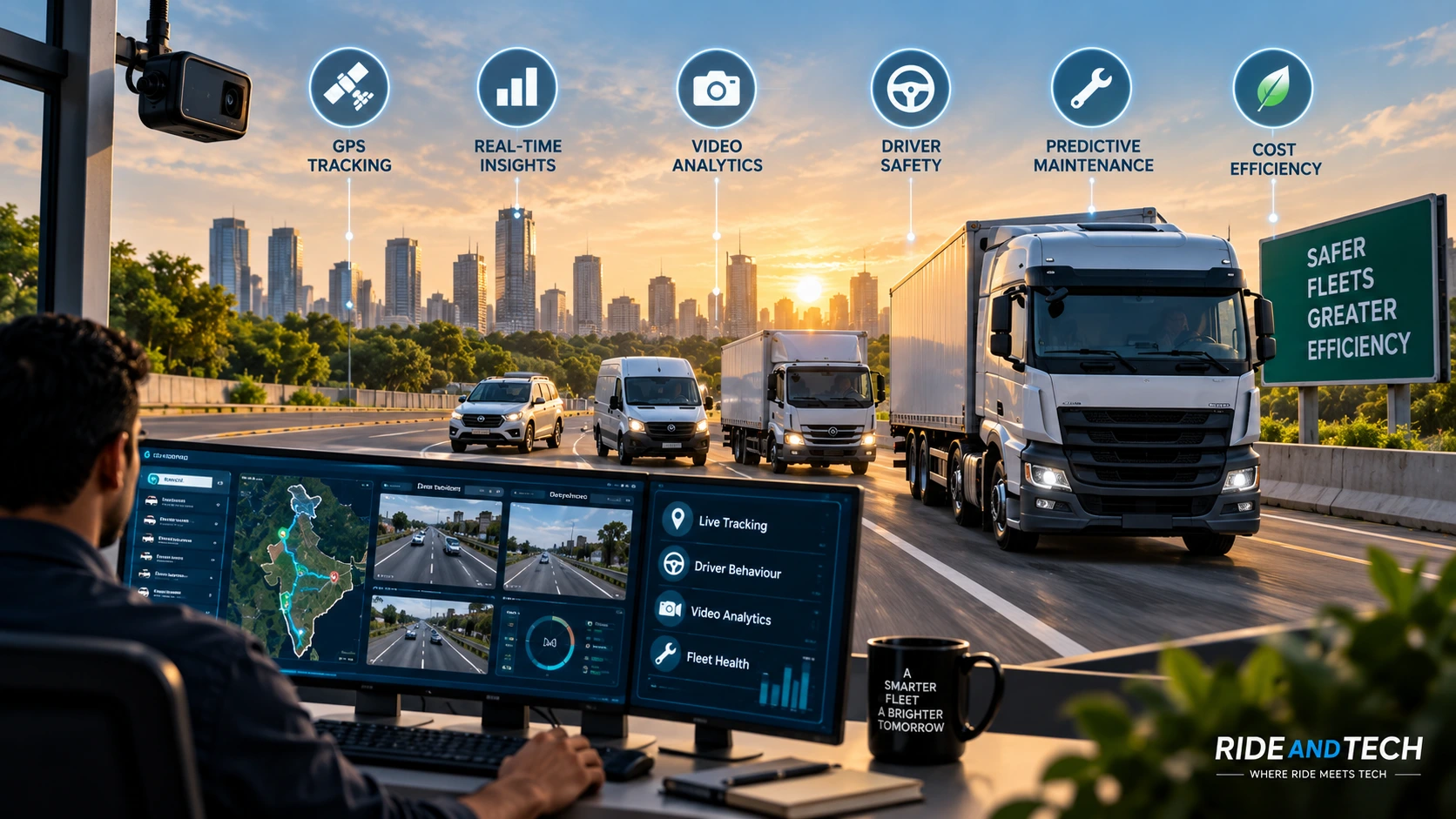
Fleet management has changed dramatically as commercial vehicles become more connected. A fleet manager no longer has to rely entirely on driver reports, periodic inspections or a vehicle returning to the depot before understanding what happened on the road. Modern smart fleet management systems can bring together location data, vehicle diagnostics, driving behavior and video into one operational picture.
At the center of this shift are fleet telematics and video telematics. Telematics can show where a vehicle is, how it is being driven and what is happening with key vehicle parameters, while video systems add visual context to important driving events. When these data streams work together, fleet operators can move from simply reacting to incidents toward identifying risks, improving driver coaching, managing maintenance and reducing unnecessary downtime.
What Is Smart Fleet Management?
Smart fleet management is the use of connected technologies and fleet data to monitor, analyze and improve the performance of commercial vehicles and their drivers. Instead of treating every vehicle as an isolated asset, the system creates a continuous flow of information that fleet managers can use to make operational decisions.
Depending on the platform and vehicle, that information can include GPS location, vehicle status, fuel or energy consumption, mileage, diagnostic information, harsh braking, acceleration, speeding and other driving events. Modern platforms can also connect this information with routing, maintenance and safety workflows.
The important difference is not simply having more data. The real value comes from turning that data into an action. A speeding event, for example, becomes more useful when it triggers an appropriate driver-coaching process rather than simply appearing as another number on a dashboard.
Read More: Connected Car Security: How to Protect Your Car From Automotive Hacking
What Is Fleet Telematics?
Fleet telematics combines vehicle data, communications technology and location tracking to provide visibility into how vehicles are being used.
A telematics device or connected vehicle can transmit information such as location, mileage, vehicle diagnostics and driving events to fleet-management software. Depending on the system, managers can also use the platform to monitor fuel consumption, idling, maintenance requirements and driver behavior.
This gives fleet operators something that traditional fleet management cannot provide as easily: a near-real-time view of vehicles while they are actually working.
Consider a delivery vehicle that repeatedly spends long periods idling. A fleet manager can identify the pattern from telematics data, investigate why it is happening and address the underlying behavior or operational problem. The same principle applies to harsh braking, speeding or inefficient vehicle utilization.
What Can Fleet Telematics Monitor?
Depending on the hardware and software used, a smart fleet management system can monitor:
- Vehicle location and trip history
- Speed and driving patterns
- Harsh acceleration and braking
- Idling
- Mileage and vehicle utilization
- Fuel or energy consumption
- Vehicle diagnostics
- Maintenance-related information
- Driver safety events
- Route and dispatch information
This information can help fleet managers understand not only where vehicles are, but also how they are being used.
What Is Video Telematics?
Telematics becomes considerably more powerful when vehicle data is combined with camera footage. This is commonly known as video telematics.
Video telematics combines dash-camera footage with vehicle data and, increasingly, artificial intelligence to provide more context around driving events. Instead of seeing only that a vehicle braked sharply, a fleet manager may be able to review what was happening on the road immediately before the event.
That distinction matters.
A harsh-braking alert by itself does not explain whether the driver was behaving dangerously or avoiding an unexpected hazard. Video can provide the missing context.
Modern AI-enabled camera systems can also detect certain risky behaviors or situations, such as distraction, phone use, drowsiness, tailgating and lane-related risks, depending on the system and its capabilities. Some platforms can provide in-cab alerts while the vehicle is moving rather than waiting for a manager to review footage later.
Why Telematics and Video Analytics Work Better Together
Telematics tells you what happened. Video can help explain why it happened.
That combination is one of the most important developments in smart fleet management.
Imagine a fleet vehicle suddenly brakes hard. Telematics records the event, location and vehicle data. Video can then show whether the driver was following another vehicle too closely, whether traffic suddenly stopped, or whether another road user created an unexpected hazard.
The result is a much more complete picture.
This can improve driver coaching because managers can focus on actual risk rather than making assumptions from a single data point. It can also help during collision investigations or disputes by providing visual evidence alongside vehicle and location data.
How Smart Fleet Management Improves Driver Safety
Driver safety is one of the strongest reasons companies adopt connected fleet technology.
Telematics can identify patterns such as speeding, harsh braking, harsh cornering or excessive acceleration. Fleet managers can then use those patterns to identify drivers who may benefit from additional training or coaching.
Video analytics takes this further by providing visual context and, on some systems, detecting specific risky behaviors.
The goal should not be to create a surveillance-heavy environment where drivers are simply punished for every event. The more effective approach is to use the information to identify recurring risks, coach drivers and build safer habits.
That distinction is important because a good fleet safety programme is ultimately about reducing incidents rather than generating more alerts.
Video Analytics Can Add Context to Road Events
One of the biggest limitations of data-only fleet monitoring is context.
Suppose a vehicle changes lanes suddenly. A telematics system may identify the maneuver as a potentially risky event. But without video, it may be difficult to determine whether the driver made an unsafe maneuver or moved quickly to avoid a road hazard.
Video can help fleet managers investigate the event more accurately.
It can also provide useful evidence after a collision or other incident. Integrated systems can associate footage with vehicle and event data, making it easier to locate relevant footage and understand what occurred.
Smart Fleet Management and Predictive Maintenance
Fleet technology is not only about drivers.
Vehicle diagnostics and connected data can help fleet managers identify maintenance requirements and spot developing problems before they turn into major operational disruptions. Modern fleet platforms increasingly position predictive maintenance as a way to anticipate issues rather than simply respond after a breakdown occurs.
This can improve vehicle uptime because maintenance teams have better information about vehicle condition and usage.
For a large commercial fleet, preventing even a small number of unexpected breakdowns can make a significant operational difference. A vehicle that remains unavailable for an entire shift can affect deliveries, customer commitments and driver schedules.
Smart maintenance therefore becomes part of smart fleet management rather than a separate activity.
Can Smart Fleet Management Reduce Fleet Costs?
Potentially, yes—but the technology itself does not automatically create savings.
The savings come from acting on the information the system provides.
For example, fleet operators can use telematics to identify excessive idling, inefficient driving patterns or poor vehicle utilization. Better route and utilization planning can also reduce wasted time and unnecessary vehicle use.
Safety technology can contribute to cost control in another way. Identifying risky driving and providing timely coaching can help fleets reduce the frequency and severity of incidents. Video evidence can also be useful when investigating collisions and insurance disputes.
The key is implementation. A fleet collecting thousands of data points without a clear process for acting on them has simply created a larger database, not a smarter operation.
Operational Efficiency Goes Beyond GPS Tracking
GPS tracking was one of the earliest major fleet-management applications, but modern smart fleet management goes considerably further.
A connected fleet can combine location, vehicle status, driver behavior, maintenance information and safety events into a broader operational picture. That can help managers make better decisions about routing, dispatch, utilization and maintenance.
This is particularly valuable for businesses operating large or geographically distributed fleets, where manually checking individual vehicles becomes increasingly difficult.
The objective is not to watch every vehicle every second. It is to give managers the information they need to identify exceptions, respond to problems and improve the system as a whole.
The Role of AI in Modern Fleet Management
Artificial intelligence is becoming an important part of vehicle video analytics.
Instead of requiring someone to watch hours of recorded footage, AI-powered systems can analyze video and identify predefined safety events. Depending on the technology, this can include behaviors such as phone use, distraction, fatigue-related indicators, tailgating and other risky events.
This changes the economics of fleet video.
A human cannot realistically review every minute of footage from hundreds or thousands of vehicles. An automated system can prioritize events that deserve attention, allowing safety teams to focus their time where the risk is highest.
However, AI detection should not be treated as infallible. Fleet operators still need appropriate policies, human review and responsible driver-coaching practices.
Privacy and Driver Trust Matter Too
Smart fleet management introduces an important issue that older fleet-tracking systems did not always face to the same degree: privacy.
Cameras and connected vehicle systems can collect significant amounts of information about drivers and their journeys. Businesses therefore need clear policies covering what is collected, why it is collected, who can access it and how long information is retained.
The best systems are not simply the ones that collect the most data. They are the ones that use relevant data responsibly while maintaining driver trust.
This becomes particularly important when inward-facing cameras or AI-based driver monitoring are used.
Smart Fleet Management in India
India’s commercial transport ecosystem provides a strong use case for connected fleet technology.
Delivery vehicles, logistics fleets, buses, taxis, construction vehicles and service fleets operate across increasingly complex road and traffic conditions. Fleet operators therefore need better visibility into vehicle utilization, driver behavior, maintenance and safety.
The opportunity is particularly significant as connected vehicles and digital fleet platforms become more common.
For Indian operators, however, the technology needs to solve practical problems rather than simply add another dashboard. Fuel or energy consumption, vehicle downtime, driver safety, route efficiency, maintenance and utilization are the areas where connected data can deliver the clearest operational value.
What Should Fleet Operators Look for in a Smart Fleet Management System?
There is no single system that is perfect for every fleet. The right solution depends on fleet size, vehicle type, operating environment and business requirements.
A capable system should ideally provide:
- Reliable vehicle and location data
- Driver safety monitoring
- Vehicle diagnostics
- Maintenance support
- Useful reporting and analytics
- Integration between telematics and video
- Real-time or near-real-time alerts where appropriate
- Practical driver-coaching workflows
- Appropriate data-security and privacy controls
- Scalability as the fleet grows
The most important question is not how many features a platform advertises. It is whether the system can turn fleet data into decisions that improve safety, efficiency and uptime.
Read More: OTA Updates in Cars: How They Work and Why They Matter
The Future of Smart Fleet Management
The next stage of fleet management will be less about simply tracking vehicles and more about predicting what is likely to happen next.
Connected vehicle data, AI-based video analytics, predictive maintenance and increasingly sophisticated fleet software are moving the industry toward proactive management. Platforms are already combining telematics and AI video into unified safety systems, while predictive maintenance tools use vehicle-health information to anticipate potential problems.
That does not mean human fleet managers will become unnecessary.
Quite the opposite. The role is likely to shift from manually monitoring individual vehicles toward interpreting data, prioritizing risks, coaching drivers and making higher-level operational decisions.
The smartest fleet will not necessarily be the one with the most sensors. It will be the one that turns connected data into better decisions.
FAQs
What is smart fleet management?
Smart fleet management uses connected vehicle technologies such as telematics, GPS tracking, vehicle diagnostics and video analytics to monitor and improve fleet safety, efficiency, maintenance and utilization.
What is fleet telematics?
Fleet telematics combines vehicle data, communications technology and location tracking to provide information about vehicle location, usage, diagnostics and driving behavior.
What is video telematics?
Video telematics combines camera footage with vehicle and telematics data. AI-powered systems can also analyze video to identify certain risky driving behaviors and provide safety alerts.
Can telematics improve driver safety?
Yes. Telematics can identify patterns such as speeding, harsh braking and harsh acceleration, helping fleet managers identify safety risks and provide targeted coaching.
Can video analytics help after a collision?
Yes. Video footage can provide visual context around an incident and may help fleet operators investigate collisions, disputes and other safety events.
Does smart fleet management reduce operating costs?
It can. Better monitoring of fuel or energy use, idling, vehicle utilization, maintenance and driving behavior can help reduce waste and downtime. However, savings depend on how effectively a fleet acts on the data.
Is smart fleet management useful for electric vehicle fleets?
Yes. Connected fleet systems can also help operators monitor EV usage and integrate vehicle information into broader fleet-management decisions. The exact data available depends on the vehicle, hardware and software platform.
Ride And Tech Verdict
Smart fleet management is no longer simply about knowing where a vehicle is. It is about understanding what the vehicle, driver and road environment are doing—and using that information before a small problem becomes a major one.
Telematics provides the operational backbone, while video analytics adds the visual context that traditional fleet tracking cannot provide. Together, they can help operators improve driver safety, investigate incidents, manage maintenance and make better use of vehicles.
But technology alone will not create a smarter fleet. The real advantage comes when businesses combine good data with sensible safety policies, responsible driver coaching and disciplined maintenance practices.
As commercial transportation becomes more connected, smart fleet management will increasingly become the bridge between vehicle data and better real-world decisions.
Ride And Tech — Where Ride Meets Tech.
Drive Smarter. Ride Smarter.
Copyright (c) Ride And Tech. All rights reserved.

2 thoughts on “Smart Fleet Management: How Telematics and Video Analytics Improve Fleet Safety and Efficiency”