



The McLaren McL 6GT has made its world debut at Monterey Car Week 2026, giving the British performance-car manufacturer one of its most distinctive new models in years. More than simply another McLaren supercar, the McL 6GT is a modern interpretation of an unfinished vision from the company’s founder, Bruce McLaren, and previews a highly exclusive production model expected in 2028.
What makes the new McLaren supercar particularly significant is its focus on driver involvement. The McL 6GT combines a V8 powertrain with rear-wheel drive and a manual transmission, bringing a more analogue character to a segment increasingly dominated by automated gearboxes, hybrid systems and software-heavy performance cars.
The unveiling also makes the McL 6GT one of the major Monterey Car Week 2026 car reveals, alongside a growing list of new supercars, hypercars and special projects being presented during one of the world’s most important automotive weeks.
For McLaren, however, the story goes deeper than a new model. The McLaren McL 6GT represents a connection between the company’s early road-car ambitions and its modern supercar engineering philosophy — while potentially opening the door to a new class of limited-production, ultra-exclusive cars.
Read More: Mahindra BE 6 Sporteq
McLaren McL 6GT: A Modern Interpretation of Bruce McLaren’s M6GT Dream
The story behind the McLaren McL 6GT goes back to the late 1960s. Bruce McLaren had envisioned a road-going sports car based on the M6 racing programme, with the original M6GT becoming an important part of McLaren’s early road-car ambitions. The project never reached full production after Bruce McLaren’s death in 1970.
More than five decades later, McLaren has revisited that idea with the new McL 6GT concept. Rather than simply borrowing the name, the new McLaren supercar uses the original M6GT as a design and engineering inspiration while combining it with modern carbon-fibre construction and contemporary performance technology.
The connection is particularly significant because the original M6GT was designed around the idea of making a lightweight, driver-focused road car. The modern McL 6GT follows a similar philosophy, but with the benefit of more than half a century of McLaren engineering development.
A Supercar Designed Around Driver Involvement
At a time when many high-performance cars are moving toward increasingly automated transmissions and electrified powertrains, McLaren has taken a deliberately different approach with this project.
The McLaren McL 6GT uses a rear-wheel-drive layout, a V8 internal-combustion engine and a six-speed manual gearbox. McLaren has also retained hydraulic steering, reinforcing the car’s focus on physical interaction between the driver and the machine.
That makes the car particularly interesting among the Monterey Car Week 2026 supercars. The event is showcasing numerous technologically advanced performance cars, but the McL 6GT stands out by deliberately bringing back mechanical elements that are becoming increasingly rare.
The manual gearbox is arguably its biggest talking point. The McL 6GT becomes McLaren’s first road car with a manual transmission since the legendary F1, which debuted in 1992.
For enthusiasts, that makes this more than another new McLaren supercar. It is a statement about the kind of driving experience McLaren believes can still matter in an increasingly digital performance-car era.
V8 Power, Manual Gearbox and Lightweight Construction
The mechanical philosophy of the McLaren McL 6GT is what separates it from many of today’s high-performance cars. Instead of combining a combustion engine with hybrid assistance and an automated transmission, McLaren has focused this project around a rear-wheel-drive V8 and a six-speed manual gearbox. The company has not yet announced final power figures for the production car.
A Manual McLaren Returns
The six-speed manual transmission is arguably the biggest talking point. The McLaren 6GT manual setup brings a traditional three-pedal layout back to the brand’s road-car range for the first time since the McLaren F1 era.
This makes the McL 6GT particularly unusual among modern McLaren supercars, where automated transmissions have become the norm. Rather than chasing headline performance figures alone, McLaren is using the manual gearbox to make the driver an active part of the experience.
The approach also gives the McLaren manual supercar a clear identity within the company’s future lineup. At a time when many performance cars are adding more electric assistance and electronic intervention, the McL 6GT deliberately places greater emphasis on mechanical feedback.
Carbon Fibre at the Core
Lightweight construction is another major part of the formula. The McLaren McL 6GT uses a super-lightweight carbon-fibre monocoque and carbon-fibre bodywork, continuing the engineering philosophy that has been central to McLaren’s road cars. Hydraulic steering is also retained to provide a more direct connection between the driver and the front wheels.
McLaren has not released the complete production specifications yet, meaning McLaren McL 6GT performance figures, final weight and output remain to be confirmed.
That distinction is important. Rather than filling the gaps with estimates, Ride And Tech will update the article when McLaren releases official production specifications.
For now, the confirmed formula is compelling:
V8 engine + rear-wheel drive + six-speed manual + carbon-fibre construction + hydraulic steering.
It gives the McLaren McL 6GT V8 a very different character from many of the electrified supercars appearing at Monterey Car Week 2026.
A Design That Connects McLaren’s Past With Its Future
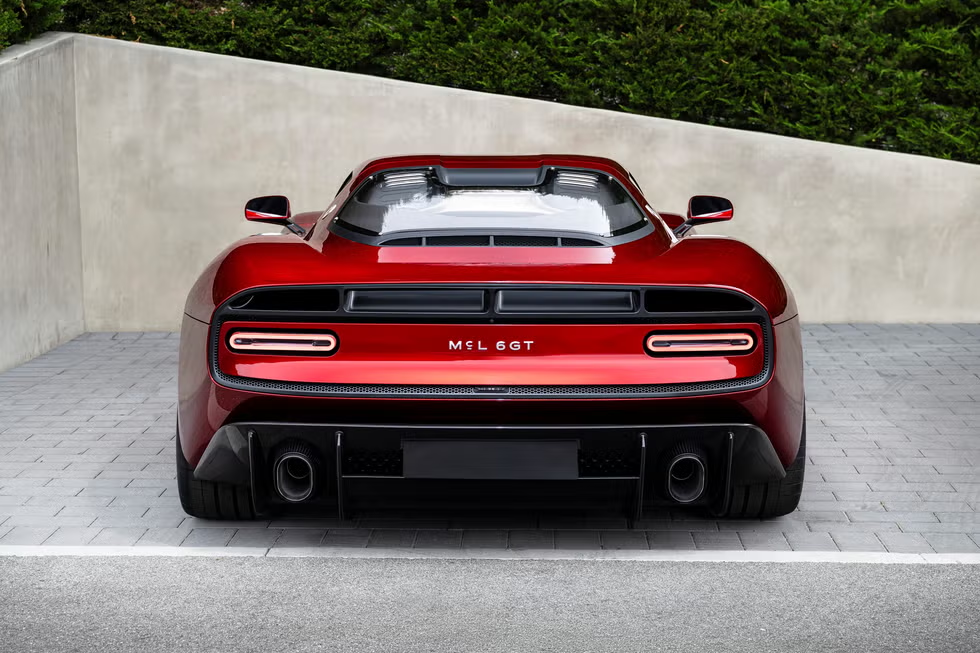
The McLaren McL 6GT is not simply a mechanical throwback. Its exterior design deliberately connects the new car with Bruce McLaren’s original M6GT while giving the concept a distinctly modern identity.
The low-slung body, extended roofline and pronounced rear section reinterpret the proportions of the original road-car project. McLaren describes the new design as a contemporary interpretation of the M6GT, with the cabin appearing to flow directly into the rear deck and engine cover.
A Distinctive Kammback-Inspired Rear
One of the most noticeable elements is the long, flowing profile that leads into a Kammback-style rear. Instead of following the familiar visual formula used across many modern supercars, the McL 6GT has a more distinctive silhouette designed around its historical inspiration.
McLaren has also incorporated several subtle references to its heritage. Bruce McLaren’s original M6GT registration plate has inspired a graphic detail, while his signature appears within the engine-bay area. The company’s Speedy Kiwi logo is also incorporated into the car, including around the fuel-filler and gear-selector details.
A Different Direction for McLaren
The styling makes the McLaren new supercar particularly interesting within the wider landscape of Monterey Car Week 2026 car reveals.
While many new performance cars rely heavily on aggressive aerodynamic surfaces and increasingly complex electronic systems, the McL 6GT takes a more restrained approach to its visual identity. Its proportions, exposed carbon-fibre elements and low roofline are intended to communicate lightweight engineering and driver focus rather than simply maximum visual aggression.
That gives the McL 6GT a character of its own among the Monterey Car Week 2026 supercars and Monterey Car Week 2026 hypercars.
It is also an important indication of where McLaren could be heading with its future ultra-exclusive models: combining modern engineering with recognizable links to the company’s racing and road-car heritage.
Inside the McLaren McL 6GT: Analogue Feel in a Digital Era
The cabin of the McLaren McL 6GT continues the same philosophy as its exterior: modern technology is present, but it is designed around the driver’s physical interaction with the car.
McLaren has combined digital instrumentation with physical controls, tactile materials and a traditional manual gear lever. The exposed mechanical character of the shifter is particularly important because the manual transmission is not simply an engineering choice; it is central to the car’s identity.
Physical Controls Instead of a Screen-First Experience
The McL 6GT takes a noticeably different approach from many modern performance cars that increasingly rely on large touchscreens and software-controlled functions.
The cabin features machined and knurled aluminium controls, exposed carbon fibre and physical switchgear. The gear lever itself is designed to emphasise the mechanical connection between driver and transmission, while the Speedy Kiwi emblem provides another link to McLaren’s heritage.
This philosophy is important because the McLaren manual supercar is being positioned around driver involvement rather than simply maximum technology.
A Modern Interior With Historic References
Despite its analogue character, the McL 6GT is not a retro car. Digital instrumentation and contemporary materials are integrated into the cabin, creating a combination of modern functionality and traditional mechanical details.
That balance reflects the wider philosophy behind the McLaren McL 6GT: take the spirit of Bruce McLaren’s original M6GT and reinterpret it using modern engineering.
The result is a cabin that feels deliberately different from many contemporary Monterey Car Week 2026 supercars, where digital interfaces and automated systems increasingly dominate the driving experience.
For McLaren, the goal appears to be simple: make the driver feel more connected to the car.
And with the McLaren 6GT manual transmission, hydraulic steering and physical controls working together, the McL 6GT is arguably one of the most driver-focused cars revealed during Monterey Car Week 2026.
Production Plans, Exclusivity and What We Know So Far
The McLaren McL 6GT is currently being presented as a concept, but McLaren has confirmed that the project is intended to become a production model in 2028. It will sit outside the brand’s core portfolio, creating a new, more exclusive tier of McLaren road cars.
A New Ultra-Exclusive McLaren Line
Rather than becoming another regular model in the McLaren range, the McL 6GT is expected to form part of a more exclusive approach to limited-production vehicles. That positioning makes it particularly interesting among the Monterey Car Week 2026 hypercars and supercars being unveiled during the event.
However, McLaren has not yet confirmed the final production volume, official price or final power output. Those figures should therefore not be treated as confirmed specifications at this stage.
This is important for anyone searching for McLaren McL 6GT 2028 information. The production model is still some time away, and McLaren can make changes between the concept and the final road car.
What Is Confirmed?
For now, the key confirmed elements include:
- Production target: 2028
- Engine: V8 internal-combustion engine
- Transmission: Six-speed manual
- Drivetrain: Rear-wheel drive
- Construction: Carbon-fibre monocoque and bodywork
- Steering: Hydraulic power steering
- Positioning: Ultra-exclusive model outside McLaren’s core portfolio
The combination makes the McLaren McL 6GT V8 particularly unusual in today’s market. It isn’t trying to win the specification war simply by adding more electric motors, more software or more automated performance systems. Instead, McLaren is prioritising mechanical involvement and exclusivity.
Price and Availability
McLaren has not officially announced the McLaren McL 6GT price or detailed customer allocation information. Reports describe the model as highly exclusive, but we should wait for McLaren to confirm pricing and production numbers before treating estimates as facts.
That uncertainty is likely to make the McL 6GT even more closely watched as the company moves toward the 2028 production programme.
For now, its combination of a manual gearbox, V8 power, carbon-fibre construction and limited-production positioning gives the new McLaren supercar a distinctive place among the major Monterey Car Week 2026 car reveals.
Why the McLaren McL 6GT Matters in the Modern Supercar World

The McLaren McL 6GT arrives at an interesting moment for the performance-car industry. Modern supercars are increasingly defined by electrification, automated transmissions, software and extreme performance figures, yet McLaren has chosen to make driver involvement the central theme of this project.
The combination of a V8 engine, rear-wheel drive, hydraulic steering and a genuine six-speed manual gearbox gives the McL 6GT a distinctly different identity. McLaren has confirmed that the manual transmission marks the return of a three-pedal road car to the brand for the first time since the F1.
A Different Approach to Performance
The significance of the McLaren manual supercar is not simply nostalgia. It represents an alternative approach to performance at a time when manufacturers are increasingly using electric motors, sophisticated electronics and automated gearboxes to deliver faster acceleration and greater efficiency.
McLaren’s decision to retain hydraulic steering and physical controls reinforces that philosophy. The objective is to make the driver more involved in operating the car rather than simply allowing electronics to manage more of the experience.
That makes the McL 6GT particularly noteworthy among the Monterey Car Week 2026 supercars and Monterey Car Week 2026 hypercars. While the event continues to showcase increasingly advanced performance technology, McLaren is demonstrating that mechanical simplicity can still be a powerful selling point.
The Manual Supercar Is Becoming Rare
Authentic manual transmissions have become increasingly uncommon in the supercar segment. Even when manufacturers offer manual-style interfaces, they often rely on automated systems underneath.
The McLaren 6GT manual is different: the production car is being developed around a genuine manual transmission, making the project particularly appealing to enthusiasts who value direct mechanical interaction.
That could ultimately make the McLaren McL 6GT 2028 one of the most distinctive limited-production performance cars of its generation.
McLaren has not yet released final production specifications or pricing, so the car’s ultimate performance remains to be confirmed. But its underlying formula is already clear: lightweight carbon-fibre construction, V8 power, rear-wheel drive, hydraulic steering and three pedals.
In a market increasingly focused on what technology can add to a supercar, the McL 6GT is making a different argument — that sometimes what a car leaves out can be just as important as what it adds.
McLaren McL 6GT vs. the Electrified Supercar Era
The McLaren McL 6GT arrives at a time when the performance-car industry is moving rapidly toward electrification. Many modern supercars now use hybrid powertrains to increase power, improve acceleration and meet increasingly demanding efficiency requirements. McLaren’s new approach is notable because it puts a V8 internal-combustion engine, rear-wheel drive and a manual gearbox at the centre of the experience.
Why the Manual Matters
The significance of the McLaren 6GT manual is not simply that it has three pedals. The gearbox is part of a wider philosophy focused on tactile and mechanical interaction.
McLaren has retained hydraulic steering and physical controls alongside the manual transmission, creating a car where steering, shifting and throttle inputs are intended to feel deliberate and physical.
That makes the McLaren McL 6GT an interesting counterpoint to the increasingly software-driven performance cars appearing at Monterey Car Week 2026.
A Different Definition of Performance
Modern Monterey Car Week 2026 supercars and Monterey Car Week 2026 hypercars are often judged by extraordinary acceleration figures, horsepower and advanced electronic systems. The McL 6GT appears to be pursuing a different definition of performance: driver engagement.
McLaren has not yet released the production car’s final horsepower, weight or acceleration figures, so it would be premature to compare its outright performance with other new cars revealed during Monterey Car Week.
Instead, the McL 6GT’s significance comes from its philosophy. It combines modern carbon-fibre construction with an old-school manual transmission and hydraulic steering, creating a McLaren V8 supercar designed around the driver’s involvement rather than a specification-sheet battle.
Could This Become a New Supercar Trend?
It is too early to say whether the McLaren manual supercar will influence other manufacturers. However, the timing is interesting.
As electrification and automation continue to reshape the industry, a limited-production car focused on mechanical interaction could appeal to collectors and enthusiasts looking for something increasingly rare.
That could make the McLaren McL 6GT 2028 an important car not because it represents the technological extreme, but because it represents an alternative direction for the modern supercar: lighter, more mechanical and more focused on the driver.
How the McLaren McL 6GT Could Shape McLaren’s Future

The McLaren McL 6GT could become more important to the brand than its position as a single limited-production model suggests. McLaren says the production version is planned for 2028 and will sit outside its core portfolio, effectively creating a more exclusive class of road cars.
A New Tier Above the Core Range
The McL 6GT is being positioned differently from McLaren’s regular supercar lineup. Instead of competing primarily on outright performance, the car is designed around exclusivity, craftsmanship and a highly focused driving experience.
That approach could give McLaren greater freedom to develop future ultra-exclusive supercars with distinctive designs and more specialised engineering. The company has indicated that the McL 6GT is intended to be the beginning of a new type of model rather than a replacement for an existing McLaren.
Heritage as a Design Strategy
The McL 6GT also demonstrates how McLaren can use its history to create new products without simply reproducing classic cars.
The original M6GT was closely associated with Bruce McLaren’s vision of a road-going race car. The new McL 6GT takes that philosophy and combines it with modern carbon-fibre construction, contemporary design and a modern V8 powertrain.
That balance between heritage and modern engineering could become an important part of McLaren’s future identity.
A Potentially Limited Production Run
McLaren has described the car as highly exclusive, while reporting from Road & Track indicates that the company is planning a production run of around 500 customer cars beginning in 2028. McLaren itself has not yet published a complete set of production specifications or pricing details, so those figures should be treated accordingly until the company confirms them.
If production remains around that level, the McLaren McL 6GT 2028 could become a highly collectible modern McLaren, particularly because of its manual gearbox and connection to Bruce McLaren’s original M6GT.
That combination could ultimately make the McL 6GT one of the most interesting new McLaren supercars of the decade—not because it is necessarily the fastest, but because it represents a rare combination of heritage, mechanical involvement, lightweight construction and exclusivity.
McLaren McL 6GT: What Makes It Different From Other New Supercars?
The McLaren McL 6GT stands out because it is not trying to follow the conventional formula for a modern flagship performance car. While many of the Monterey Car Week 2026 car reveals focus on maximum power, electrification and increasingly sophisticated electronic systems, McLaren has centred this project around mechanical interaction and exclusivity.
Its combination of a V8 engine, rear-wheel drive, carbon-fibre construction, hydraulic steering and a six-speed manual transmission gives the McLaren supercar a very specific character. McLaren has also positioned the model outside its core portfolio, creating a more exclusive tier of cars rather than another mainstream addition to its existing range.
A Supercar Built Around the Driver
The most important difference is arguably the manual gearbox. McLaren’s last production road car with three pedals was the F1, making the McLaren McL 6GT manual transmission a significant return to a technology that has become increasingly rare in the modern supercar segment.
The car also retains hydraulic steering and physical controls, reinforcing the company’s focus on tactile feedback. Rather than using technology simply to make the car faster, McLaren is using engineering choices to make the driving experience more involving.
A Different Kind of Exclusivity
The production version is scheduled for 2028, and McLaren says the car will establish a new type of model positioned outside its core portfolio. Final pricing, production numbers and complete performance specifications have not yet been officially confirmed.
That positioning could make the McL 6GT one of the most interesting Monterey Car Week 2026 supercars to emerge from this year’s event.
It also gives the McLaren McL 6GT 2028 a clear identity: rather than competing purely on horsepower or acceleration, it is being developed as a highly exclusive driver’s car that combines McLaren’s modern engineering with the philosophy of its founder.
And that may ultimately be what makes this manual supercar more significant than another high-performance car revealed during Monterey Car Week.
McLaren McL 6GT: What We Know and What Is Still to Be Confirmed
The McLaren McL 6GT has generated considerable interest at Monterey Car Week 2026, but it is important to separate the confirmed information from details that McLaren has not yet released.
The car shown at Monterey is a concept that previews a production model planned for 2028. McLaren has confirmed the core engineering direction, including a V8 internal-combustion engine, rear-wheel drive, a six-speed manual transmission, carbon-fibre construction and hydraulic steering.
Confirmed McL 6GT Details
| Specification | Confirmed information |
|---|---|
| Model | McLaren McL 6GT |
| Current status | Concept / production preview |
| Production target | 2028 |
| Engine | V8 internal combustion |
| Transmission | Six-speed manual |
| Drivetrain | Rear-wheel drive |
| Chassis | Carbon-fibre monocoque |
| Bodywork | Carbon fibre |
| Steering | Hydraulic power steering |
| Final power output | Not yet announced |
| Final performance figures | Not yet announced |
| Official production price | Not yet announced |
This means searches for McLaren McL 6GT specifications will continue to evolve as the production programme progresses.
What We Should Not Assume Yet
McLaren has not released the final horsepower figure, acceleration numbers, top speed, production price or complete production specifications. Those details should therefore not be presented as confirmed facts.
That is particularly important with an ultra-exclusive supercar like the McL 6GT, where the final production car could differ from the concept shown at Monterey.
For now, the most significant confirmed elements remain the V8 powertrain, manual transmission, rear-wheel drive and lightweight carbon-fibre construction.
As McLaren moves toward 2028, more information should emerge about pricing, production numbers, customer allocations and final performance. Until then, the McL 6GT remains one of the most intriguing Monterey Car Week 2026 new cars, particularly for enthusiasts interested in the return of the manual supercar.
Read More: Acura Concept Car 2026 Teased
Monterey Car Week 2026: Why the McL 6GT Is One of the Standout Reveals
The McLaren McL 6GT arrives at one of the most important moments on the global automotive calendar. Monterey Car Week 2026 brings together manufacturers, collectors, designers and enthusiasts for a series of major vehicle debuts, concept reveals and automotive events across California.
Among the Monterey Car Week 2026 new cars, the McL 6GT stands out because its appeal is not based simply on headline performance. Instead, McLaren has combined a V8 engine, rear-wheel drive, carbon-fibre construction and a genuine manual gearbox in a highly exclusive package.
A Different Kind of Monterey Debut
Many Monterey Car Week 2026 supercars and Monterey Car Week 2026 hypercars are designed to showcase the latest advances in power, electrification and aerodynamic technology. The McL 6GT takes a different route by celebrating elements that are becoming increasingly rare.
Its hydraulic steering, physical controls and six-speed manual transmission are designed to make driving feel more tactile and mechanical. McLaren says the production model will arrive in 2028 as a new type of exclusive model positioned outside its core portfolio.
That makes the McLaren McL 6GT particularly relevant beyond Monterey itself. It represents a broader conversation taking place across the performance-car industry: how can manufacturers preserve driver involvement as cars become increasingly electrified, automated and software-driven?
A Car Designed for Enthusiasts and Collectors
The combination of rarity, heritage and mechanical involvement could make the McL 6GT especially attractive to collectors.
The car revisits Bruce McLaren’s unfinished M6GT road-car vision while introducing it to a modern audience. Its connection to McLaren’s history, combined with the return of a manual gearbox, gives it an identity that goes beyond being another new McLaren supercar.
With production planned for 2028 and final pricing and performance specifications still to be announced, there is plenty more to learn about the McLaren McL 6GT 2028.
For now, its debut at Monterey Car Week 2026 has established the McL 6GT as one of the event’s most distinctive new performance cars — and potentially one of the most interesting manual supercars of the decade.
Frequently Asked Questions About the McLaren McL 6GT
What is the McLaren McL 6GT?
The McLaren McL 6GT is a new ultra-exclusive McLaren supercar concept unveiled during Monterey Car Week 2026. It draws inspiration from Bruce McLaren’s original M6GT road-car project and previews a production model planned for 2028.
Is the McLaren McL 6GT a production car?
The current McL 6GT is a concept that previews a production model. McLaren has confirmed plans to bring the car to production in 2028, although final production specifications have not yet been announced.
Does the McLaren McL 6GT have a manual transmission?
Yes. The McL 6GT features a six-speed manual transmission, making it particularly significant in the modern supercar market. It represents McLaren’s return to a three-pedal road car since the legendary McLaren F1.
What engine does the McLaren McL 6GT use?
The McL 6GT uses a V8 internal-combustion engine. McLaren has not yet released the final production power output or complete engine specifications.
Is the McLaren McL 6GT electric or hybrid?
The concept revealed at Monterey Car Week uses a V8 internal-combustion powertrain with rear-wheel drive. McLaren has not announced an electric motor or hybrid system for the McL 6GT.
When will the McLaren McL 6GT go into production?
McLaren currently plans to bring the McL 6GT into production in 2028. More details about customer deliveries and final specifications are expected as development progresses.
How much will the McLaren McL 6GT cost?
McLaren has not officially announced the production price. Because the car is positioned as an ultra-exclusive model outside the company’s core portfolio, its eventual price is expected to reflect its limited-production positioning, but any specific figure would currently be speculation.
How many McLaren McL 6GT cars will be produced?
McLaren has not yet officially confirmed the final production volume. Reports have suggested a limited run, but Ride And Tech will treat the official McLaren figure as definitive once it is announced.
Why is the McLaren McL 6GT important?
The McL 6GT is significant because it combines V8 power, rear-wheel drive, carbon-fibre construction, hydraulic steering and a manual transmission at a time when many new supercars are becoming increasingly electrified and automated.
What is Monterey Car Week 2026?
Monterey Car Week 2026 is a major automotive event in California bringing together manufacturers, collectors, enthusiasts and some of the world’s most significant new and historic cars. The week includes multiple events and culminates with the Pebble Beach Concours d’Elegance on August 16, 2026.
What other cars are being revealed at Monterey Car Week 2026?
The event is hosting numerous new-car, supercar and hypercar debuts. Ride And Tech will continue covering the most important Monterey Car Week 2026 car reveals as they are officially announced.
Is the McLaren McL 6GT related to the original M6GT?
Yes. The modern McL 6GT is inspired by Bruce McLaren’s original M6GT road-car project from the late 1960s. The new model reinterprets that idea using modern McLaren engineering and carbon-fibre construction.
What’s Next at Monterey Car Week 2026?
The McLaren McL 6GT may be one of the most distinctive reveals of Monterey Car Week 2026, but the event still has more to offer before the week reaches its finale.
The final weekend will bring more significant automotive presentations, collector events and potentially additional Monterey Car Week 2026 car reveals. The biggest date to watch is Sunday, August 16, 2026, when the Pebble Beach Concours d’Elegance will bring the event to its traditional conclusion.
For automotive enthusiasts around the world, the final day can provide another opportunity to see significant new cars, rare classics, concept vehicles and high-performance machines in one of the world’s most important automotive settings.
Ride And Tech will continue following the event and will cover the most significant Monterey Car Week 2026 supercars, hypercars and new car debuts as they are officially revealed.
Coming Next on Ride And Tech
Monterey Car Week 2026: Biggest Cars and Reveals From the Final Day
We will follow the major vehicles officially presented during the August 16 finale and bring readers their key design details, technology, specifications and significance in the global automotive market.
Ride And Tech Verdict
The McLaren McL 6GT is one of the most interesting cars revealed at Monterey Car Week 2026 because it takes a different approach to modern supercar development.
Instead of focusing exclusively on bigger numbers, more electric assistance or increasingly complex software, McLaren has built the concept around driver involvement. The combination of a V8 engine, rear-wheel drive, carbon-fibre construction, hydraulic steering and a six-speed manual transmission gives the McL 6GT a character that is becoming increasingly rare.
Its connection to Bruce McLaren’s original M6GT also gives the car something many new supercars lack: a genuine historical story behind its design and philosophy.
The biggest questions remain unanswered for now. Final power figures, performance numbers, pricing and production volume have yet to be confirmed, and the production car will not arrive until 2028.
But based on what McLaren has revealed, the McL 6GT isn’t simply another new McLaren supercar. It represents an interesting alternative direction for the performance-car industry — one where modern engineering is combined with mechanical involvement and exclusivity.
Our verdict: The McL 6GT could become one of the most distinctive limited-production supercars of the decade, particularly for enthusiasts who believe that the driving experience should remain as important as outright performance.
Ride And Tech — Where Ride Meets Tech.
Drive Smarter. Ride Smarter.
Copyright (c) Ride And Tech. All rights reserved.

1 thought on “McLaren McL 6GT Unveiled at Monterey Car Week 2026: V8 Power and Manual Gearbox”