


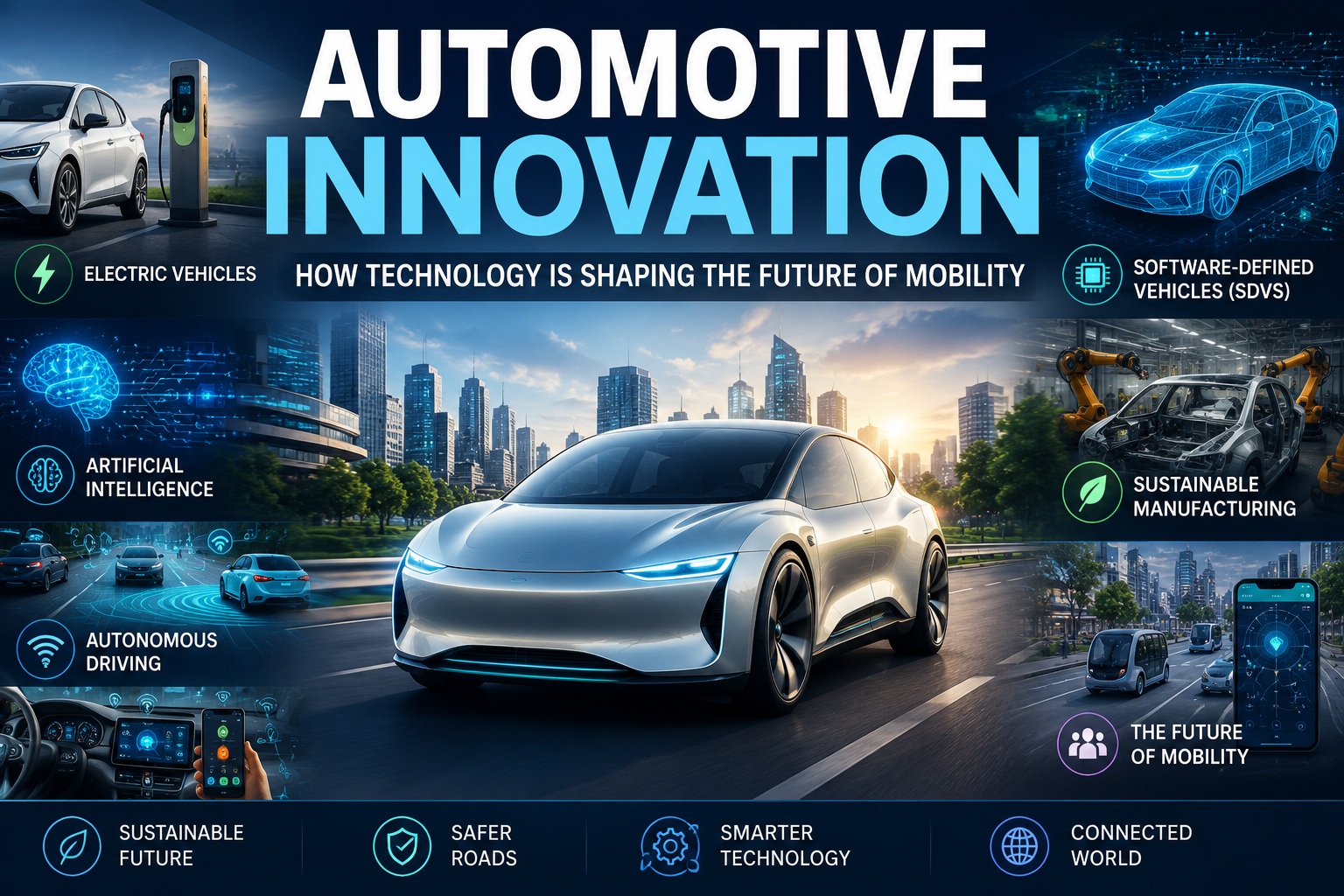
The automotive industry is undergoing one of the biggest transformations in its history, driven by rapid automotive innovation and technological advancements. From electric vehicles and autonomous driving to artificial intelligence and connected mobility, modern vehicles are evolving far beyond their traditional role as a means of transportation. Today’s cars are becoming smarter, safer, more efficient, and increasingly connected to the digital world.
As governments introduce stricter emission regulations and consumers demand sustainable, intelligent mobility solutions, automakers are investing heavily in next-generation technologies. Innovations such as advanced driver assistance systems (ADAS), over-the-air software updates, software-defined vehicles, and alternative energy solutions are reshaping how vehicles are designed, manufactured, and experienced.
The future of mobility is no longer a distant vision—it is already taking shape on roads around the world. In this article, we explore how automotive innovation is transforming the industry, the technologies driving this change, and what the future holds for drivers, manufacturers, and the global transportation ecosystem.
The Rise of Electric Vehicles (EVs)
One of the most significant examples of automotive innovation is the rapid growth of electric vehicles (EVs). Over the past decade, EVs have evolved from a niche alternative to a mainstream transportation solution, driven by advancements in battery technology, increasing environmental awareness, and supportive government policies. As countries work toward reducing carbon emissions and achieving net-zero goals, the transition to electric mobility has become a key priority for the global automotive industry.
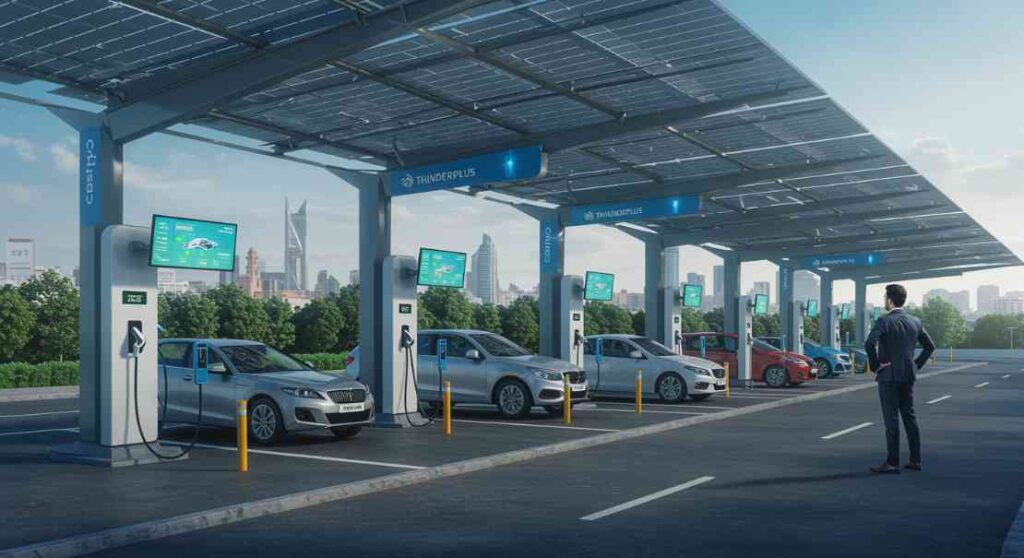
Leading manufacturers such as Tesla, BYD, BMW, Mercedes-Benz, Hyundai, Tata Motors, Mahindra, and MG Motor are investing billions of dollars in developing next-generation electric vehicles. Modern EVs now offer longer driving ranges, faster charging capabilities, improved battery efficiency, and lower maintenance costs, making them a practical choice for both personal and commercial use.
Charging infrastructure is also expanding rapidly, with governments and private companies investing in public charging stations and ultra-fast charging networks. At the same time, researchers continue to develop advanced battery technologies, including solid-state batteries, which promise greater energy density, shorter charging times, enhanced safety, and longer battery life. Innovations such as Vehicle-to-Grid (V2G) technology could further transform electric vehicles by allowing them to store and supply electricity back to the power grid when needed.
As technology continues to evolve and production costs decline, electric vehicles are expected to play a central role in the future of mobility. Their continued development demonstrates how automotive innovation is creating cleaner, smarter, and more sustainable transportation solutions for the next generation.
Artificial Intelligence Is Making Vehicles Smarter
Artificial Intelligence (AI) has become one of the most influential drivers of automotive innovation, enabling vehicles to make intelligent decisions, improve safety, and deliver a more personalized driving experience. Modern vehicles are no longer limited to mechanical engineering—they now rely heavily on AI-powered software to process vast amounts of data in real time and assist drivers in various road conditions.
Today’s vehicles use AI across multiple applications, including advanced driver assistance systems (ADAS), voice recognition, predictive maintenance, intelligent navigation, and driver monitoring systems. By analysing data collected from sensors, cameras, and radar, AI can detect potential hazards, optimise driving performance, and provide timely alerts that help reduce the risk of accidents.
AI is also transforming the ownership experience through predictive maintenance. Instead of waiting for a component to fail, intelligent systems can monitor vehicle health, identify potential issues early, and notify drivers when maintenance is required. This not only improves reliability but also reduces repair costs and vehicle downtime.
As vehicles become increasingly software-driven, AI will play an even greater role in the future of mobility. From enhancing autonomous driving capabilities to enabling over-the-air software updates and personalised in-car experiences, artificial intelligence is helping manufacturers develop smarter, safer, and more connected vehicles. As a result, automotive innovation continues to redefine how people interact with their vehicles and the transportation ecosystem as a whole.
Autonomous Driving: The Road to Self-Driving Vehicles
Autonomous driving is one of the most transformative developments in automotive innovation, with the potential to redefine road safety, mobility, and the overall driving experience. While fully self-driving cars are still under development, today’s vehicles already incorporate advanced technologies that assist drivers and enhance safety through intelligent automation.
Many modern vehicles are equipped with Advanced Driver Assistance Systems (ADAS), which include features such as Adaptive Cruise Control, Lane Keeping Assist, Automatic Emergency Braking, Blind Spot Monitoring, and Traffic Sign Recognition. These technologies use a combination of cameras, radar, LiDAR, ultrasonic sensors, and artificial intelligence to monitor the vehicle’s surroundings and support the driver in making safer decisions.
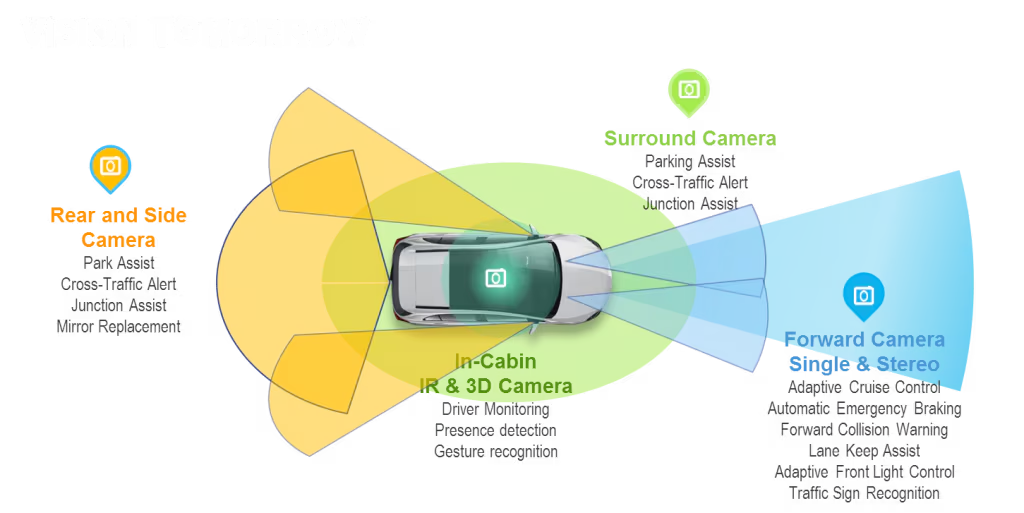
Leading companies such as Tesla, Mercedes-Benz, Waymo, BMW, and several global automakers continue to invest heavily in autonomous driving technologies. Their goal is to develop vehicles capable of navigating complex traffic conditions with minimal or no human intervention. As sensor technology, machine learning, and computing power continue to improve, autonomous vehicles are expected to become more reliable and widely adopted.
Despite the rapid progress, several challenges remain before fully autonomous vehicles become common on public roads. Regulatory approvals, cybersecurity, ethical decision-making, infrastructure readiness, and public trust are key factors that must be addressed. Nevertheless, autonomous driving remains a major milestone in automotive innovation, bringing the industry closer to a future where transportation is safer, more efficient, and increasingly intelligent.
Connected Cars: A New Era of Smart Mobility
Another major milestone in automotive innovation is the rise of connected cars, which are transforming vehicles into intelligent, internet-enabled platforms. Unlike traditional vehicles, connected cars can communicate with other vehicles, road infrastructure, cloud services, and mobile devices, creating a seamless digital ecosystem that enhances safety, convenience, and efficiency.
Modern connected vehicles use technologies such as 5G connectivity, cloud computing, the Internet of Things (IoT), and Vehicle-to-Everything (V2X) communication to exchange real-time information. This enables features like live traffic updates, remote vehicle diagnostics, predictive maintenance, emergency assistance, and over-the-air (OTA) software updates. Drivers can also remotely monitor and control various vehicle functions using smartphone applications, improving both convenience and security.
Connected cars also play a vital role in the development of smart cities. By sharing real-time data with traffic management systems, they can help reduce congestion, improve traffic flow, and enhance road safety. As infrastructure continues to evolve, vehicle-to-vehicle (V2V) and vehicle-to-infrastructure (V2I) communication will enable faster responses to road hazards, accidents, and changing traffic conditions.
As digital connectivity becomes an essential part of modern transportation, automotive innovation is transforming vehicles into intelligent mobility solutions that deliver a safer, more efficient, and highly connected driving experience.
Global Auto News: How Electric and Smart Vehicles Are Shaping the Future of Mobility
Software-Defined Vehicles (SDVs): The Next Evolution of the Automotive Industry
Software-Defined Vehicles (SDVs) represent the next major leap in automotive innovation, shifting the focus from hardware-centric vehicles to software-powered mobility. Unlike conventional cars, where most features are fixed at the time of purchase, SDVs rely on advanced software platforms that allow manufacturers to continuously improve vehicle performance, safety, and functionality throughout the vehicle’s lifecycle.
Modern SDVs are built with powerful central computing systems that control multiple vehicle functions, replacing the traditional approach of using numerous independent electronic control units (ECUs). This centralized architecture enables faster communication between vehicle systems, simplifies software management, and supports seamless integration of new features through over-the-air (OTA) updates.
One of the biggest advantages of software-defined vehicles is their ability to receive regular updates without requiring a visit to the service centre. Manufacturers can introduce new driver assistance features, improve battery management, optimise vehicle performance, enhance cybersecurity, and even unlock additional functionalities remotely. This approach ensures that vehicles remain up to date with the latest technology, much like smartphones and other connected devices.
Leading automotive companies such as Tesla, Mercedes-Benz, BMW, Volvo, Hyundai, and General Motors are investing heavily in SDV platforms as they move toward a future where software plays a central role in vehicle development. As artificial intelligence, cloud computing, and connectivity continue to evolve, software-defined vehicles will become a cornerstone of automotive innovation, delivering smarter, safer, and more personalised mobility experiences for drivers around the world.
Sustainable Manufacturing and Green Automotive Technologies
Sustainability has become a driving force behind automotive innovation, influencing not only how vehicles operate but also how they are designed, manufactured, and recycled. As governments introduce stricter environmental regulations and consumers become more environmentally conscious, automakers are adopting greener production methods to reduce their carbon footprint and promote sustainable mobility.
Many manufacturers are investing in renewable energy sources such as solar and wind power to operate production facilities while reducing greenhouse gas emissions. Recycled materials, lightweight composites, and eco-friendly alternatives are increasingly being used in vehicle interiors, body panels, and battery components. These innovations help reduce resource consumption, improve fuel efficiency, and support the transition toward a circular economy.
Battery recycling and second-life battery applications have also become essential components of sustainable automotive development. Companies are developing advanced recycling technologies to recover valuable materials such as lithium, cobalt, nickel, and graphite from used batteries, reducing dependence on raw material mining and minimising environmental impact. At the same time, hydrogen fuel cell technology continues to gain attention as an alternative zero-emission solution, particularly for commercial vehicles and long-distance transportation.
As the industry moves toward carbon-neutral manufacturing and cleaner mobility solutions, sustainability is becoming an integral part of automotive innovation. By combining advanced technologies with environmentally responsible practices, automakers are building vehicles that are not only smarter and more efficient but also better for the planet.
The Future of Mobility: Smarter, Shared, and Autonomous Transportation
The future of transportation extends far beyond individual vehicle ownership. Driven by rapid automotive innovation, mobility is evolving into a smarter, more connected, and sustainable ecosystem where vehicles, infrastructure, and digital services work together to improve efficiency and enhance the overall travel experience.
One of the most significant emerging trends is Mobility-as-a-Service (MaaS), which integrates multiple transportation options—including public transit, ride-sharing, bike-sharing, car-sharing, and taxis—into a single digital platform. Using a smartphone application, users can plan, book, and pay for an entire journey without relying on a privately owned vehicle. This approach helps reduce traffic congestion, lowers transportation costs, and makes urban mobility more convenient.
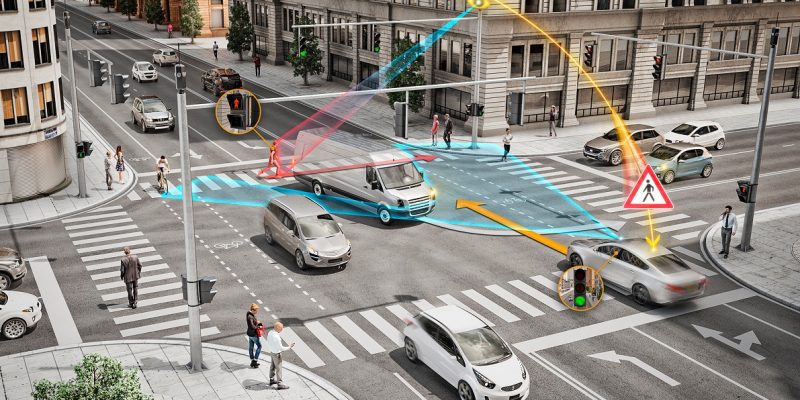
Autonomous ride-hailing services, robotaxis, and smart public transportation systems are also expected to transform the way people travel in the coming years. Combined with electric vehicles, artificial intelligence, and connected infrastructure, these technologies have the potential to improve road safety, reduce emissions, and optimize traffic flow in rapidly growing cities.
The expansion of smart cities will further accelerate this transformation by integrating intelligent traffic management systems, real-time data analytics, and connected infrastructure with modern vehicles. As governments and automakers continue investing in digital mobility solutions, automotive innovation will play a crucial role in creating transportation systems that are safer, cleaner, more efficient, and accessible to everyone.
Challenges and Opportunities in Automotive Innovation
While automotive innovation is transforming the industry at an unprecedented pace, it also brings several challenges that manufacturers, governments, and consumers must address. Developing advanced technologies such as electric vehicles, autonomous driving systems, and software-defined vehicles requires significant investment in research, infrastructure, and skilled talent. As a result, balancing innovation with affordability remains a key challenge for the automotive industry.
Cybersecurity has become another major concern as vehicles become increasingly connected and software-driven. Modern cars exchange vast amounts of data through cloud services, mobile applications, and connected infrastructure, making them potential targets for cyber threats. Automakers are investing in advanced encryption, secure software development, and continuous security updates to protect vehicles and customer data from evolving risks.
Infrastructure development and regulatory frameworks also play a crucial role in the success of emerging automotive technologies. Expanding EV charging networks, establishing standards for autonomous driving, and upgrading road infrastructure require close collaboration between governments, technology companies, and vehicle manufacturers. In addition, building public trust through safety testing, transparent regulations, and consumer education will be essential for widespread adoption.
Despite these challenges, the opportunities created by automotive innovation are far greater. Advancements in artificial intelligence, electrification, connectivity, and sustainable manufacturing are opening new possibilities for safer roads, cleaner transportation, reduced operating costs, and enhanced mobility services. As technology continues to evolve, innovation will remain the driving force behind the automotive industry’s transition toward a smarter, more sustainable, and digitally connected future.
Conclusion
The automotive industry is entering a new era where technology is redefining every aspect of mobility. From electric vehicles and artificial intelligence to autonomous driving, connected cars, software-defined vehicles, and sustainable manufacturing, automotive innovation is driving the transformation toward safer, smarter, and more environmentally responsible transportation.
These advancements are not only improving vehicle performance and safety but also reshaping how people travel, how manufacturers develop vehicles, and how cities manage transportation systems. As emerging technologies continue to mature and infrastructure expands, the future of mobility will become increasingly connected, efficient, and accessible.
While challenges such as cybersecurity, regulatory compliance, and infrastructure development remain, the pace of innovation continues to accelerate. Governments, automakers, and technology companies are working together to create mobility solutions that meet the evolving needs of consumers and support global sustainability goals.
As the industry continues to evolve, automotive innovation will remain the foundation of future transportation, enabling cleaner, smarter, and more intelligent mobility for generations to come.
Frequently Asked Questions (FAQs)
1. What is automotive innovation?
Automotive innovation refers to the development and adoption of new technologies, designs, and manufacturing processes that improve vehicle safety, performance, efficiency, sustainability, and the overall driving experience. It includes advancements such as electric vehicles, artificial intelligence, autonomous driving, connected cars, and software-defined vehicles.
2. Why is automotive innovation important?
Automotive innovation is essential because it helps create safer, cleaner, and more efficient transportation solutions. It reduces emissions, enhances road safety through advanced driver assistance systems (ADAS), improves fuel and energy efficiency, and supports the transition toward sustainable mobility.
3. What are the latest trends in automotive innovation?
Some of the biggest trends shaping the automotive industry include:
- Electric Vehicles (EVs)
- Artificial Intelligence (AI)
- Autonomous Driving
- Connected Cars
- Software-Defined Vehicles (SDVs)
- Over-the-Air (OTA) Updates
- Sustainable Manufacturing
- Smart Mobility and Mobility-as-a-Service (MaaS)
4. How is artificial intelligence used in modern vehicles?
Artificial intelligence enables vehicles to perform functions such as voice recognition, predictive maintenance, intelligent navigation, driver monitoring, traffic sign recognition, and Advanced Driver Assistance Systems (ADAS). AI also plays a crucial role in the development of autonomous driving technologies.
5. What are Software-Defined Vehicles (SDVs)?
Software-Defined Vehicles are modern vehicles where software controls many core functions instead of relying primarily on hardware. They receive over-the-air updates, allowing manufacturers to improve performance, add new features, enhance cybersecurity, and fix software issues without requiring a service centre visit.
6. How do connected cars improve the driving experience?
Connected cars communicate with cloud services, smartphones, and surrounding infrastructure to provide features such as real-time traffic updates, remote diagnostics, emergency assistance, predictive maintenance, navigation, and over-the-air software updates, making driving safer and more convenient.
7. What is the future of automotive innovation?
The future of automotive innovation will focus on electric mobility, autonomous transportation, connected ecosystems, artificial intelligence, sustainable manufacturing, hydrogen technologies, and smart cities. These advancements aim to create transportation systems that are safer, more efficient, environmentally friendly, and increasingly connected.
At Ride And Tech, we’re committed to bringing you the latest automotive news, technology insights, buying guides, and vehicle care tips to help you stay informed in the ever-evolving world of mobility. Stay connected with Ride And Tech for trusted updates and expert automotive content.
Copyright (c) Ride And Tech. All rights reserved.

2 thoughts on “Automotive Innovation: How Technology Is Shaping the Future of Mobility”