


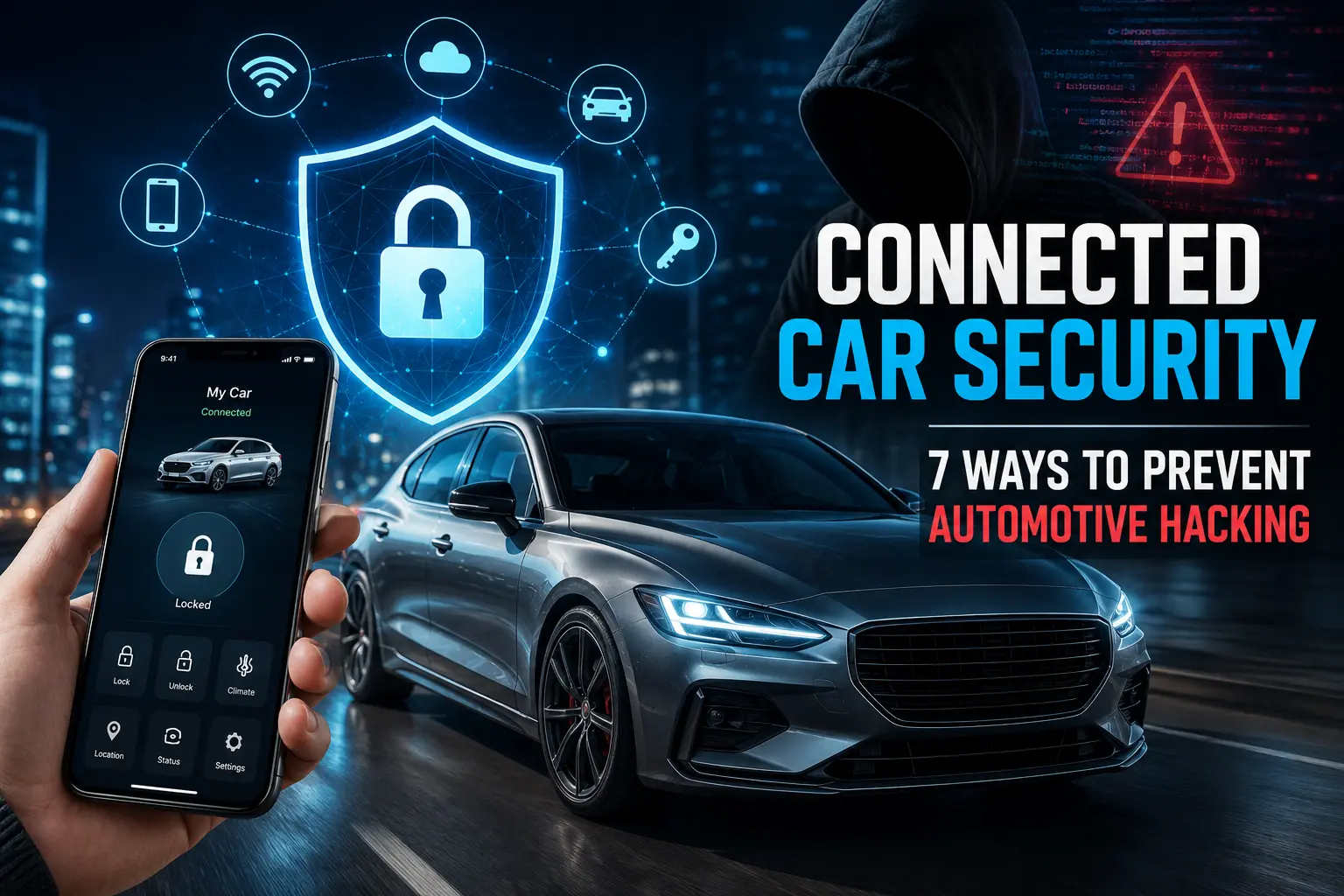
A modern car is no longer just a machine with an engine, gearbox and four wheels. It is increasingly a connected computer on wheels, communicating with smartphones, cloud services, navigation systems and other digital platforms every time you drive. That connectivity brings useful features such as remote locking, live navigation, over-the-air updates and connected infotainment—but it also creates new ways for attackers to target a vehicle.
That is where connected car security becomes critical. As cars become more software-driven, automotive cybersecurity has become an important part of vehicle safety and ownership. A vulnerability in a connected service, mobile app or vehicle software could potentially expose personal data or allow unauthorized access to certain functions.
So, can a connected car really be hacked? And more importantly, what are automakers and drivers doing to prevent it? Here is what you need to know about the growing cybersecurity challenge facing today’s connected vehicles.
Why Connected Car Security Matters More Than Ever
The modern car has quietly become one of the most connected devices in our daily lives. A typical connected vehicle can communicate with your smartphone, cellular networks, cloud platforms, navigation services and even the manufacturer’s servers. Features such as remote locking, live traffic information, digital keys, connected infotainment and over-the-air software updates have made cars far more capable than they were a decade ago.
But every new connection can also create another potential entry point for a cyberattack. This is known as the vehicle’s attack surface, and it has expanded considerably as manufacturers have added more software and online services to their cars. A weakness in a mobile application, wireless connection, cloud service or piece of vehicle software could potentially be exploited if it is not properly secured.
The concern also goes beyond the possibility of someone interfering with the car itself. Connected vehicles can collect and transmit a surprising amount of personal information, including location history, vehicle usage data, driver preferences and account information. If these systems are compromised, the consequences could involve privacy breaches as well as unauthorized access to connected services.
The rise of software-defined vehicles makes the issue even more important. Cars are increasingly dependent on software for everything from infotainment and connectivity to advanced driver-assistance features. Manufacturers can now introduce improvements and fix vulnerabilities remotely through OTA software updates, but that also means cybersecurity has to be treated as an ongoing process rather than something that is addressed only when a car leaves the factory.
For drivers, this changes the definition of vehicle security. Keeping a modern car safe is no longer just about locking the doors and protecting the keys. Connected car security now involves protecting the vehicle’s software, communications, personal data and digital services throughout its entire lifespan.
Read More: OTA Updates in Cars
How Can a Connected Car Be Hacked?
A connected car can have several digital pathways linking it to the outside world, and each one needs to be properly secured. The exact vulnerabilities vary between vehicles, but the attack surface can include wireless connections, mobile applications, cloud services and the software running inside the car.
One potential entry point is Wi-Fi or Bluetooth. These technologies are useful for connecting smartphones, providing internet access or running in-car features, but poorly protected wireless systems can expose a vehicle to unauthorized access. Security researchers have demonstrated that vulnerabilities in wireless systems can sometimes provide a route into other vehicle systems.
Smartphone applications create another important connection. Many manufacturers allow owners to lock or unlock their cars, check vehicle status, locate the vehicle or manage charging through an app. If an attack compromises the account or the communication between the app and the manufacturer’s servers, an attacker could potentially gain access to connected functions.
The vehicle’s infotainment system and cellular connection can also form part of the attack surface. Modern infotainment systems are much more sophisticated than the simple radios found in older cars, and some communicate continuously with external servers. A vulnerability in the software could potentially become a stepping stone toward other parts of the vehicle’s electronic architecture.
Then there is the cloud. Connected vehicles increasingly depend on manufacturer servers and third-party platforms to exchange information and deliver services. That means connected car hacking does not necessarily require an attacker to be physically next to the vehicle. In some scenarios, weaknesses elsewhere in the connected ecosystem could become the starting point for an attack.
This does not mean that every connected car is easy to hack. Modern manufacturers use multiple security layers to limit these risks, and critical vehicle systems are generally designed with isolation and access controls in mind. The important point is that as vehicles gain more digital connections, automotive cybersecurity must protect the entire ecosystem—not just the hardware inside the car.
The Biggest Connected Car Security Risks
The idea of a hacked car can sound like something from a movie, but the cybersecurity risks surrounding connected vehicles are very real. That does not mean an attacker can simply take control of any modern car at will. In reality, the potential impact depends on the vehicle’s architecture, the vulnerability involved and which systems an attacker manages to access.
Unauthorized Access to Vehicle Functions
Connected services can allow owners to perform functions remotely, including locking or unlocking doors, checking vehicle status and, in some cases, controlling other vehicle features. If the account, application or communication channel behind these services is compromised, an attacker could potentially gain unauthorized access to those functions.
Theft of Vehicle and Driver Data
Privacy is another major concern. Connected cars can generate information about where a vehicle travels, how it is used and which services are connected to it. Depending on the vehicle and its features, personal information may also be associated with driver accounts, smartphones and other devices. A security breach could therefore expose data that drivers would rather keep private.
Vulnerabilities in Vehicle Software
Modern vehicles rely on thousands of lines of software and numerous electronic control units. Like any complex software system, these can contain vulnerabilities. An unpatched weakness could provide an attacker with an opportunity to access a system that was never intended to be externally reachable.
Third-Party and Supply-Chain Risks
A vehicle’s cybersecurity does not depend entirely on the automaker. Connected cars can rely on third-party applications, cloud providers, communication services and software suppliers. A weakness somewhere in that wider ecosystem can potentially create a security problem for the vehicle as well.
Keyless Entry and Wireless Threats
Keyless entry and digital-key technology have made cars considerably more convenient, but wireless communication also introduces additional security considerations. Attackers have developed techniques targeting some keyless systems, which is why manufacturers continue to improve authentication and encryption technologies.
The biggest lesson is that connected car security is not about protecting one individual component. It requires multiple layers of protection across the vehicle, its software, connected services and the wider digital ecosystem.
How Automakers Are Preventing Automotive Hacking
Automakers are increasingly treating cybersecurity as an integral part of vehicle development rather than something that can be added after a car reaches the road. As vehicles become more connected and software-dependent, manufacturers and suppliers are using multiple layers of protection to reduce the chances of unauthorized access and limit the damage if a vulnerability is discovered.
One of the most important measures is secure communication. Data moving between a vehicle, smartphone, cloud platform or other connected service needs to be protected against interception and manipulation. Encryption and secure authentication help ensure that a device or service communicating with the car is actually authorized to do so.
Manufacturers are also using network segmentation to isolate different parts of a vehicle’s electronic architecture. Instead of allowing every connected system to communicate freely with safety-critical components, modern vehicle architectures can restrict how information moves between systems. This can help prevent a vulnerability in an infotainment or connectivity system from automatically becoming a pathway into more sensitive vehicle functions.
Over-the-air software updates have become another important part of automotive cybersecurity. When a vulnerability is discovered, manufacturers can increasingly deploy a security patch remotely rather than requiring every affected vehicle to visit a dealership. This allows security weaknesses to be addressed faster and helps vehicles remain protected as new threats emerge.
Authentication is equally important. Connected services need to verify that the person or device requesting access is legitimate. Strong account security, encrypted connections and additional authentication measures can reduce the risk of unauthorized access to features such as remote vehicle controls and digital keys.
Before vehicles reach customers, manufacturers and cybersecurity teams can also conduct vulnerability assessments and penetration testing to identify weaknesses. Security researchers may test vehicle systems, applications and connected services in controlled environments, while responsible-disclosure programmes can give manufacturers an opportunity to fix vulnerabilities before they are widely exploited.
The approach is therefore moving beyond simply trying to prevent every attack. Effective automotive cybersecurity also means limiting access, isolating critical systems, detecting weaknesses and having a reliable process for fixing them when they are found.
Can Drivers Improve Their Car’s Cybersecurity?
Automakers carry much of the responsibility for securing connected vehicles, but owners are not completely powerless. Many common cybersecurity risks involve the accounts, smartphones and connected services that drivers use alongside their cars, making basic digital hygiene an important part of vehicle security.
The first step is to keep the vehicle’s software up to date. When a manufacturer releases an OTA update that includes a security fix, installing it promptly can close known vulnerabilities. The same principle applies to the manufacturer’s mobile app and the smartphone itself, particularly when the phone is being used as a digital key or to control vehicle functions remotely.
Drivers should also protect their connected-car accounts with a strong, unique password and enable additional authentication where the manufacturer provides it. Reusing the same password across several services can increase the consequences of a separate account breach.
It is also worth being selective about third-party applications and services that are given access to vehicle information. Before connecting an unfamiliar service to a car, drivers should understand what data or permissions it requires and whether the provider is trustworthy.
Another simple but often overlooked step is protecting the smartphone. A phone that can unlock a vehicle or access its connected-car account effectively becomes another key to the car. Keeping the device locked, updated and protected with appropriate authentication therefore matters just as much as securing the physical vehicle.
Finally, owners should pay attention to manufacturer security notices, recalls and software campaigns. A cybersecurity vulnerability may not produce any obvious warning while the vehicle is being driven, so waiting for something to go wrong is not a sensible security strategy.
Good connected car security is ultimately a shared responsibility. Manufacturers need to build secure systems, but drivers also need to maintain their digital keys, accounts, devices and vehicle software throughout the car’s ownership.
What Happens If a Connected Car Has a Security Vulnerability?
Finding a cybersecurity vulnerability does not automatically mean that a vehicle is unsafe to drive. In many cases, the discovery simply gives the manufacturer an opportunity to investigate the issue, determine its severity and develop a fix before the weakness can be exploited.
The process often begins with security researchers, suppliers or the automaker’s own cybersecurity team identifying a potential vulnerability. Responsible disclosure allows the manufacturer to examine the problem privately and work on a solution rather than leaving details publicly available while affected vehicles remain exposed.
If a vulnerability is confirmed, the response can vary depending on what is affected. A relatively minor issue may be resolved through a software or OTA update, while a more significant problem could require a service campaign or physical inspection at a dealership. Where a cybersecurity issue creates a safety-related defect, it may also become subject to an official recall or regulatory action.
This is one reason software updates have become so important in modern vehicles. A car that can receive secure OTA updates can potentially have certain vulnerabilities fixed without requiring the owner to schedule a workshop visit. However, not every security problem can be solved remotely, and some vehicles may still require a physical repair.
For owners, the key is not to panic when a security vulnerability is reported. Instead, check whether the manufacturer has issued specific guidance, install recommended updates and follow any recall or service instructions.
As cars become increasingly software-defined, vehicle cybersecurity is becoming an ongoing part of vehicle ownership. Security does not end when a new car leaves the factory; manufacturers need processes to identify, patch and manage vulnerabilities throughout the vehicle’s life.
The Future of Connected Car Security
The cybersecurity challenge will only become more important as vehicles gain more software, connectivity and automated driving technology. Future cars are likely to communicate with a growing number of external services while relying on software for functions that were once handled almost entirely by mechanical components.
The expansion of software-defined vehicles is a particularly important shift. Manufacturers can increasingly add features, improve vehicle performance and change functionality through software updates. That creates opportunities for better security as well, because vulnerabilities can potentially be identified and patched throughout a vehicle’s lifecycle. At the same time, it means manufacturers must maintain secure software infrastructure long after a vehicle has been sold.
Artificial intelligence and increasingly sophisticated driver-assistance systems add another layer to the challenge. Cameras, radar, sensors and computing platforms process large amounts of information, making the integrity of that data increasingly important. As vehicles move closer to higher levels of automation, protecting these systems from manipulation will become closely linked to road safety.
The wider connected ecosystem will also matter. Vehicles will increasingly interact with smartphones, charging networks, cloud platforms, other vehicles and smart infrastructure. Each additional connection has to be designed with security in mind rather than treated as an isolated feature.
That means the future of connected car security will not be about finding one perfect solution. It will require continuous monitoring, secure software development, strong authentication, regular updates and cooperation between automakers, suppliers, cybersecurity researchers and regulators.
For drivers, the result should ultimately be a better kind of connected car—one that delivers the technology and convenience people expect without making cybersecurity an afterthought.
FAQ: Connected Car Security
Can a connected car really be hacked?
Yes, connected cars can have cybersecurity vulnerabilities, just like other complex software systems. However, the risk varies between vehicles and does not mean that every connected car can simply be taken over remotely. Modern vehicles use multiple security measures to reduce these risks.
Can hackers remotely unlock a connected car?
Potentially, if a vulnerability exists in the vehicle’s connected service, mobile application, digital key or supporting infrastructure. Manufacturers use authentication and other security controls to prevent unauthorized access, but keeping connected-car accounts and software updated remains important.
Is keyless entry a cybersecurity risk?
Keyless entry introduces wireless communication that needs to be properly secured. Some systems have been targeted by techniques such as relay attacks. Manufacturers have responded with improved authentication and other technologies designed to make unauthorized access more difficult.
How do OTA updates improve car security?
Over-the-air updates allow manufacturers to distribute software fixes without requiring every vehicle to visit a dealership. This can make it faster and easier to address certain known vulnerabilities, although some security issues may still require a physical service visit.
Can a car’s smartphone app be hacked?
The smartphone app and its associated account can become part of a connected vehicle’s attack surface. A compromised account could potentially expose connected services or vehicle information, depending on the manufacturer’s system. Using a unique password, additional authentication where available and keeping the app updated can reduce the risk.
What should I do before selling a connected car?
Remove your personal accounts, disconnect your smartphone and digital keys, delete stored personal information where possible and follow the manufacturer’s recommended ownership-transfer procedure. This helps prevent the next owner from gaining access to your connected services or personal data.
Ride And Tech Verdict
Connected cars have made driving smarter and more convenient, but that convenience comes with a new responsibility: keeping the digital side of the vehicle secure. From smartphone apps and keyless entry to cloud services and OTA updates, modern vehicles have more connections than ever before.
The good news is that connected car security is evolving alongside the technology. Automakers are investing in stronger authentication, encrypted communications, network isolation, vulnerability testing and faster software updates to make vehicles harder to compromise.
For drivers, the message is equally simple: keep your car and connected devices updated, secure your accounts and take manufacturer security notices seriously. Cybersecurity may not be something you can see when you walk around a car, but it is becoming just as important to modern ownership as brakes, tyres and regular maintenance.
As cars continue moving towards software-defined and increasingly automated driving, protecting the technology behind the wheel will become essential. A truly smart car isn’t just connected—it needs to be secure.
Ride And Tech — Where Ride Meets Tech.
Drive Smarter. Ride Smarter.
Copyright (c) Ride And Tech. All rights reserved.

2 thoughts on “Connected Car Security: How to Protect Your Car From Automotive Hacking”