


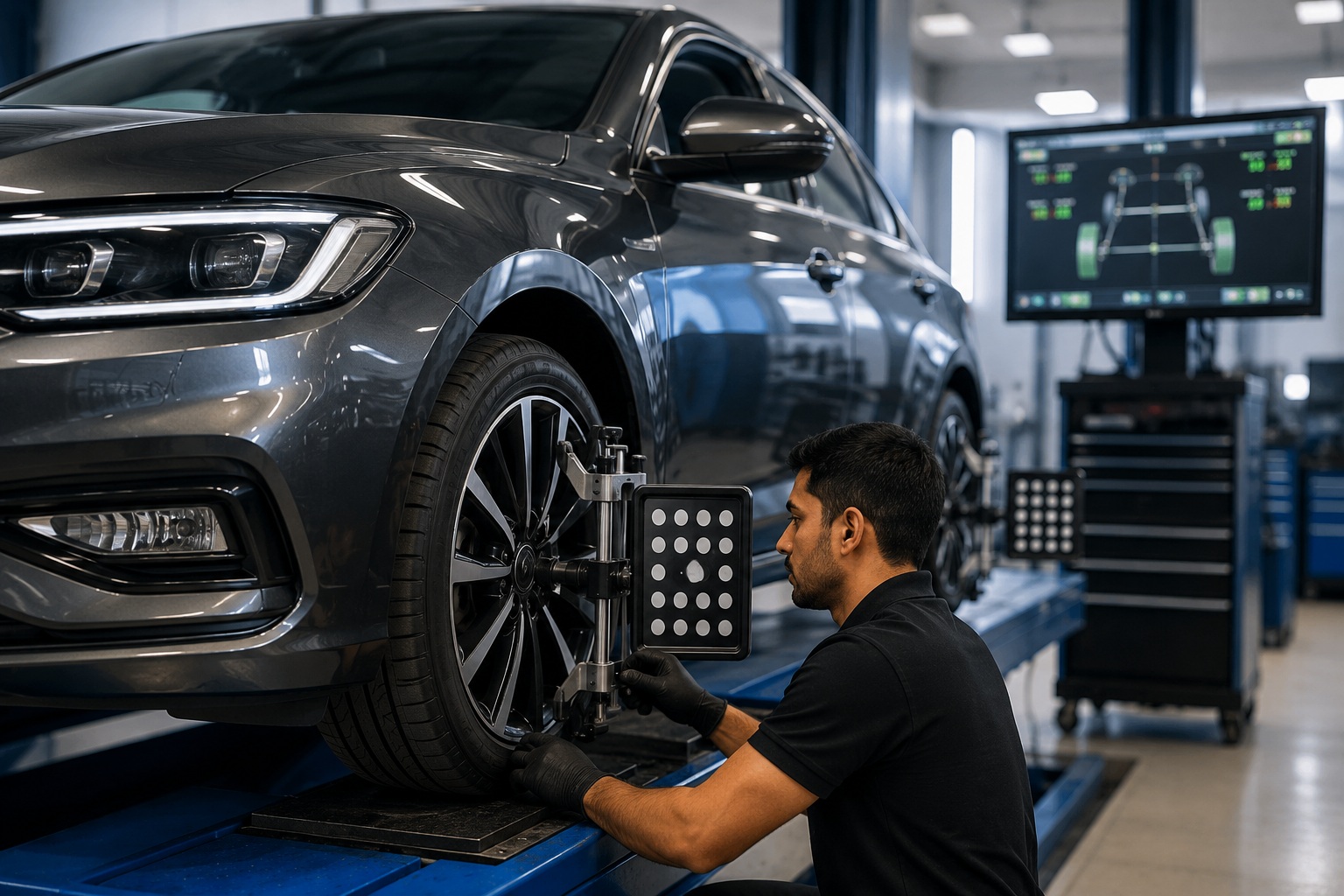
Cars today are engineered for comfort, safety, and precise handling, but even the smallest imbalance or misalignment can affect how your vehicle drives. If you’ve noticed your steering wheel pulling to one side, uneven tyre wear, or vibrations at higher speeds, you may need either a wheel alignment or wheel balancing service.
Although these two maintenance procedures are often confused, they solve completely different problems. Wheel alignment adjusts the angles of your wheels so they point in the correct direction, while wheel balancing ensures the weight of the tyre and wheel assembly is evenly distributed for a smooth ride.
In this guide, we’ll explain the difference between wheel alignment and wheel balancing, the warning signs to watch for, when your car needs each service, and the average cost in India. By the end, you’ll know exactly which service your vehicle requires and why both are essential for tyre life, fuel efficiency, and driving safety.
What Is Wheel Alignment?
Wheel alignment is the process of adjusting the angles of your vehicle’s wheels so they match the manufacturer’s specifications. The goal is to ensure all four wheels are correctly positioned relative to each other and the road surface.
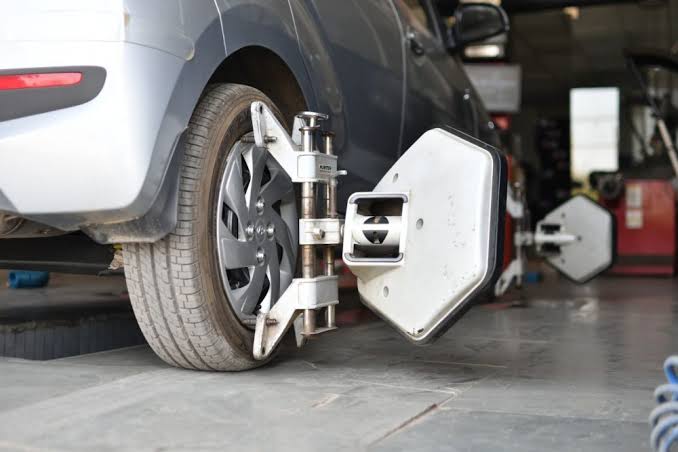
During a wheel alignment service, technicians adjust three primary alignment angles:
- Camber – The inward or outward tilt of the wheel when viewed from the front.
- Caster – The angle of the steering axis, which affects steering stability and cornering.
- Toe – The direction the tyres point relative to each other when viewed from above.
When these angles are properly adjusted, your car tracks straight, steering feels more responsive, tyre wear remains even, and overall driving becomes safer and more comfortable.
Modern service centres use computerised wheel alignment machines with laser or camera-based systems to achieve highly accurate adjustments according to manufacturer specifications.
What Is Wheel Balancing?
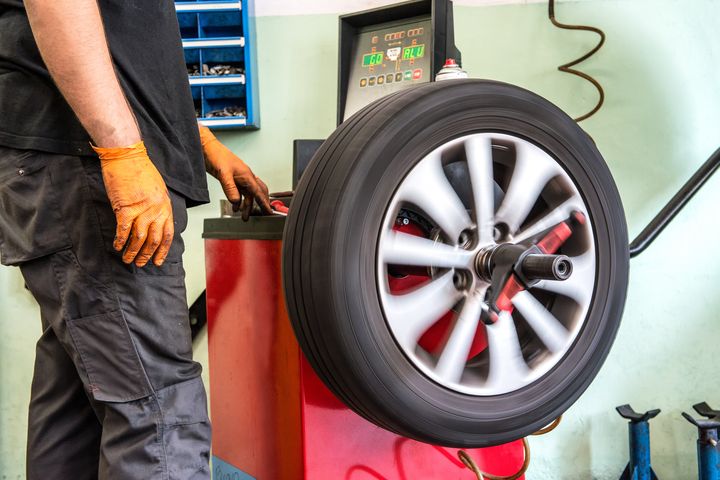
Wheel balancing is the process of evenly distributing the weight of the tyre and wheel assembly so that it rotates smoothly without causing vibrations. Even a small imbalance in the wheel can lead to noticeable steering wheel vibrations, uneven tyre wear, and reduced driving comfort, especially at higher speeds.
During a wheel balancing service, the wheel and tyre assembly is mounted on a specialised balancing machine that detects uneven weight distribution. The technician then attaches small balancing weights to the wheel rim to eliminate the imbalance and ensure smooth rotation.
Unlike wheel alignment, which adjusts the angles of the wheels, wheel balancing focuses on correcting weight distribution. Both services are equally important but solve different problems.
Most manufacturers recommend checking wheel balancing whenever new tyres are installed, tyres are repaired, or if you experience vibrations while driving. Regular balancing not only improves ride quality but also helps extend tyre life, reduces stress on suspension components, and enhances overall driving safety.
Benefits of Wheel Balancing
Proper wheel balancing offers several advantages for both your vehicle and your driving experience:
- Reduces steering wheel vibrations, especially at highway speeds.
- Extends tyre life by preventing uneven tread wear.
- Improves driving comfort with smoother vehicle operation.
- Protects suspension and steering components from unnecessary stress.
- Enhances fuel efficiency by reducing rolling resistance caused by uneven tyre movement.
- Improves overall road safety by ensuring stable handling and better tyre contact with the road.
Ignoring an unbalanced wheel may seem like a minor issue initially, but over time it can lead to premature tyre replacement, increased maintenance costs, and reduced driving comfort.
Read More: Second Hand Car Buying Guide
Wheel Alignment vs Wheel Balancing: Key Differences
Although wheel alignment and wheel balancing are often performed together during vehicle maintenance, they are two completely different services. Understanding the difference between wheel alignment and wheel balancing can help you identify the right solution when your car develops steering, tyre, or vibration issues.
Wheel alignment focuses on adjusting the angles of the wheels according to the manufacturer’s specifications. It ensures that all four wheels point in the correct direction, improving steering accuracy, tyre life, and vehicle stability.
On the other hand, wheel balancing ensures that the weight of the tyre and wheel assembly is evenly distributed. This prevents vibrations, provides a smoother ride, and reduces unnecessary stress on the tyres and suspension.
To make the difference easier to understand, here’s a quick comparison:
| Feature | Wheel Alignment | Wheel Balancing |
|---|---|---|
| Purpose | Adjusts wheel angles to manufacturer specifications | Balances the weight of the tyre and wheel assembly |
| Main Problem Solved | Vehicle pulls to one side and uneven tyre wear | Steering wheel or vehicle vibrations |
| Symptoms | Off-centre steering, poor handling, uneven tyre wear | Vibrations at medium and high speeds, uneven tyre wear |
| Equipment Used | Computerised alignment machine with laser or camera technology | Dynamic wheel balancing machine |
| When Required | After suspension repairs, hitting potholes, or noticing steering issues | After tyre replacement, puncture repair, or when vibrations occur |
| Primary Benefit | Better handling, improved tyre life, increased fuel efficiency | Smoother ride, longer tyre life, reduced suspension wear |
Can Wheel Alignment Replace Wheel Balancing?
No. Wheel alignment and wheel balancing are separate maintenance procedures that solve different problems. A perfectly aligned vehicle can still experience steering wheel vibrations if the wheels are not balanced. Likewise, balancing the wheels will not correct steering pull or uneven tyre wear caused by incorrect wheel alignment.
Do You Need Both Services?
In many cases, yes. Service centres often recommend performing wheel alignment and wheel balancing together, especially after installing new tyres or replacing suspension components. Combining both services helps ensure optimum tyre performance, improved handling, enhanced driving comfort, and maximum tyre life.
Ignoring either service can lead to premature tyre wear, poor fuel efficiency, reduced ride quality, and higher maintenance costs over time. Regular inspection of both wheel alignment and wheel balancing is one of the simplest ways to keep your car safe, stable, and economical to maintain.
Signs Your Car Needs Wheel Balancing
Just like wheel alignment, ignoring wheel balancing can lead to premature tyre wear, reduced driving comfort, and unnecessary stress on your vehicle’s suspension. Recognising the early symptoms of unbalanced wheels can help prevent expensive repairs and ensure a smoother, safer driving experience.
Here are the most common signs that indicate your car may need wheel balancing.
Steering Wheel Vibrates at Higher Speeds
One of the clearest signs of poor wheel balancing is a steering wheel that vibrates while driving, especially between 80 and 120 km/h. As speed increases, the imbalance becomes more noticeable, making the vehicle uncomfortable to drive.
Vehicle Vibrates Even on Smooth Roads
If you feel vibrations through the floor, seats, or steering wheel despite driving on a well-maintained road, unbalanced wheels could be the cause. Proper wheel balancing eliminates these unwanted vibrations and restores a smooth ride.
Uneven Tyre Wear
Although uneven tyre wear is commonly associated with wheel alignment, unbalanced wheels can also create irregular tread wear over time. Regular wheel balancing helps tyres wear evenly, improving their lifespan and overall performance.
Reduced Driving Comfort
An unbalanced wheel constantly creates small vibrations that may not seem serious at first but gradually reduce driving comfort. Over long journeys, these vibrations can make the vehicle feel unstable and increase driver fatigue.
Suspension and Steering Components Wear Faster
Ignoring wheel balancing places additional stress on the suspension, wheel bearings, steering system, and shock absorbers. Over time, this extra load can lead to premature wear and higher maintenance costs.
After Installing New Tyres or Repairing a Puncture
Whenever new tyres are fitted or an existing tyre is repaired, wheel balancing should always be performed. Even a slight difference in weight distribution can affect how smoothly the wheel rotates, making balancing an essential part of tyre installation.
When Should You Get Wheel Balancing?
Most manufacturers recommend checking wheel balancing:
- Whenever new tyres are installed.
- After repairing a puncture.
- If steering wheel vibrations appear while driving.
- Every 10,000–15,000 km during routine maintenance.
- After hitting a large pothole or kerb if vibrations develop.
- Whenever tyres are rotated from one axle to another.
Routine wheel balancing improves ride quality, extends tyre life, reduces strain on suspension components, and enhances overall driving safety.
Wheel Alignment and Wheel Balancing Cost in India
Understanding the wheel alignment cost and wheel balancing cost in India can help you plan your vehicle maintenance budget. The price varies depending on factors such as the type of vehicle, tyre size, service centre, location, and whether a 2-wheel or 4-wheel alignment is required.
On average, you can expect the following charges at authorised service centres and reputed tyre shops across India:
| Service | Average Cost (Approx.) |
|---|---|
| Wheel Alignment | ₹500 – ₹1,500 |
| Wheel Balancing | ₹300 – ₹800 |
| Wheel Alignment + Wheel Balancing Package | ₹800 – ₹2,000 |
Note: Prices may vary depending on the vehicle model, city, and service provider.
Factors That Affect Wheel Alignment Cost
Several factors can influence the wheel alignment cost in India:
- Vehicle type (Hatchback, Sedan, SUV, Luxury Car)
- Two-wheel or four-wheel alignment requirements
- Wheel size and tyre specifications
- Service centre equipment and technology
- Suspension or steering repairs required before alignment
Factors That Affect Wheel Balancing Cost
The wheel balancing cost depends on several factors, including:
- Number of wheels being balanced
- Alloy wheels or steel wheels
- Tyre size and profile
- Dynamic or computerised balancing equipment
- Additional weights required during balancing
Is It Better to Get Both Services Together?
Yes. Many authorised service centres and tyre specialists offer a combined wheel alignment and wheel balancing package at a lower price than booking each service separately. Since both procedures complement each other, getting them done together improves steering performance, ride comfort, tyre life, and overall driving safety.
If you’re replacing tyres, repairing suspension components, or experiencing both steering pull and vibrations, it’s advisable to opt for a combined service to ensure your vehicle performs at its best.
Frequently Asked Questions (FAQs)
Is Wheel Alignment the Same as Wheel Balancing?
No. Wheel alignment and wheel balancing are two different maintenance services. Wheel alignment adjusts the angles of the wheels to improve steering, handling, and tyre wear, while wheel balancing evenly distributes the weight of the tyre and wheel assembly to eliminate vibrations. Although they are different procedures, both are essential for maintaining your vehicle’s performance and tyre life.
Can I Get Wheel Balancing Without Wheel Alignment?
Yes, you can. However, it depends on the problem your vehicle is experiencing. If you notice steering wheel vibrations at higher speeds, wheel balancing may solve the issue. If your car pulls to one side or the tyres are wearing unevenly, you’ll likely need wheel alignment instead. A professional inspection can determine whether one or both services are required.
How Often Should Wheel Alignment Be Done?
Most manufacturers recommend checking wheel alignment every 10,000 to 15,000 km or during routine vehicle servicing. You should also have the alignment inspected after hitting a large pothole, replacing suspension components, or installing new tyres.
How Often Should Wheel Balancing Be Done?
Wheel balancing should be checked whenever new tyres are installed, after a puncture repair, during tyre rotation, or if you notice vibrations while driving. Many experts also recommend checking wheel balancing every 10,000 to 15,000 km as part of regular maintenance.
Does Wheel Alignment Improve Fuel Efficiency?
Yes. Proper wheel alignment reduces rolling resistance by ensuring the tyres maintain correct contact with the road. This helps the vehicle move more efficiently, which can improve fuel economy while also reducing tyre wear.
Is Wheel Balancing Necessary After Changing Tyres?
Yes. Every time new tyres are fitted, wheel balancing should be performed. Even brand-new tyres can have slight weight variations, and balancing ensures smooth wheel rotation, improved driving comfort, and longer tyre life.
Can Poor Wheel Alignment Damage Tyres?
Yes. Incorrect wheel alignment causes uneven tread wear, which shortens tyre life and can affect steering stability and braking performance. Ignoring wheel alignment issues may also place additional stress on suspension and steering components.
Should Wheel Alignment and Wheel Balancing Be Done Together?
In many cases, yes. If you’re replacing tyres, repairing suspension parts, or experiencing both steering pull and vibrations, it’s recommended to have wheel alignment and wheel balancing performed together. This provides the best driving comfort, improves tyre life, and helps maintain your vehicle’s overall safety.
Conclusion
Understanding the difference between wheel alignment and wheel balancing is essential for maintaining your vehicle’s safety, performance, and tyre life. While wheel alignment ensures your wheels are positioned at the correct angles for precise steering and even tyre wear, wheel balancing eliminates vibrations by evenly distributing the weight of the tyre and wheel assembly.
Ignoring either service can lead to premature tyre wear, poor handling, reduced fuel efficiency, and unnecessary strain on suspension and steering components. Regular inspections, especially after installing new tyres, hitting potholes, or noticing steering or vibration issues, can help prevent costly repairs and keep your car performing at its best.
If you’re unsure whether your vehicle requires wheel alignment, wheel balancing, or both, consult a trusted service centre for a professional inspection. Investing in timely maintenance not only improves driving comfort but also extends the life of your tyres and enhances overall road safety.
Ride And Tech Expert Tip
Regular wheel alignment and wheel balancing are among the simplest yet most effective ways to improve your vehicle’s handling, fuel efficiency, and tyre life. Including these checks as part of your routine maintenance schedule can save you money on tyre replacements and help ensure a safer, smoother driving experience on every journey.
About Ride And Tech
At Ride And Tech, we’re committed to helping automotive enthusiasts and everyday drivers make informed decisions through trusted news, in-depth buying guides, vehicle maintenance tips, and the latest automotive technology updates. Whether you’re looking for practical car care advice or the newest industry developments, our goal is to keep you informed with accurate, easy-to-understand, and reader-focused content.
Copyright (c) Ride And Tech. All rights reserved.

1 thought on “Wheel Alignment vs Wheel Balancing: Key Differences Explained”