


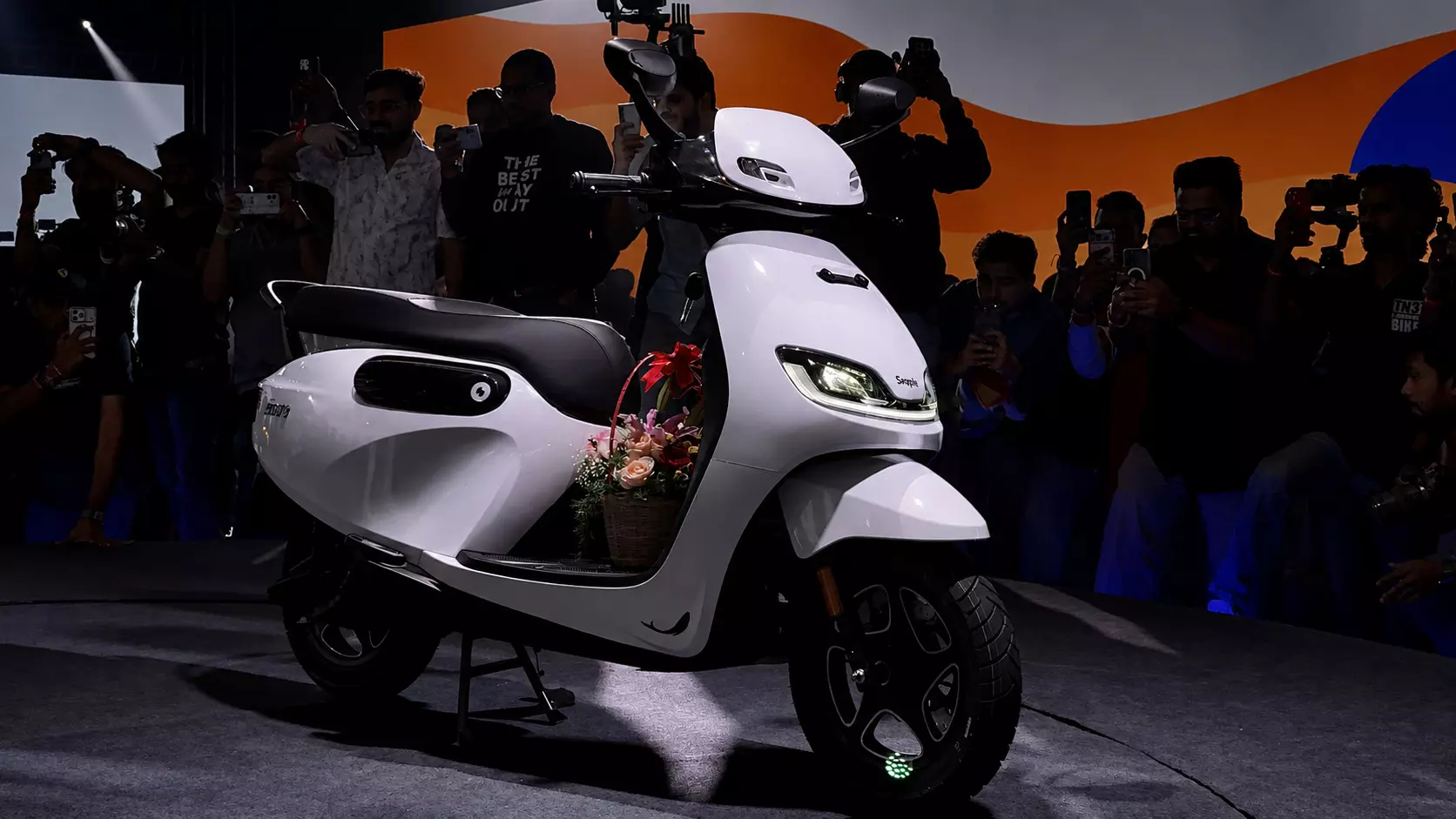
Simple Energy has finally made its move into the heart of India’s family scooter market. The Simple Wave electric scooter has been launched in India at an introductory price of ₹1,09,999, bringing a very different proposition from the performance-focused One family that established the Bengaluru-based EV maker. Instead of chasing outright performance, the Wave puts everyday usability, space and multiple battery choices at the center of the package.
And there is plenty to catch the eye. The range-topping Wave+ gets a 5kWh battery, a claimed 243km IDC range and a 90km/h top speed, while the scooter offers up to 70 litres of storage and a 920mm-long seat. Simple Energy has also planned six configurations across the Wave S, Wave and Wave+ range, giving buyers several combinations of battery capacity, equipment and range.
The launch matters because Simple is stepping into a part of the electric scooter market where practicality can matter just as much as acceleration figures. The Simple Wave electric scooter has been designed around the requirements of Indian families, with a flat floorboard, generous seating, large storage capacity and a choice of battery sizes ranging from 2.2kWh to 5kWh. Deliveries are scheduled to begin on September 25, 2026.
Read More: EV Localization Rules in India Take Effect
Simple Wave Electric Scooter: What’s New?
The biggest change is not hidden inside the battery pack or motor; it is the philosophy behind the scooter. Simple Energy’s earlier One range has a sharper, performance-oriented character, whereas the new Wave has been shaped as a more conventional family electric scooter. The longer seat, flat floorboard and expanded storage are clear signs that the company wants the Wave to work as an everyday machine rather than simply another fast EV.
The Simple Wave electric scooter is based on an updated version of the platform used by the One, but Simple Energy has made several important changes to suit its new role. The rear suspension now uses twin shocks rather than the monoshock arrangement of the One, while the wider rear structure and revised packaging are intended to create more usable space for both passengers and luggage.
That emphasis on practicality continues with the scooter’s storage arrangement. Simple claims up to 70 litres of total storage, comprising as much as 63 litres beneath the seat, a 3-litre glovebox and a separate 4-litre auxiliary compartment called the Pill. For a family scooter, that could prove more meaningful in daily use than another headline-grabbing performance statistic.
There is still plenty of performance underneath the more relaxed styling. The higher versions use a 6.4kW PMSM motor, with the Wave+ capable of reaching 90km/h and accelerating from 0-40km/h in a claimed 3.3 seconds. The entry-level 2.2kWh version uses a 4.5kW motor and has a claimed 75km/h top speed.
Simple Wave Battery, Range and Performance
The Simple Wave electric scooter is available with four battery capacities, giving buyers a much wider choice than the usual one-size-fits-all approach in the electric scooter market. The range starts with a 2.2kWh pack offering a claimed 110km IDC range and stretches all the way to a 5kWh battery with a claimed 243km. In between, the 2.7kWh version delivers 132km, while the 3.7kWh version manages 171km on the IDC cycle.
| Variant | Battery | Claimed IDC Range | Motor | Top Speed |
|---|---|---|---|---|
| Wave S | 2.2kWh | 110km | 4.5kW | 75km/h |
| Wave S | 2.7kWh | 132km | 6.4kW | Up to 90km/h |
| Wave | 3.7kWh | 171km | 6.4kW | 90km/h |
| Wave+ | 5kWh | 243km | 6.4kW | 90km/h |
The headline Simple Wave range figure belongs to the Wave+, whose 5kWh battery gives it a claimed 243km IDC range. That is a substantial number for a family scooter, although as always with IDC figures, real-world range will depend on speed, riding conditions, traffic, payload and riding mode. Simple Energy says the higher-capacity versions use its 6.4kW PMSM motor, while the entry-level 2.2kWh version gets a 4.5kW motor.
Performance is therefore not an afterthought. The 6.4kW versions can reach up to 90km/h and complete the 0-40km/h sprint in a claimed 3.3 seconds, while the entry-level version is tuned to a lower 75km/h top speed. Ride, Eco and EcoX modes are available across the range, with Sport mode added to the higher-spec versions.
The battery story is interesting, too. The 2.2kWh and 2.7kWh packs use LFP chemistry, while the 5kWh Wave+ uses NCA chemistry. The battery packs and motor are rated IP67, and Simple claims the scooter can handle up to 300mm of water wading. For an Indian electric scooter intended for everyday use, that combination of battery choice and weather protection could be more useful than chasing a single headline range figure.
The real trick, however, is that buyers don’t have to pay for 243km of claimed range if they don’t need it. Someone using the scooter primarily for short urban commutes can opt for the smaller battery, while riders who regularly cover longer distances can move up the range. That makes the Simple Wave battery strategy one of the more interesting aspects of the new scooter, because it allows the product to cover several price and usage points within the same family.
Simple Wave Battery and Range
The Simple Wave electric scooter gets four battery options, starting with a 2.2kWh pack and going up to 5kWh in the range-topping Wave+. Claimed IDC range stands at 110km, 132km, 171km and 243km respectively, giving buyers the choice between a more affordable city-focused version and a long-range model.
The 6.4kW versions can reach 90km/h and accelerate from 0-40km/h in a claimed 3.3 seconds, while the entry-level 2.2kWh version uses a 4.5kW motor and has a 75km/h top speed. The Wave+ therefore combines the headline 243km range with enough performance to make it more than just a basic commuter.
Simple has also focused heavily on everyday usability. The scooter offers up to 70 litres of storage, including 63 liters under the seat, along with a 920mm seat and flat floorboard. Deliveries are scheduled to begin on September 25, 2026.
Simple Wave Price and Variants
The Simple Wave electric scooter starts at an introductory ₹1,09,999, with the range spread across six configurations based on battery capacity and equipment. The Wave S is positioned as the entry point, while the Wave+ sits at the top of the range with its 5kWh battery and 243km claimed IDC range.
That pricing gives Simple Energy a useful spread across the electric scooter market in India, allowing the Wave to target buyers looking for a practical urban EV without immediately stepping into the higher prices of premium long-range models. The company says bookings are now open, with deliveries set to begin from September 25.
Simple Wave Features and Practicality
The Simple Wave electric scooter is clearly aimed at everyday family use rather than simply chasing performance numbers. Its 920mm seat, flat floorboard and up to 70 litres of storage are among the biggest talking points, while higher variants get a 7-inch TFT display with connected features and over-the-air updates.
Safety and convenience equipment includes multiple riding modes, hill-hold, reverse assist and a tyre-pressure monitoring system on higher versions. Simple Energy has also given the Wave IP67-rated battery and motor protection, adding some reassurance for typical Indian weather and road conditions.
The result is a scooter that looks less interested in being the fastest EV on the road and more interested in becoming something Indian families can actually use every day. That shift could be the most important part of the Simple Wave launch.
Read More: Electric Two-Wheeler Sales in India Cross 1 Million
India Availability and Deliveries
The Simple Wave electric scooter is now available for bookings in India, with prices starting at ₹1,09,999. Simple Energy is targeting the scooter at buyers who want a practical electric alternative for daily commuting, while the larger-battery versions are aimed at riders who need more range between charges.
Deliveries are scheduled to begin on September 25, 2026, giving the company only a few weeks to turn today’s launch interest into actual customer deliveries. For Simple Energy, the Wave could be an important step beyond its earlier performance-focused positioning and into the much larger mainstream family scooter market.
Why the Simple Wave Matters
The Simple Wave electric scooter arrives at an interesting moment for India’s EV market, where buyers are increasingly looking beyond outright range and asking whether an electric scooter can genuinely replace a petrol family scooter. Simple Energy is betting that practicality will be a major part of that decision, with multiple battery options, generous storage and a family-friendly layout.
The challenge now is execution. Simple Energy needs to translate the Wave’s attractive specifications and introductory pricing into strong bookings, reliable deliveries and convincing real-world range. If it can do that, the Wave could become a much more important product for the company than its numbers initially suggest.
Simple Wave Electric Scooter: FAQs
What is the Simple Wave electric scooter price in India?
The Simple Wave starts at an introductory price of ₹1,09,999 in India. The range includes multiple configurations with different battery capacities and equipment levels.
What is the Simple Wave’s claimed range?
The Simple Wave range goes up to 243km on the IDC cycle with the 5kWh Wave+ battery. The smaller battery options offer claimed ranges between 110km and 171km.
How much storage does the Simple Wave have?
The scooter offers up to 70 litres of storage, making practicality one of its biggest selling points for everyday family use.
When will Simple Wave deliveries begin?
Simple Energy has scheduled deliveries to begin from September 25, 2026 in India.
What is the top speed of the Simple Wave?
The higher-specification versions can reach a claimed 90km/h, while the entry-level 2.2kWh version has a claimed top speed of 75km/h.
Ride And Tech Verdict
The Simple Wave electric scooter looks like a smart change of direction for Simple Energy. Instead of focusing purely on performance, it brings the things that matter to everyday Indian riders — useful storage, a family-friendly layout, multiple battery options and a potentially attractive starting price.
The 243km claimed range of the Wave+ is the headline grabber, but the bigger story may be the scooter’s 70-litre storage capacity and flexible lineup. If Simple Energy can deliver on its pricing, reliability and real-world range, the Wave has the ingredients to become a serious contender in India’s growing electric scooter market.
Ride And Tech — Where Ride Meets Tech.
Drive Smarter. Ride Smarter.
Copyright (c) Ride And Tech. All rights reserved.
